The nexus between the branches and its central organisation has to be settled by the bye laws. Usually the upper body holds supervisory jurisdiction over the affairs of the branches; and, if the bye laws so provide, the property acquired by the branches may remain as the property of the whole/central organisation. When the parental body exercises its supervisory jurisdiction, in matters other than the formal administrative governance, it has to obey principles applicable to a quasi-judicial authority (ie., observing principles of natural justice, etc.).
The extent of autonomy or independence in administration of a branch is determined by the bye laws. Normally, so long the branches function within its jurisdiction, in conformity with the provisions of the bye laws, they can claim freedom from interference. When they violate the provisions of the bye laws and act in an arbitrary manner, their actions will be subject to the supervisory control of the central organisation.
Branches Contemplated In The Companies Act Are Not Separate Entities
In S.N.D.P. Yogam v. G. Krishnamoorthy, 2022-4 Ker HC 168, it is pointed out as under:
“The branches contemplated and provided for under the Companies Act, 1882 and its successor enactments are not independent or separate entities and in terms of the aforesaid statutes, company and its branches would constitute one single entity.”
Referring English Electric Co. of India Ltd v. Deputy Commercial Tax Officer, (1976) 4 SCC 460, it is observed in S.N.D.P. Yogam v. G. Krishnamoorthy, 2022-4 Ker HC 168, that a registered company can have Branches under the Companies Act and they are not independent or separate entities, and that the company and its branches constitute one single entity.
2. Does a Branch Regd. with a Regd. Society Get the Status as a Regd. Society?
An (unregistered) association which is registered with a registered-society will not get the status of a registered society.[1] Same will be the position as to a branch of a registered society. Section 4 of the Societies Registration Act provides for filing Annual List of Managing Body once in every year with the Registrar. Societies Registration Act does not envisage societies-with-branches.
In Kerala Vyapari Vyavasayi Vs. Kerala Vyapari Vyavasayi Ekopana Samithi[2] after considering the definition and character of the ‘Governing Body’ in the So. Regn. Act, so also the scheme of the Act, it is held that the committee of officers at the district level or unit level is not the ‘Governing Body’ under the Societies Registration Act.
3. Can a Branch Sue?
The Supreme Court, in P. Nazeer Vs. Salafi Trust, AIR 2022 SC 1580, held:
(i) A society registered under the Societies Registration Act is entitled to sue and be sued, only in terms of its byelaws.
(ii) The byelaws may authorise the President or Secretary or any other office bearer to institute or defend a suit for and on behalf of the society,
since section 6 of the Societies Registration Act, provides that ‘every society registered under the Act may sue or be sued in the name of President, Chairman, or Principal Secretary, or trustees, as shall be determined by the rules and regulations of the society and,
in default of such determination, in the name of such person as shall be appointed by the governing body for the occasion’.
(iii) Unless the plaintiff, which claims to be a society, demonstrates that it is a registered entity and that the person who signed and verified the pleadings was authorised by the byelaws to do so, the suit cannot be entertained
The fact that the plaintiff in a suit happens to be a local unit or a Sakha unit affiliated to a registered society is of no consequence, unless the byelaws support the institution of such a suit.
4. Fundamental Principles and Decision of a Branch to Sever
It being not open for the majority of the members of a society to alter the fundamental principles upon which it is founded, even the unanimous decision[3] of a branch (unless such a power is specifically reserved under the bye laws)[4] cannot sever the relation with the central body. This principle was expounded in Milligan Vs. Mitchel,[5]Atttorney General Vs. Anderson.[6] In Free Church of England Vs. Overtoun,[7] House of Lords (by a majority of 5-2) found that the minority, which adhered to the ‘principles of establishment’, was entitled to the assets of the Free Church. It was observed that when men subscribe money for a particular object, and leave it behind them for the promotion of that object, their successors have no right to change the object endowed. It was held that, by adopting new standards of doctrine (and particularly by abandoning its commitment to ‘the establishment principle’, which was held to be fundamental to the Free Church), the majority had violated the conditions on which the property of the Free Church.[8]
5. Can a Branch Dissociate?
A branch of a (central) organisation created under the provisions of bye laws, cannot (unless the Rules provide otherwise) lawfully sever its connections with its central body, as observed in John Vs. Rees[9], inasmuch as the act of severance will amount to violation of the rules or bye laws.
6. Merger of an Association with Another Association
If a voluntary association came into existence independently, and subsequently subjected itself as a branch of another association, such a ‘branch’ may have the right[10] to dissociate or disaffiliate from such association or ‘central body’; because, the ‘branch’, when came into existence, had all characteristics of an independent voluntary association with its own basic principles of foundation. The same will be the position of a voluntary association which merged or amalgamated[11] with another association.
If the conduct of the members of the merged association shows that their act amounted to unanimous or undisputed surrendering or abandonment of the identity of the former voluntary association, or they became an integral-whole with the association in which they merged, principles of acquiescence and estoppel will be a bar for dissociation.
7. Parallel Administration within a Church Not Allowable
In Varghese Vs. St. Peters and Pauls Syrian Orthodox Church [12] it is pointed out by our Apex Court that ‘running parallel governance’ at the cost of Church by creating factionalism within the constituent parish churches is not permissible. It is settled proposition of law that when a mode is prescribed for doing a thing, it can be done only in that manner and not otherwise.
[8] All these English decisions were referred to in Prasanna Venkitesa Rao Vs. Srinivasa Rao: AIR 1931 Mad. 12. See also: Inderpal Singh Vs. Avtar Singh: 2007-4 Raj LW 3547.
[9] John Vs. Rees: [1970] 1 Ch 345: [1969] 2 All ER 275.
[10] Unless principles of estoppel and acquiescence work against.
[11] Sec. 14A of the Karnataka Co-operative Societies Act, 1959 provides powers to the Registrar to order amalgamation of societies. See: H Puttappa Vs. State of Karnataka: AIR 1978 Kar 148.
[12] Varghese Vs. St. Peters and Pauls Syrian Orthodox Church: (2017) 15 SCC 333.
1. Provisions of the Societies Registration Act, 1860:
3. Registration and fees: Upon such memorandum and certified copy being filed, the Registrar shall certify under his hand that the society is registered under this Act. There shall be paid to the Registrar for every such registration a fee of fifty rupees, or such smaller fees as [the State Government] may from time to time, direct; and all fees so paid shall be accounted for to [the State Government].
4. Annual list of managing body to be filed:- Once in every year, on or before the fourteenth day succeeding the day on which, according to the rules of the society, the annual general meeting of the society is held, or, if the rules do not provide for an annual general meeting, in the month of January, a list shall be filed with the Registrar of joint-stock Companies, of the names, addresses and occupations of the governors, council, directors, committee or other governing body then entrusted with the management of the affairs of the society.
20. To what societies Act applies: The following societies may be registered under this Act:– Charitable societies, the military orphan funds or societies established at the several presidencies of India, societies established for the promotion of science, literature, or the fine arts for instruction, the diffusion of useful knowledge, [the diffusion of political education], the foundation or maintenance of libraries or reading-rooms for general use among the members or open to the public or public museums and galleries of paintings and other works of art, collections of natural history, mechanical and philosophical inventions, instruments, or designs.
Section 8 (2) Companies Act, 2013 reads: The company registered under this section shall enjoy all the privileges and be subject to all the obligations of limited companies.
2. Introduction
India has a long history of collective community life. Ancient history of India manifested in oldest scriptures of Hinduism – Vedas – refers to then existed strong civil society. Voluntary organisations were originated for promotion of health, education and cultural activities. Religious organizations promoted charitable trusts with a philanthropic view. The Government recognised these voluntary organizations and trusts by various enactments. The oldest enactments in this regard include:
The Societies Registration Act, 1860,
The Religious Endowments Act, 1863,
The Indian Trusts Act, 1882,
The Charitable Endowments Act, 1890,
The Charitable and Religious Trusts Act, 1920 and
The Trade Unions Act, 1926.
It is noteworthy that these enactments did not impose strong governmental control over various activities of the associations and the institutions.
3. So. Regn. Act does not Require Compulsory Registration
Because Article 19(1)(c) of our Constitution guarantees freedom to form associations.
Societies Registration Act, 1860 does not require compulsory registration of Societies. This position continues. No doubt, it is because Article 19(1)(c) of our Constitution guarantees freedom to form associations and unions. But, Tamil Nadu Societies Registration Act, 1975 directs compulsory registration of certain societies.
Tamil Nadu Societies Registration Act, 1975 Sec. 4 reads:
4. Compulsory Registration of Certain Societies –
(1) Subject to the provisions of Sub-sections (3) and (4), every society formed on or after the date of the commencement of this Act, which has for its object any object mentioned in, or prescribed Under Section 3, and
(a) which consists of not less than twenty members, or
(b) whose annual gross income or expenditure in any financial year after the date of the commencement of this Act, is not less than ten thousand rupees, shall be registered under this Act within such period as may be prescribed.
(2) …..
(3) Nothing in this section shall apply to any society which has for its object the promotion of religion, athletics or sports (including indoor games).
(4) Nothing contained in this Act shall be deemed to require the registration under this Act of any society formed, established, registered or incorporated under any other law.
4. General Principles of Company Law Apply to Regd. Society.
The general principles governing rights of a member in a registered society, and the right of suit of a member, would be similar to that of an individual share holder’s rights in a company. The general principles as to the rights and responsibilities of the directors of a company also apply to the governing body members of a society.
Following are recognised as individual membership rights in a company.[1]
(i) Right to vote,
(ii) right to stand as a candidate for election as a director and
(iii) set-right illegal acts.
The general principles as to the rights and responsibilities of the directors of a company also apply to the governing body members of a society.
5. Registration of Societies Brings-in Certain Privileges
In Board of Trustees, Ayurvedic & Unani Tibia College, Delhi Vs. The State of Delhi[2] the legal position is expounded by our Apex Court pointing out that by registration of a Society, perpetual succession is conceded inasmuch as the society’s property vest in the trustees for the time being of the society for the use and benefit of the society and its members and of all persons claiming through the members according to the society’s rules, and further (and this is the most noteworthy provision) that the property shall pass to succeeding trustees without assignment or transfer. In this decision it is observed as under:
“… The most important point to be noticed in this connection is that in the various provisions of the Societies Registration Act, 1860, there are no sufficient words to indicate on intention to incorporate; on the contrary, the provisions show that there was an absence of such intention. ….. Section 5, however, states that the property belonging to the society, if not vested in trustees, shall be deemed to be vested in the governing body of the society and in all proceedings, civil and criminal, the property will be described as the property of the governing body. The section talks of property belonging to the society; but the property is vested in the trustees or in the governing body for the time being. The expression “property belonging to the society” does not give the society a corporate status in the matter of holding or acquiring property, it merely describes the property which vests in the trustees or governing body for the time being……..”
“… Those provisions undoubtedly give certain privileges to a society registered under that Act and the privileges are of considerable importance and some of those privileges are analogous to the privileges enjoyed by a corporation, but there is really no incorporation in the sense in which that word is legally understood.”
In Pamulapati Buchi Naidu College Committee, Nidubrolu Vs. Govt. of AP[3] it was observed that if an association was not registered as a society under the Societies Registration Act it could not sue or be sued except in the name of all the members of the association. The registration of the Society confers on it certain advantages. The members as well as the Governing Body the Society are not always the same. Even though the members of the Society or the Government Body fluctuate from time to time, the identity of the society is sought to be made continuous by reason of the provisions of the Societies Registration Act.
Registering An Old Society Did Not Mean Forming A New Society,
In Noel Frederick Barwell v. John Jackson, AIR 1948 All. 146, the Court referred M’ Kenny v. Mayor and Corporation of Barnsley, (1894) 10 T.L.R. 533, and said as under:
“There the question was whether an unregistered society should be registered under the Friendly Societies Act, 1855, and dealing with the question whether the Society should or should not be registered, the Master of the Rolls observed:
“And in the absence of any special rule to the contrary, it seemed to be a general rule arising from the nature of things that, where a number of people joined together for some purpose and must for the carrying out of that purpose govern themselves, the only way in which they, could do so was by the will of the majority.”
The Allehabad High Court continued as under:
“68. His Lordship went on to hold that registering an old society did not mean forming a new society, nor did it alter it in any way. The observations must, therefore, be confined to the facts of that case that the natural law of the rule of the majority would govern only for the purpose of carrying out the object for which they had come together and formed the association, tout that does not justify the assertion that on all questions the majority have a right to impose their will on the minority. It cannot be said here that the resolution of 3rd September was for the carrying out of the purpose for which the club was founded. In the absence of that basic requirement the case cannot help the defendants.”
The Allehabad High Court thereafter referred another English decision, Oldhamour Lady’s Sick and burial Society v. Taylor, and said as under:
“69. The case in Oldhamour Lady’s Sick and burial Society v. Taylor, (1887) 3 TLR 472 has, to my mind, no relevance. That was-a case where after the registration of an unregistered society, which was registered by a vote of the majority the minority then having decided to secede, the question was whether the registered society could claim the money due to the unregistered society and it was held that it was the same society and there was a continuity of existence.”
Person who Signs Pleadings must be Authorised by the Byelaws
The Supreme Court, in P. Nazeer Vs. Salafi Trust, AIR 2022 SC 1580, held:
(i) A society registered under the Societies Registration Act is entitled to sue and be sued, only in terms of its byelaws.
(ii) The byelaws may authorise the President or Secretary or any other office bearer to institute or defend a suit for and on behalf of the society,
since section 6 of the Societies Registration Act, provides that ‘every society registered under the Act may sue or be sued in the name of President, Chairman, or Principal Secretary, or trustees, as shall be determined by the rules and regulations of the society and,
in default of such determination, in the name of such person as shall be appointed by the governing body for the occasion’.
(iii) Unless the plaintiff, which claims to be a society, demonstrates that it is a registered entity and that the person who signed and verified the pleadings was authorised by the byelaws to do so, the suit cannot be entertained
The fact that the plaintiff in a suit happens to be a local unit or a Sakha unit affiliated to a registered society is of no consequence, unless the byelaws support the institution of such a suit.
6. Registration Brings-in Certain Changes to the Character of its Property
A society or a club is a compendium of its members. Its property is the ‘joint property’ held by the members as ‘joint tenants’ (as differentiated to ‘tenants in common’, till a decision is taken for dissolution). If such property is maintained for the benefit of its future members also (and therefore encumbered with obligations as in a ‘trust’), it cannot be dealt with by the members disregarding the objectives of its foundation.
With respect to the property of a society which can be distributed among the members on its dissolution, by registration under the Societies Registration Act a sea-change occurs whereby the disposal of property is governed by the provisions of the Societies Registration Act; and a perpetual succession is conceded thereto.[4]
Benefits Brought About by Registration of Societies.
Legal recognition and Benefits of Entry in Public Document. The Societies Registration Act provides for registering its bye laws and filing annual list of managing body and accounts. It is subject to scrutiny of Registrar. The registration and renewal of the registration of the society is for the benefit of all the members and office bearers of the society[5]so also the persons who deal with the society. A registered society can open bank accounts and obtain registration under Income Tax Act.
Perpetual Succession. By registration of a Society, perpetual succession is conceded inasmuch as the society’s property vest in the trustees or its governing body, for the use and benefit of the society;or in its members and of all persons claiming through the members according to the society’s rules.[6]
And further (and this is the most noteworthy provision) that the property shall pass to succeeding trustees or its governing body without assignment or transfer.[7]
Enabling Provisions for Filing Suits. Suits with respect to registered societies can be filed without invoking the provisions of Order 1 Rule 8 CPC;[8] and can be sued also in that way.
Fixity. During the subsistence of a registered society, or on dissolution, the members do not have any proprietary or beneficial enjoyment/interestin the property the society holds.[9] The Societies Registration Act, therefore, does not create in the members of the registered society any interest other than that of bare trustees. What all the members are entitled to, is the right of management of the properties of the society subject to certain conditions.[10]
Left-behind-property goes to another society: As per the Societies Registration Act, on dissolution, the left-behind-property of a registered society goes to another society as determined by the members of the society or by the court[11] for being managed by some other charitable organisation and to be utilised for like purposes.
Tax Exemptions. Registration of Societies permits certain tax benefits and exemptions as provided in various Tax Laws.
So. Regn. Act: Holding Annual General Meeting is Statutory; Election Not
Sec. 4 of the Societies Registration Act, 1860 postulates holding of Annual General Meeting. These provisions (also the Memorandum and Articles of Association of the society) as to holding Annual General Meetings, are mandatory; and not directory (Sarbjit Singh Vs. All India Fine Arts & Crafts Society: ILR 1989-2 Del 585). As per Sec. 2 of the Societies Registration Act the management of the affairs of a society is entrusted with the governing body. The rules of the society have to direct the details of such entrustment.
It is pertinent to note that the Societies Registration Act, 1860 does not specifically direct ‘election’ of the governing body. But various States’ amendments (and State-Acts) provide for the same. The mode and modalities of formation of the governing body is determinedly left, under Sec. 16, to the ‘Rules and Regulations of the society’.
Sec. 16 reads:
Governing body defined: The governing body of the society shall be the governors, council, directors, committee, trustees, or other body to whom by the rules and regulations of the society the management of its affairs is entrusted.
A Religious-Society Can be Registered If it Carries on Secular Activities Also
Society formed for religious purposes can also be registered under the Societies Registration Act, as the society formed for religious purposes would also ordinarily be a Society for charitable purposes.[12] Though the expression charitable purpose generally takes-in religious purpose also, it is held by the Patna High Court in Md. Yunus Vs. The Inspector General of Registration[13] that the So. Regn. Act does not embrace purposes which are religious or predominantly religious.
9. How Can a Society or a Club Acquire Property and Enter into a Contract?
See Blog: Vesting of Property in Societies and Clubs
10. Associations Regd. under S. 8(1) of the Companies Act, 2013
Incorporation of Clubs brings in Legal Personality
Section 8 (1) of the Companies Act, 2013, lays down that an association of persons with charitable objects can be registered under this Act. It should have ‘in its objects the promotion of commerce, art, science, sports, education, research, social welfare, religion, charity, protection of environment or any such other object’ and it should be one which ‘intends to apply its profits, if any, or other income in promoting its objects’.
Clubs incorporated under the Companies Act enjoy all the privileges of limited companies; and they are subject to all the obligations thereunder also. Section 8 (2) Companies Act, 2013 reads:
“(2) The company registered under this section shall enjoy all the privileges and be subject to all the obligations of limited companies.”
Privileges
exempted from requirement regarding minimum share capital.
exempted from requirement to mention its name and address as required in case of all other companies
free to determine the date, place and time of its Annual General Meeting according to their convenience and feasibility.
can call an Annual General Meeting at a short notice
can maintain books of accounts for a shorter period.
send the required documents at least fourteen days before the date of meeting instead of 21 days.
free to increase the number of its directors without seeking approval of central Government.
exempted from the applicability of Companies Auditor’s Report Order, 2003 (CARO).
Obligations
ensure that its profits and all other incomes are utilized only for the purpose of promoting its objects and not for any other purpose
ensure that its profits are not distributed as dividend among its members
cannot alter its objects clause in its Memorandum without seeking the written approval of central government
bound by such conditions and regulations imposed by Central Government
ensure that its objects are confined to those mentioned in section Section 8 (1) of the Companies Act, 2013.
Halsbury’s Laws of England[14] describe Incorporated Members’ Club as under:
“206. Incorporated Members’ Club. – A members’ club incorporated under the Companies Act, 1948, or earlier Companies Acts, enjoys the advantages incidental to incorporation as a company, especially that of suing and being sued as a legal entity. The company may be limited by shares or by guarantee, and in either case the liability may be merely nominal in amount. The most convenient method, when a members’ club is incorporated, is to register it as a company limited by guarantee, the members of the club for the time being constituting the company. If a members’ club is incorporated as a company limited by shares, the articles of association to some extent take the place of club rules, and may be supplemented by bye laws. If it is registered as an association limited by guarantee, the rules governing the relations of the members inter se are generally appended to the memorandum of association, and they together form the regulations of the company. In either case the objects of the club are set forth in the memorandum of association. The company is quite distinct from the club, the company merely being the proprietor; the relations of the members of the club inter se are governed by club rules or bye laws, as in the case of an unincorporated members’ club, and the rights and liabilities of the share-holders in the company depend upon the memorandum and articles of association, as in the case of an ordinary trading company.”
11. Registered Society is not a Juristic Person
See Blog: Is Registered Society a Juristic Person.
12. Regd. Societies – Not Corporate Body & No Common Seal
A society registered under the Societies Registration Act, 1960 is not a body corporate having perpetual succession and common seal.[15] But, a Co-operative Society, created by or under a statute,[16] is a body corporate having perpetual succession and a common seal with power to hold property; and it can enter into contracts.[17]
13. Societies Considered as Legal Persons While Deal Tax Matters
Generally, public institutions established with a philanthropic view and administered by trustees are described as ‘trusts’, especially while dealing with tax matters, though, in the strict legal sense, trust is a concept and it cannot be an organisation or a Juristic Person.[18]
In Swami Satchitanand Vs. The 2nd Addl. Income-tax Officer, Kozhikode[19] the Kerala High Court observed that a society registered under Societies Registration Act is a legal entity; and it is held that tax imposed on a Society, though it has been styled as an ‘Association of persons’ is still a tax on the society and not on its members, and that it is not possible, therefore, to say that the tax imposed on a Society is a tax imposed on the members of the Society.
14. Does a Society or Branch Registered with Another Registered Society Get the Status as a Registered Society?
If a dispute arises as to whom among the two sets were the lawful members of the Governing Committee, the Registrar has the power to decide upon such a dispute under the Societies Registration Act as an incidental or consequential power in itself. The Registrar has to prima facie satisfy from the materials and evidences. There may not be an elaborate enquiry. However, such an enquiry made by the Registrar and the decision taken from it does not become final and the aggrieved party can take up the matter before a competent court for a decision as to who are the members of the governing body.[20]
16. Jurisdiction of State and Registrar: Limited
The District Registrar has no power to interfere with the selection in the election process. The scope of exercising power under the Societies Registration Act is only to limited extent. The enquiry is not directed against election or selection but to find out the genuineness of the list.
The disputes are to be resolved by the Civil Court
Sec. 4 of the So. Regn. Act casts a duty on the persons concerned to file before the registrar an annual return containing the names, addresses and occupation of the members of the Executive Committee. But the law does not provide for the suspension or dissolution of the society because of failure to comply with Sec. 4. The Act does not vest any control or supervisory or disciplinary power or jurisdiction in the registrar to take action against a society. The disputes are to be resolved by the Civil Court.[21]
Once a list is furnished in accordance with the election, the scope of enquiry would come to an end, even if the selection is bad. The extent of enquiry is only to find out whether the list being furnished is not by way of any bogus claim or by fraudulent claim.[22]
17. Co-op. Registrar’s Powers Regulatory or Supervisory in Nature
A Co-operative society is an autonomous body and it has got a freedom of its own and such freedom can be interfered only when they violate the provisions of the bye-laws and act in an arbitrary manner. When they violate the provisions of the bye-laws and the Act in an arbitrary manner, or resort to activities prejudicial to the interest of the society, their actions will be subject to the supervisory control of the authorities under the Act.[23] Except supervisory role, the State has no administrative control over the day-to-day affairs of a Co-operative society.[24] It will not amount to dominating or interfering with the management or affairs of the Co-operative society so as to be controlled.The supervisory powers are given to the Co-operative Registrar and the executive powers are given to the Secretary with ‘a single object in view, namely, the better working of the Co-operative societies’[25]
AK Ganguly, J. in The Dakshinee Co-Operative Housing Society Ltd. Vs. Nayan Ranjan Das[26] has observed that democratic norms or democratic principles always presuppose regulatory measures since democracy cannot exist without moderation and that such provisions in the Act strengthen the larger interest of the co-operative movement in general.
Our Apex Court, in Thalappalam Ser. Co-op. Bank Ltd. Vs. State of Kerala,[27] it is pointed out that the final authority of a society vests in the general body of its members and every society is managed by the managing committee constituted in terms of the bye-laws, and unequivocally held that the powers of Registrar of Co-operative Societies are only ‘regulatory or supervisory’ in nature and it ‘will not amount to dominating or interfering with the management or affairs of the society so as to be controlled’.
18. States’ Amendments/Acts Empower Registrar
Though the Central Act does not specifically empower the Registrar to enquire into the affairs of the society, various States’ Amendments/Acts provide for the same.
Tamil Nadu Societies Registration Act
Considering Section 36(1) of the Tamil Nadu Societies Registration Act, 1975, it is held in CMS Evangelical Suvi David Vs. District Registrar[28] that the power of the Registrar to enquire into the affairs of the society was only to hold a summary inquiry for his own satisfaction. The said power cannot be construed as the power of appeal. Under Section 36, the Registrar has not been empowered to adjudicate upon the conflicting claims to represent the society based upon question of fact. A plain reading of Section 36 shows that the Registrar could look only the provisions of the Act and the Rules and prima facie materials to arrive at a conclusion either to believe or not to believe.
The power of the Registrar to call for information and explanation under Section 34 does not contemplate any power to examine witnesses or to allow opportunity for cross-examination of witnesses. The power is incidental and it is only for the purpose of maintaining correct records. As the power to conduct inquiry is only limited – in order to find out whether constitution of members are valid – the inquiry is limited only for the purpose of making entries in the register. However, the exercise of power must not be arbitrary as the orders passed or directions issued by the Registrar are amenable to challenge in the Writ Jurisdiction.[29]
19. Super-session of Governing Body by Government – M.P. Act
A few States, in their Societies Registration Acts, give power, to the Government to supersede societies. Section 32 of the MP Societies Registrikaran Adhiniyam, 1973, Registrar is authorised to hold an enquiry into the constitution and working and financial conditions of the society. Section 33 of the Act speaks of supersession[30] of the Governing Body by the State Government by removing the governing body and appointing a person or persons to manage the affairs of the society for a specified period not exceeding two years in the first instance.
Sec. 33 of the MP Societies Registrikaran Adhiniyam, 1973 reads:
“33. Super-session of Governing Body.— (1) If, in the opinion of the Government, governing body of any State aided society—
(a) persistently makes default or is negligent in the performance of the duties imposed on it by or under this Act, regulations or bye-laws of the society or by any lawful order passed by the State Government or Registrar, or is unwilling to perform such duties, or
(b) commits acts which are prejudicial to the interest of society or its members, or
(c) is otherwise not functioning properly, the State Government may, by order in writing, remove the governing body and appoint a person or persons to manage the affairs of the society for a specified period not exceeding two years in the first instance.
Provided that where it is proposed to remove the governing body of the society exclusively on the ground that election to the governing body were not held in accordance with the provisions of this Act or the regulations or bye-taws made thereunder, no action shall be taken under this sub-section unless the Registrar or an officer authorised by him in this behalf has convened a meeting of the General body for conducting the election thereto in accordance with the provisions of this Act, or the Regulations or bye-laws made thereunder but has failed to get the new governing body elected.
Provided further that the Registrar or the Officer authorised by him shall, for the purpose of conducting election, have all the necessary powers under the Act or the Regulations or bye-laws made thereunder.
(2) No order under Sub-section (1) shall be made unless the governing body has been given a reasonable opportunity of showing cause against the proposed order and representation, if any, made by it, is considered.
(3) …. (4) ….. (5) …. (6) …. (7) …. (8) …..”
It is held in Suresh Vs. State of MP[31] that the power of supersession was not an administrative power but was a quasi-judicial in nature. In Indian National Congress Vs. Institute of Social Welfare[32] it is observed by the Supreme Court, when it considered as to what constitutes exercise of quasi judicial power, as under:
“24. The legal principles laying down when an act of a statutory authority would be a quasi-judicial act, which emerge from the aforestated decisions are these: Where
(a) a statutory authority empowered under a statute to do \any act
(b) which would prejudicially affect the subject
(c) although there is no lis or two contending parties and the contest is between the authority and subject and
(d) the statutory authority is required to act judicially under statute, the decision of the said authority is quasi-judicial.”
20. Power to Grant Interim Orders by Registrar – Karnataka Act
Section 25 of the Karnataka Societies Registration Act provides for an enquiry into the constitution and working of the registered society by the Registrar on his own motion or on the application of the majority of the members or on the complaint given by 1/3rd members of the society. The Act further gives power to the Registrar to issue notice for general body meeting of the society and require the governing body of the society to call a general meeting and to determine such matters as may be directed by him. The Registrar has the ancillary powers to summon any person and examine him.
It is held in Advocates Association Vs. District Registrar and Registrar of Societies[33] that if certain material irregularities were brought to the notice of the registrar and if he was of the opinion that granting of an interim order pending disposal of the enquiry was in furtherance of final order to be passed, the power can be traced under Section 25 itself regarding enquiry. It was observed that the authority which was supposed to hold an enquiry would have the power to grant an interim order, in aid of the final relief, even though it may not be traced to any of the provisions of the Act.
21. Powers of Registrar to Direct Election – Karnataka Act
Following Kodava Samaj, Bangalore Vs. District Registrar of Registration of Societies, Bangalore[34] it is held in Advocates Association Vs. District Registrar and Registrar of Societies[35] that under the Karnataka Societies Registration Act the Registrar has power to direct the society to hold an election, because an enquiry into the constitution and working of the registered society would include the enquiry into the propriety of continuation by a Working Committee and the need to elect a new committee if the existing working committee functions contrary to the bye-laws of the society. Section 25 (2) (c) should be read so as to include a power in the Registrar to direct the holding of the election to the general body if the occasion demands.
Registrar under the Manipur Societies Registration Act has locus standi to file a Writ Petition challenging election of Managing Committee on behalf of a society though the Regulation of the society empowers secretary to file suit on behalf of the society.[36]
22. Powers of Registrar Do Not Bar Civil Court Jurisdiction
The regulatory powers as to registration of a Society vested with the Registrar do not confer any authority on the Registrar to interfere with the affairs, including the election process, of the Society. The scope of exercising power under Section 4 of the Societies Registration Act is only to the limited extent of examining whether the list furnished is false or bogus. The above referred limited purpose is fulfilled the moment the list is furnished pursuant to an election. If the parties have any grievance against selection, they are free to approach the civil court.[37] When more than one return is filed, the Registrar has got the power to find out as to which one he should accept. There may not be an elaborate enquiry. Prima facie he has to satisfy as to which return is to be accepted. Such an enquiry made by the Registrar and the decision taken from it does not become final. The dispute can be taken up before a competent court as to who are the members of the governing body.[38]
23. Powers of Registrar: Only Enabling Provision
Several State-Societies-Registration-Acts and Amendments to the Societies Registration Act provide for enquiry by Registrar into the constitution, working and financial conditions of the society. In D Dhanapal Vs. D David Livingstone[39] it is held that the suit filed for declaration that the plaintiff continues to be the Secretary of the Society is maintainable. Section 36 of the Tamil Nadu Societies Registration Act does not reveal any express bar to the Civil Courts. Section 36 is merely an enabling provision. If the aggrieved party approaches the Registrar or the Registrar acts on his own motion, then, it shall be lawful for the Registrar to conduct an enquiry and communicate the report of the enquiry. It does not mean to deem it as a bar to the jurisdiction of the Civil Court. There must be at least some implication to show that the Civil Court cannot entertain such suits.
24. Powers of Registrar on Defunct Society: May Cancel Registration
Certain state enactments and state amendments to So. Regn. Act empower the Registrars of Societies to cancel[40] the registration of societies for violation of the provisions under Sec. 4 of the So. Regn. Act.
It is held in CMS Evangelical Suvi David Vs. District Registrar[41] that the intention of the Legislature was not to confer a power of supersession of the Committee on the Registrar as, such power was vested only in the Government;[42] and even when the Registrar was satisfied after enquiry[43] that the society which had contravened any of the provisions of the Act or the Rules made thereunder, or the society was insolvent or the business of any such registered society was conducted fraudulently or not in accordance with the bye-laws or the objects specified in the memorandum filed with the Registrar, he may only cancel the registration.
From the object and scheme of the Societies Registration Acts it is legitimate to state that even if the registration of a society can be cancelled by the Registrar for it becomes defunct[44] the same would not set free the society, once registered, from the provisions as to dissolution in the Societies Registration Act. As per the Societies Registration Act, on dissolution, the left-behind-property of a society goes to another society as determined by the members of the society or by the court (S. 14) for being managed by some other charitable organization and to be utilised for like purposes.[45]
25. No power to Registrar to Direct Fresh Election
It is with Civil Court
Registrar has no jurisdiction to meddle with election disputes.[46] It is also held in CMS Evangelical Suvi David Vs. District Registrar[47] that the power under Sub-Section (9) of Section 36 cannot be stretched to a power on the Registrar to direct the registered society to hold fresh election. A direction to hold fresh election would amount to indirectly setting aside the earlier election and such power is not conferred on the Registrar under any of the provisions of the Act. So long as the election is not declared invalid in the manner known to law, no direction for fresh election could be ordered. Validity of the election could very well be decided only by the competent Civil Court as the parties are entitled to let in their evidence to sustain their respective claims. In the event the Registrar satisfies himself as to the particulars furnished in Form VII as correct, he should enter the names in the register maintained for that purpose. In the event if he does not satisfy as to the particulars and thereby does not accept Form VII, he has to issue a direction relegating the parties to approach the Civil Court for appropriate orders.
26. Effect of Failure to File Documents u/s 4 or of Becoming Defunct
Non-renewal does not infer, society is defunct.
Non-renewal of the registration of a society may be a bar to avail the benefits offered to registered societies, but the same by itself will not lead the inference that the society is not in existence.[48] Burden will be with those who wish to rebut the presumption; and, in any case, such a society can no more be regarded as a registered society.[49]Several State-amendments[50] to the So. Regn. Act, 1860 and State-Societies-Registration-Acts[51] also made specific provisions for imposing fine on the societies (or its office bearers) which make default in complying with the requirements of Sec. 4.
In Nelson Vs. Kallayam Pastorate[52] it is held by Our Apex Court that in the event of becoming a society defunct, or failure to file documents under Sec. 4 of the So. Regn. Act, there is no bar to revive its activities and to conduct the election of the office bearers. It is held in this decision as under:
“A society need not necessarily be held to have become defunct only because certain statutory provisions have not been complied with by it.”
It was further observed that the courts cannot set aside such elections on the sole ground that certain statutory provisions have not been complied with by it. Right to contest an election of an office-bearer of the society is a statutory right of the member thereof. Such a right also exists under the bye-laws of the society. If a society fails to file with the Registrar the documents required under Sec. 4, a presumption may arise that it is defunct.
But, it was held by our Apex Court in Nand Deo Pandey Vs. Committees of Management[53] that properly constituted committee of management was required to continue the proceedings of inquiry against the Principal of a Vidyalaya. The Managing Committee was held to have ceased to be valid due to non-renewal of the registration of the society and non-holding of periodical elections under the provisions of the Societies’ Registration (U.P. Amendment) Act, 1960. In Parshvanath Jain Temple Vs. LRs. of Prem Dass[54] it was observed by the Rajasthan High Court that irregularity, if any, on account of non-registration of the Trust under the Rajasthan Public Trusts Act at the time of institution of the suit could be cured with the registration of the Trust. It was held that the bar under Section 29 of the Rajasthan Public Trusts Act was only against the hearing and final decision of the suit and not against the institution of the suit itself.
27. States Usually Insist Registration for Its Assistances
Usually, for extending State’s assistances, especially financial, registration of societies under a proper Act is insisted, for it ensures supervision of officials.
[1] NagappaChettiar Vs. Madras Race Club AIR 1951 Mad 831.
Satyavart Sidhantalankar Vs. Arya Samaj: AIR 1946 Bom 516;
Shridhar Misra Vs. Jaihandra: AIR 1959 All 598;
CL Joseph Vs. Jos: AIR 1965 Ker 68;
Star Tiles Works Vs. N. Govindan AIR 1959 Ker 254.
[44] Sub-section (2) of Section of M.P. Societies Registrikaran Adhiniyam, 1973 deals with the power of Registrar to dissolve the society if a society has become defunct or has been persistently making default in the observance of the provisions of the Act, or the regulations or byelaws made thereunder.
[45] Board of Trustees, Ayurvedic & Unani Tibia College, Delhi Vs.The State of Delhi: AIR 1962 SC 458: Para 23.
Dadar Ashram Trust Society Vs. Mahathma Gandhi KakshiVidyapeeth: AIR 2017 All. 60
[46] All. Muslim Welfare Society Vs. Asst. Registrar: AIR 1992 All. 43;
All India Council Vs. Asst. Registrar: AIR 1988 All. 236 .
[48] Committee of Management Vs. Commissioner, Kanpur Region: 2008 -1 AWC 695; 2008 -1 ADJ 706; 2008-70 All LR 368.
[49] In Mrigan Maity Vs. Daridra Bandhab Bhandar: 2011-4 Cal LT 226 it is observed that though only a few members of the society have shown any interest in matters pertaining to the society for 36 years or so, it might still not be presumed that the society was defunct that would warrant dissolution under the So. Rgn. Act.
[50] Assam, Orissa, Punjab, Haryana, Delhi, Andhra Pradesh, Himachal Pradesh, Uttar Pradesh, Gujarat, Nagaland, Pondicherry, etc. Maharashtra Amendment to Societies Registration Act, 1860 (Sub Sec. 5 of Sec. 3A) lays down that a society which fails to get its certificate of registration renewed in accordance with this section with one year from the expiration of the period for which the certificate was operative shall become an unregistered society.
[51] Karnataka, MP, Rajasthan, West Bengal, Travancore-Cochin, etc.
[52] AIR 2007 SC 1337. Board of Control for Cricket in India Vs. Netaji Cricket Club [(2005) 4 SCC 741: AIR 2005 SC 592] referred to in this decision.
Clubs and Societies are voluntary associations of persons. Article 19(1)(c) of our Constitution guarantees freedom to form associations and unions. It includes in itself the right of effective functioning so as to achieve its lawful objectives.[1]
The Clubs and Societies, as understood in our legal system, are identified in English Common Law as ‘Members’ Clubs’ and ‘Friendly Societies’.
2. Differentiating Features Between Clubs and Societies
It is difficult to pinpoint the differentiating features. Nomenclature of an Association, as Club or Society, by itself, may not be a decisive factor. For distinguishing Clubs from Societies, following characteristics, seen generally attached to Clubs, can be relied on.
(i) Recreation, or social interaction for mutual benefit of the members, is prime object.
(ii) Funded by equal contribution of members, as membership-fee and subscriptions.
(iii) Property is joint property of the members, and not encumbered with obligations of ‘trust’ so as to benefit outsiders; and, therefore, they are freely dealt with by the members as they wish (subject to the bye laws).
(iv) Interaction between members being higher, compared to Societies, new membership is given on a serious scrutiny. The membership fee and rate of subscriptions are comparatively high.
(v) Usually registered under the Companies Act, for getting legal identity.
General features of Societies can be summarised, for the purpose of distinguishing them from Clubs, as under:
(i ) Societies are formed for accomplishing social, charitable or benevolent objectives.
(ii) They are funded, mainly, on voluntary donations from members or outsiders.
(iii) Property of a Society (though theoretically joint property of the members) is maintained for benefit of persons other than the members also (and therefore encumbered with obligations pertaining to ‘trust’).
(iv) Acquisition of membership in Societies will be easier and membership fee and rate of subscriptions thereof will be comparatively low.
(v) Societies are registered under the Central or State Societies Registration Act, for acquiring legal identity and recognition.
3. Club: Definitions
Halsbury’s Laws of England: ‘Club’ is defined in the Halsbury’s Laws of England[2] as under:
“A club, except a proprietary club or an investment club, may be defined as a society of persons associated together, not for the purposes of trade, but for social reasons, the promotion of politics, sport, art, science or literature, or for any other lawful purpose; but trading activities will not destroy the nature of a club if they are merely incidental to the club’s purposes.”
Black’s Law Dictionary
In the Black’s Law Dictionary club is expounded as ‘a voluntary, incorporated or unincorporated association of persons for purposes of a social, literary, or political nature, or the like.’[3]
Daly’s Club Law
Daly’s Club Law[4] describes a club as ‘essentially an association of individuals in a way that involves to some degree the factors of free choice (which connotes a power of exclusion), permanence, corporate identity and the pursuit as a common aim of some joint interest other than the acquisition of gains.’
4. Members’ Club and Proprietary Club
Clubs are categorised into two main classes: ‘Members’ Club’ and ‘Propriety Club’.
Members’ Club: A ‘Members’ Club’ is a voluntary association of persons joining together in accordance with the rules and bye-laws of the club fundamentally for enjoying certain facilities or for availing specified mutually beneficial objectives and purposes.
Halsbury’s Laws of England[5] describes Members’ Club as a society of persons each of whom contributes to the funds out of which the expenses of conducting the society are paid. The contribution is generally made by means of membership fees or subscriptions, or both.
In Members’ Club, subject to any rule to the contrary, members of the time being are joint owners, in equal shares, of all the properties of the Club. The relationship between the Club and the members is governed by the doctrine of mutuality; every member is a shareholder and every shareholder is a member.[6]
On the dissolution of a Members’ Club the property and assets are sold and realised, and after the discharge of the debts and liability of the club the surplus is divisible equally amongst the members for the time being, other than the honorary members, subject to any provision in the rules to the contrary.[7]
Proprietary Club: Propriety Club is controlled and administered by proprietor. The members are customers of proprietor; and they are not the owners of or interested in the property of the club.[8] The proprietor utilizes surplus income as profit and appropriates the same for his own benefit. There are wide variation in the nature and activity of propriety club and many of them are purely commercial undertakings. In India, Proprietary Clubs are usually seen established by Companies.
5. Unincorporated and Incorporated Clubs
Clubs can be incorporated under the Companies Act;[9] and on that basis, there are two classes: Unincorporated Clubs and Incorporated Clubs.
An incorporated company has a separate existence and the law recognises it as a juristic person separate and distinct from its members. This new personality emerges from the moment of its incorporation and its rights and obligations are different from those of its shareholders. The company is holding its property and carrying on its business is not agent of its shareholders.[10]
Sec. 8 of the Companies Act, 2013 deals with companies with charitable objects, etc. It reads:
8. Formation of companies with charitable objects, etc
(1) Where it is proved to the satisfaction of the Central Government that a person or an association of persons proposed to be registered under this Act as a limited company—
(a) has in its objects the promotion of commerce, art, science, sports, education, research, social welfare, religion, charity, protection of environment or any such other object;
(b) intends to apply its profits, if any, or other income in promoting its objects; and
(c) intends to prohibit the payment of any dividend to its members, the Central Government may, by licence issued in such manner as may be prescribed, and on such conditions as it deems fit, allow that person or association of persons to be registered as a limited company under this section without the addition to its name of the word “Limited”, or as the case may be, the words “Private Limited” and thereupon the Registrar shall, on application, in the prescribed form, register such person or association of persons as a company under this section.
6. Societies Registered under Societies Registration Act
Societies predicated in the Societies Registration Act, 1860 are the ‘associations of persons for any literary, scientific, or charitable purpose’; and no recreation club can be registered under the provisions of the Societies Registration Acts.
A society formed for religious purposes can also be registered under the Societies Registration Act as the society formed for religious purposes would also ordinarily be a Society for charitable purposes.[11] But, it is held by the Patna High Court in Md. Yunus Vs. The Inspector General of Registration[12] that the Societies Registration Act does not embrace purposes which are religious or predominantly religious. It is explained in Nelson Vs. Kallayam Pastorate by our Apex Court that when the Church, indisputably, carries on secular activities also, keeping in view the interest of the general public, there is no reason as to why in a case of mismanagement of such (registered) charitable organisations, although run by minorities, the Court cannot oversee its functions.[13]
Sec. 1 and 20 of the Societies Registration Act, 1860 deal with registration of societies, etc. It reads:
1. Societies formed by memorandum of association and registration
Any seven or more persons associated for any literary, scientific, or charitable purpose, or for any such purpose as is described in section 20 of this Act, may, by subscribing their names to a memorandum of association, and filing the same with Registrar of Joint-stock Companies form themselves into a society under this Act.
20. To what societies Act applies–
The following societies may be registered under this Act: Charitable societies, the military orphan funds or societies established at the several presidencies of India, societies established for the promotion of science, literature or the fine arts, for instruction, the diffusion of useful knowledge (the diffusion for political education), the foundation or maintenance of libraries or reading-rooms for general use among the members or open to the public museums and galleries of paintings and other works or art, collections of natural history,
7. Can a Literary/Charitable Club be Registered under So. Regn Act
Sec. 14 of the So. Regn. Act provides the provisions for dissolution. It lays down that upon the dissolution of a society registered under this Act, the property of that society shall not be distributed among the members, but shall be given to some other society, as directed in this Section. In the proviso to this Section, it is stated:
“Clause not to apply to Joint-stock Companies: Provided, however, that this clause shall not apply to any society which has been founded or established by the contributions of share-holders in the nature of a Joint-stock Company.”
It is clear from the Proviso to Sec. 14 of the So. Regn. Act that Associations ‘in the nature of a Joint-stock Company’ can also be registered under the So. Regn. Act. Therefore, it is legitimate to state that an Association in the nature of a club – not for recreation but, ‘for any literary, scientific, or charitable purpose’ (and not encumbered with obligations of ‘trust’ so as to benefit outsiders) too can be registered under the Societies Registration Act. Property of such an Association/society is the joint property of the members; and, therefore, they are entitled to freely deal with the same as they wish (subject to the bye laws).
8. Unincorporated Clubs and Unregistered Societies
General principles as to the individual membership rights (so also the rights and responsibilities of the governing body members) of unincorporated clubs and unregistered societies are similar. Halsbury’s Laws of England describe Unincorporated members’ club as under:
“205. Unincorporated Members’ Clubs. – An unincorporated members’ club is a society of persons each of whom contributes to the funds out of which the expenses of conducting the society are paid. The contribution is generally made by means of entrance fees or subscriptions, or both. The society is not a partnership, because the members are not associated with a view to profit, nor, for the same reason, is it an association requiring registration as a company. It is not recognised as having any legal existence apart from the members of which it is composed. Subject to any rule to the contrary, the property and funds of the club belong to the members of the time being jointly in equal shares; and if provisions are supplied to a member, at a given price, this does not constitute a sale, but is in effect a release by the other members of their interest in the goods supplied. The transaction is not of a commercial nature and, consequently, is not controlled by the provisions of the Trade Descriptions Act, 1968. The peculiar nature of the transaction is of particular significance in relation to the supply of intoxicating liquor.”
9. Guarantees of Freedom to Form Associations, not Absolute
Right to form associations or unions is guaranteed by Article 19(1)(c) of the Constitution of India. But, it is subjected to the restrictions in clause (4) of Article 19.[14]
Article 19 lays down:
Protection of certain rights regarding freedom of speech, etc. –
(1) All citizens shall have the right-
(a)…. (b) ….
(c) to form associations or unions, co-operative societies;
(d) … (e) … (f) … (g) . …
(2) …. (3) …
(4) Nothing in Sub -clause (c) of the said clause shall affect the operation of any existing law in so far as it imposes, or prevent the State from making any law imposing, in the interests of the sovereignty and integrity of India or public order or morality, reasonable restrictions on the exercise of the right conferred by the said sub clause.
(5) … (6) ….”
10. Enactments Governing Trusts, Societies and Clubs in India
‘Trust and Trustees’ and ‘Charities and charitable institutions, charitable and religious endowments and religious institutions’ are subjects of the Concurrent List of the Seventh Schedule to the Constitution, under Entry No.10 and 28, respectively; thereby both the Centre and the States are competent to legislate on these subjects. A non-profit association can be formed under Section 8 (1) of the Companies Act, 2013.
The legal form of a charitable institution is identified by the nature of business it undertakes. Charitable organisations in India are registered, mainly, under three laws:
Societies Registration Act
(State) Public Trusts Act
Companies Act, 2003.
The Societies Registration Act, 1860 and various State-Societies-Registration-Acts (Rajasthan, Karnataka, West Bengal, Madhya Pradesh, Manipur, Jammu – Kashmir) do not require compulsory registration of Societies.Nevertheless, Tamil Nadu Societies Registration Act, 1975 requires compulsory registration of certain societies.
All public charitable trusts in the state of Maharashtra are governed by the Bombay Public Trusts Act, 1950. States like Gujarat, Rajasthan, Madhya Pradesh etc. also have Public Trusts Act. Several other states in India have no Trust Act at all. Wakf Acts and Religious Institutions and Charitable Endowments Acts also govern various religious public organisations.
11. Associations Attracted S. 8(1) of the Companies Act, 2013
Section 8 (1) of the Companies Act, 2013, lays down that an association of persons with charitable objects can be registered under this Act. It should have ‘in its objects the promotion of commerce, art, science, sports, education, research, social welfare, religion, charity, protection of environment or any such other object’ and it should be one which ‘intends to apply its profits, if any, or other income in promoting its objects’.
12. Unlike a Company, a Registered Society is not a Juristic Person[15]
‘Persons’ are of two kinds: human beings and legal persons. The second class is the institutions and associations of persons upon which the law incorporates or attributes legal personality. They are formed either on registration under a statute like Companies Act, or under a particular enactment such as English East India Company, Municipal Corporations, Life Insurance Corporation, Oil and Natural Gas Commission, etc. Apart from companies, corporations etc. our system accept idols in temples also as legal persons.
A Company is a body corporate having perpetual succession and a common seal, with power to hold property. It is held by our Apex Court in Board of Trustees, Ayurvedic & Unani Tibia College, Delhi Vs. The State of Delhi[16] that the vesting of legal ownership of the property of a society in the governing body is merely a method or mechanism permitted by the law; and, it was pointed out that the very resort to the machinery of trustees or the governing body for the time being acquiring and holding the properly showed that there was no intention to incorporate the society or union so as to give it a corporate capacity for the purpose of holding and acquiring property and that they confer certain privileges on a registered Society, which would be wholly unnecessary if the registered society were a corporation.
The members of a club or society, both registered and unregistered, are bound by the memorandum of association and its rules and regulations. The bye laws bind its members as a contract. Even the formation of a society itself is based on a contract. When a person becomes a member of the society, he would have no independent rights, and lose his individuality qua the society except those that are given to him by the statutes concerned and bye laws; and the rights of members merge in the rights of the society. In State of UP Vs. CD Chheoki Employees Co-operative Society, AIR 1997 SC 1413, our Apex Court explicated it with the analogy that the stream cannot rise higher than the source. It reads:
“Thus, it is settled law that no citizen has a fundamental right under Article 19(1)(c) to become a member of a Cooperative Society. His right is governed by the provisions of the statute. So, the right to become or to continue being a member of the society is a statutory right. On fulfillment of the qualifications prescribed to become a member and for being a member of the society and on admission, he becomes a member. His being a member of the society is subject to the operation of the Act, Rules and bye-laws applicable from time to time. A member of the society has no independent right qua the society and it is the society that is entitled to represent as the corporate aggregate. No individual member is entitled to assail the constitutionality of the provisions of the Act, Rules and the bye-laws as he has his right under the Act, Rules and the bye-laws and is subject to its operation. The stream cannot rise higher than the source.”
(Quoted in Zoroastrian Co-op. H. Society Ltd. Vs. District Registrar: AIR 2005 SC 2306; Supreme Court Bar Association Vs. BD Kaushik: (2011) 13 SCC 774; Chandigarh Housing Board Vs. Devinder Singh: AIR 2007 SC 1723.)
Acts Reasonably Ancillary or Conducive to the Objects
An act beyond the powers conferred by law, or an act violative of the objects envisaged in the foundational document or memorandum of a company, an association or a trust, is termed ‘ultra vires’ act. But, if the act done by a company, association or trust is fairly incidental or reasonably ancillary to its main business or conducive to the statement of the objects of the company, association or trust, unless such an act is expressly prohibited, cannot be held to be ultra vires.
No Alteration of Fundamental Principles of Foundation and Trust
It is not open for the majority of the members of an association to alter the fundamental principles upon which it is founded, unless such a power is specifically reserved. This principle explained in Prasanna Venkiaesa Rao Vs. Srinivasa Rao. (AIR 1931 Mad. 12; Relied on: Milligan Vs. Mitchel: 40 ER 852; Free Church of England Vs. Overtoun: (1904) AC 515. See also: Inderpal Singh Vs. Avtar Singh (2007-4 Raj LW 3547).
In Free Church of England Vs. Overtoun, House of Lords (by a majority of 5-2) found that the minority was entitled to the assets of the Free Church. It was observed that when men subscribe money for a particular object, and leave it behind them for the promotion of that object, their successors have no right to change the object endowed. It was held that, by adopting new standards of doctrine (and particularly by abandoning its commitment to ‘the establishment principle’, which was held to be fundamental to the Free Church), the majority had violated the conditions on which the property of the Free Church was held.
Ultra Vires Acts are Void
Though the configuration of a society differs from that of a company, general principles as to various administrative affairs of a registered society are similar to that of a company.
A company is a juristic person. The actions and functioning of a company differ from that of a natural person who is free to act on his whims and fancies. The actions and functioning of a company are limited by the Memorandum of Association and Articles of Association of Company. A corporation or a company has no inherent common law rights. Any act of a company (save a case of indoor management) ultra vires its Memorandum and Articles of Association, even if backed by the Resolution of the Board of Directors, is void and not enforceable. A contract made by the Directors of a company upon a matter not included in the Memorandum of Association is ultra vires and is not binding on the company. Such a contract does not become binding on the company even though afterwards expressly assented to at a General Meeting of shareholders, being void in its inception. A company is competent to carry out its objects specified in the Memorandum of Association and cannot travel beyond the objects. An ultra vires contract by a company is analogous to and stands on the same footing as a contract by an infant or a minor and in which case there is total incapacity. Just like a consent decree founded on the incompetency of an infant or minor is void and a nullity, a contract founded on the incompetency of the company is void and a nullity. These principles are recapped in Ashbury Railway Carriage and Iron Co. Ltd. Vs. Riche.
The principles in Ashbury Railway Carriage and Iron Co. Ltd. Vs. Riche have been followed in A. Lakshmana-swami Mudaliar Vs. Life Insurance Corporation of India, In Re – Steel Equipment and Construction Co. (P) Ltd. etc.
13. Co-Operative Societies, Creatures of the Statute
Co-operative Societies Acts provide for juristic personality to Co-operative societies. In Daman Singh Vs. State of Punjab and Haryana[18] our Apex Court held ‘a co-operative society is a corporation as commonly understood’ inasmuch as the same has the status of a body corporate having perpetual succession and a common seal, with power to hold property, enter into contracts, institute and defend suits and other legal proceedings and to do all things necessary for the purposes for which it is constituted.[19]
Co-operative societies being creatures of the statute, once a Co-operative Society is formed and registered, the rights of the society and that of its members stand abridged by the provisions of the Act. The activities of the societies are controlled by the statute. Therefore, there cannot be any objection to statutory interference with their composition or functioning merely on the ground of contravention of individual’s right of freedom of association by statutory functionaries.[20]
But, when the association has an option/choice to get it registered under a particular (Co-operative Societies’) statute,[21] if there are more than one statute operating in the field, the State cannot force the society to get itself registered under a statute for which the society has not applied. If the State does so, it will ‘violate Article 19(1)(c) of the Constitution of India’.Ninety Seventh Amendment of our Constitution provided constitutional status to the Co-operative Societies and it has brought out radical changes in the concept of Co-operative Societies. Democratic functioning and autonomy have now become the core constitutional values of a Co-operative Society.
Vesting of property
In Illachi Devi Vs. Jain Society Protection of Orphans India,[17] reiterating the earlier view, it is held by our Apex Court that a Society registered under the Societies Registration Act is not a body-corporate,and that the mere fact of registration of a Society under the Societies Registration Act will not make the said Society distinct from association of persons.In that view of the matter, a Society registered under the Societies Registration Act is not a juristic person. A society, whether registered or unregistered, is not capable of owning any property or of suing or being sued in its own name.
14. Regd. Society: Members do not have any Beneficial Interest
Members have no interest other than that of bare trustees
During the subsistence of a registered society, or on its dissolution, the members do not have any proprietary or beneficial enjoyment/interest (that is, ‘proprietary interest’ or interest pertaining to owner) in the property the society holds.[22] But, in companies, the share-holders hold the property as their own.
In Pamulapati Buchi Naidu College Committee, Nidubrolu Vs. Govt. of Andhra Pradesh[23] it is held as under:
“The Societies Registration Act, therefore, does not create in the members of the registered society any interest other than that of bare trustees. What all the members are entitled to, is the right of management of the properties of the society subject to certain conditions.”
Underhill, in his treatise, ‘Law of Trusts and Trustees’, explained:
“However, the crucial difference surely is that no absolutely entitled members exist if the gift is on trust for future and existing members, always being for the members of the Association for the time being. The members for the time being cannot under the Association rules appropriate trust property for themselves for there would then be no property held on trust as intended by the testator for those persons who some years later happened to be the members of the Association for the time being.” [24]
15. Formation of Associations and Running Business
A fundamental right to form the association cannot be coupled with the fundamental right to carry on any trade or business.[25] The right of the citizens to form the association is different from running the business by that association. Therefore, right of individuals to form a society has to be understood in a completely different context.
Expulsion of a Member from Society or Club
The associations have the right to manage their affairs by themselves. They have the right to enforce the internal discipline even by expelling an erring member. Since expulsion of a member from society or club visits him with harsh adversities, it will always be an exceptional decision and it has to be taken only in exceptional circumstances. It has to be done cautiously and after due considerations. And, it should also be strictly in accordance with law.
‘Suit By or Against a Regd. So.’ is Virtually Suit By or Against Entire Members
A society or a club, both registered and unregistered, is the compendium of its members. When it sues or is sued all its members should be made parties. Registration of Societies under the Central or State Societies Registration Act does not give the society a corporate status. The common expression, ‘suit by or against a society’, legally and virtually denotes suit by or against its entire members.
From the expression in Sec. 7 of the Societies Registration Act, that ‘proceedings shall be continued in the name of or against the successor of such person’, it is clear that the words in Sec. 6 of the Societies Registration Act, ‘sue or be sued in the name of President, Chairman, or Principal Secretary, or Trustees,’ refers to filing suit by or against the President, Chairman, Principal Secretary or Trustees in their ‘personal name’; and not in their ‘official status’ “as” President, Chairman, Principal Secretary or Trustees.
Civil Courts’ Jurisdiction to Interfere in the Internal Affairs of a Society or Club
Unless by express mode or by necessary implication barred, civil courts’ jurisdiction permeates into every civil matter including that of the private associations and even clubs. When the affairs of such institutions, associations etc. are governed by statutes, the courts test the validity of their actions on the touch stone of such statutes. If such bodies are not directly governed by any statute but being administered under their own rules, bye laws etc., their impugned actions are tested in the light of those rules or bye laws. The courts enquire whether their acts were in conformity with those rules and bye laws, and following the principles of natural justice. See Blog: Court’s Jurisdiction to Interfere in the Internal Affairs
How to Sue Societies, Clubs
An unregistered society or a club is not a legal person; and therefore, it has to sue or be sued only in the name of all its members. It can be done invoking Order I Rule 8 CPC which enables one or more of ‘numerous’ persons having common interest to sue or be sued in a representative character.
When a suit is filed by a member seeking reliefs concerning the society or a club, relating to a matter common to all members, he has to file it (also) as representing other members of the society other than the defendants (usually office-bearers of the society or club); and if it is a personal matter of the plaintiff, seeking relief against all other members, the plaintiff has to sue against one or two members (usually office-bearers) as representatives of others.
Suit Against Regd. Societies shall be in the Personal Name of President, Chairman, etc.
Suing entire members of the society, either in person or invoking Order I Rule 8 CPC, is the normal rule. But, Sec. 6 enables to sue or be sued every registered society in the name of its president, secretary, etc., as shall be determined by the rules and regulations of the society (or through such person as shall be appointed by the governing body for the occasion).
From the expression in Sec. 7 of the Societies Registration Act that ‘proceedings shall be continued in the name of or against the successor of such person’, it is clear that the words in Sec. 6 of the Societies Registration Act, ‘sue or be sued in the name of President, Chairman, or Principal Secretary, or Trustees,’ refers to filing suit by or against the President, Chairman, Principal Secretary or Trustees in their ‘personal name’; and not in their ‘official status’ as President, Chairman, Principal Secretary or Trustees. See Blog: How to Sue Societies, Clubs and Companies
16. General Principles in Company Law Apply to Regd. Society.
The principal difference between a society registered under the Societies Registration Act and a company corporate is that a company is a juristic person by virtue of it being a body corporate, whereas the society, even when it is registered, is not possessed of these characteristics.[26]
The general principles governing rights of a member in a registered society, and the right of suit of a member, would be similar to that of an individual share holder’s rights in a company. Following are recognised by Courts as individual membership rights in a company: (i) Right to vote, (ii) right to stand as a candidate for election as a director and (iii) set-right illegal acts.[27] The general principles as to the rights and responsibilities of the directors of a company also apply to the governing body members of a society.
17. Role of Societies in society
After laying down the legal status of the Societies, our Apex Court observed in Illachi Devi Vs. Jain Society Protection of Orphans India[28] that a society registered under the Societies Registration Act play an important role in society. They discharge various functions which are beneficial to the society. They run educational and other institutions. They sometimes work in public interest and act in aid of State functions. They have their own accountability. They sometimes incur liabilities. Public interest litigations filed by Societies are galore.
[1] AP Dairy Development Corporation Vs. B Narasimha Reddy: AIR 2011 SC 3298;
Under English law of trusts, there is ‘duel ownership’ over the trust property.
First is the ‘legal ownership’. It is vested with trustees.
The other is the ‘equitable or beneficial ownership’. It is vested with the beneficiaries.
Indian law on trusts differs from English-Trust-Law on the doctrine of ‘duel ownership’. Because, under Indian law:
Trustee is the ‘sole’ (legal) owner of the trust property.
Beneficiaries do not have ‘beneficial ownership’; they have only ‘beneficial interest’.
Trustees only ‘hold’ the trust property, and it is for mere administration.
Trustees hold the trust property for the ‘benefit of the beneficiaries’; not ‘on their behalf‘.
Since the trustees only ‘hold’ the properties for the beneficiaries, no legal ‘title’ vests with the trustees, though they have legal ‘ownership’.
2. Salmond Propounds doctrine of ‘Duel Ownership’
Under English law, when the author of the trust creates a trust, by the dedication of the endowed property, he transfers the ‘legal ownership’ on the trust-property to the trustees and ‘beneficial ownership’ to the beneficiaries. Salmond on Jurisprudence (12th Edition, page 256) refers these propositions as under:
“A trustee is the legal owner of the property, the actual owner thereof having lost title thereto by the creation of a trust. The equitable ownership in the trust property vests in the beneficiaries. The trust is thus an incident of dual ownership in which the creator of the trust no longer figures.”
3. Doctrine of ‘Duel Ownership’ has no Universal Acceptance.
Doctrine of duel-ownership on trust property is peculiar to English law. It has no universal acceptance.
In The I Congresso Del Partido [(1977) 1 Lloyd’s Rep. 536 ] the Queen’s Bench Division (Admiralty Court) pointed out that the trust-concept ‘involving a dichotomy between legal and equitable ownership is unknown tosome, and perhaps most, other jurisdictions’. [Referred to in Owners and Parties Interested in the Vessel M.V. “Dong Do” v. Ramesh Kumar, (2000) 1 Cal LT 367 ].
Definition of trust in the Indian Trusts Act, 1882
Sec. 3 of the Indian Trusts Act, 1882 defines trust as under:
“Trust: A ‘trust’ is an obligation annexed to the ownership of property, and arising out of a confidence reposed in and accepted by the owner, or declared and accepted by him, for the benefit of another, or of another and the owner:
From the definition it is clear that ‘Trust’, in law, holds the following conceptions:
Trust is ‘an obligation’ upon the trustee.
It is to administer the endowed property.
The administration must be done by the trustee as if he is the owner.
It must be done by him accepting the desire of the author.
And, the same must be for the benefit of the beneficiaries.
4. ‘Trustee’is the Sole ‘Owner’ According to the Definition of ‘Trust’
From the definition of ‘trust’ in the Indian Trusts Act, 1882 it is clear that the Act does not recognise ‘beneficial ownership’ in the beneficiaries. It recognises ‘ownership in trustee’ alone.
The definition of trust in Sec. 3 can be analysed as under:
(i) A ‘trust’ is an obligation-
annexed to the ownership of property (to administer), and
(i) arising out of a confidence reposed in (trustee, by the author) and accepted by the owner (that is, trustee, the legal owner), or (ii) declared and accepted by him(that is, trustee),#
for the benefit of another, or of another and the owner (that is, trustee, the legal owner).
#the obligation that is declared and accepted by the same person. This situation comes-up when the the author himself declares to act as trustee. See notes below under the head: ‘Obligation … Declared And Accepted By Him’.
(ii) Confidence is ‘Reposed’ by the Author
Trust is defined to be an obligation arising out of a confidence ‘reposed in’ (the owner/trustee). When the ‘author of the trust’ is defined, it is stated:
“The person who reposes or declares the confidence is called the ‘author of the trust’.”
Therefore, it is definite that the words, ‘confidence reposed in the owner’, denote the confidence that is ‘reposed’ by the author ‘in the owner’. (Allahabad Bank Vs. IT Commr.: AIR 1953 SC 476; Chikkamuniyappa Reddy Vs. State of Karnataka: ILR 1997 Kar 2460; Dinshaw Rusi Mehta Vs. State of Maharashtra: AIR 2017 SC 1557.)
(iii) The ‘Owner’ in whom the Confidence is ‘Reposed’, is Trustee
As stated above, it is the author who ‘reposes’ the confidence; and the confidence is ‘reposed in’ the ‘owner‘. Then, who is the ‘owner’?
It is trustee. (Khairul Bashar Vs. ThannuLal: AIR1957 All 553; Mysore Spinning and Manufacturing Co Vs. CIT: 1966-61 ITR 572 (Bom); Christopher Karkada VS Church of South India: ILR 2012 Kar 725; Chockalinga Sethurayar Vs. Arumanayakain: AIR 1969 SC 569; Rajah SagiJanaki Vs. Appururu Bhukta: 1976-2 AndWR 117, 1976-1 APLJ 312; Special Secy. Govt of WB Vs. State Bank of India: AIR 1989 Cal 40; CIT Vs. K Shyamaraju: 1991-1 KantLJ 233; Chikkamuniyappa Reddy Vs. State of Karnataka: ILR 1997 Kar 2460.)
The nexus between owner and trustee is clear from the definitions of ‘trust’ and ‘trustee’.
When ‘trust’ is defined, it is stated:
the confidence is ‘accepted by the owner’;
When ‘trustee’ is defined, it is stated:
the confidence is ‘accepted by the trustee’.
According to the definition of trust, the ‘obligation’ stands ‘annexed to the ownership’ of the trust-property. Sec. 6 of the Trusts Act makes it clear that ‘a trust is created when the author of the trust transfers the trust property to the trustee’. Therefore, the ‘obligation’ upon the trustee casts a duty upon him to administer the trust-property as (if) he is its ‘owner’.
(iv) The definition of Trust can be explained as under:
A trust is an obligation annexed to the ownership of property,
Trust is an obligation (upon trustee to administer the trust-property as its (legal) owner. (Sec. 11 of the Trusts Act casts duty on the trustee to execute the trust, by fulfilling ‘the purpose of the trust’, and obeying ‘the directions of the author of the trust’.) (Ramabai Govind Vs. Raghunath Vasudevo: AIR 1952 Bom 106; State Bank of India Vs. Spl. Secretary: 1995-Supp. 4 SCC 30; Bhavna Nalinkant Vs. Commr. Gift Tax: 2002-174 CTR 152,2002-255 ITR 529)
and arising out of a confidence
Duty of a Trustee is fiduciary in nature. (R P Kapur Vs. Kaushalya Edl Trust: 1982-21 DLT 46: ILR 1982-1Del 801; Gobinda Chandra Ghosh Vs. Abdul Majid: AIR1944 Cal 163)(Paru Vs. Chiruthai: 1985 KerLJ 480, 1985 KerLT 563: Referred: UN Mitra’s Law of Limitation and Prescription, 9th Edn., Vol. II, at page 1574, Para 66; Bhavna Nalinkant Vs. Commr Gift Tax: 2002-174 CTR 152: 2002-255 ITR 529; CBSE Vs. Aditya Bandopadhyay: AIR 2011 SCW 4888: 2011-8 SCC 497; Reserve Bank of India Vs. Jayantilal N. Mistry: AIR 2016 SC 1.) It is moral as well as legal. (Dinshaw Rusi Mehta Vs. State of Maharashtra: AIR 2017 SC 1557.)
reposed in
Confidence is reposed in Trustee (by the Author). (Mysore Spinning Vs. Commr of IT: ITR 1966-61 572 (Bom); Ramdass Trust Vs. Damodardas: 1967 RLW(Raj) 273; Canara Bank Vs. State of Kerala: AIR 1982 Ker 1: ILR 1981-2 Ker 649; R P Kapur Vs. Kaushalya: 1982-21 DLT 46; ILR 1982-1 Del 801; Chikkamuniyappa Reddy Vs. State of Karnataka: ILR 1997 Kar 2460.)
and accepted by the owner,
Trustee the (legal) owner, must have accepted the confidence (reposed in by the author).(Mysore Spinning Vs. Commr of IT: ITR 1966-61 572 (Bom); R P Kapur Vs. Kaushalya: 1982-21 DLT 46; ILR 1982-1Del 801; Chikkamuniyappa Reddy Vs. State of Karnataka: ILR 1997 Kar 2460; DinshawRusi Mehta Vs. State of Maharashtra: AIR 2017 SC 1557. Trustee is the owner: Chhatra Kumari Devi Vs. Mohan Bikram Shah: AIR 1931 PC 196; WO Holdsworth Vs. The State of Uttar Pradesh: AIR 1957 SC 887; Khairul Bashar Vs. Thannu Lal: AIR1957 All 553; Ramdass Trust Vs. Damodardas: 1967 RLW (Raj) 273; Quoted in: Sagar Sharma Vs. Addl. CIT: 2011-239 CTR 169: 2011-52 DTR 89. Benafasilal Rajgorhia Vs. Central Bank of India: 1971-76 Cal WN 807; Bomi Munchershaw Mistry Vs. Kesharwani Co Op H. Society: 1993 BCR 301; Chikkamuniyappa Reddy Vs. State of Karnataka: ILR 1997 Kar 2460.)
or declared and accepted by him
Trustee (when author himself is the truste) (Heeralal Vs. Firm RatanlalMahavir Prasad:1964 RajLW 33) can ‘declare and accept’ the ‘confidence’.
for the benefit of another, or of another and the owner.
Author creates trust for the benefit of others. Trustee can be one among the beneficiaries.
5. Indian Law Recognises ‘Legal Ownership‘ on Trustees; Not ‘Title‘
The Privy Council, in Chhatra Kumari Vs. Mohan Bikram (AIR 1931 PC 196) held as under:
“The Indian Law does not recognise legal and equitable estates. By that law, therefore, there can be but one owner; and where the property is vested in a trustee, the owner must, their Lordship think, be the trustee. This is the view embodied in the Indian Trusts Act: See Sec. 3, 55, 56, etc. … ” (Quoted in Special Secy. Govt of W B Vs. State Bank of India: AIR 1989 Cal 40; Christopher Karkada Vs. Church of South India: ILR 2012 Kar. 72; Raja Sir Muthiah Chettiar Vs. Commissioner of IT: 1984-38 CTR 76: 1984-17 TAXMAN 142: 1984-148 ITR532: Commissioner of Income Tax Vs. Ganga Properties Ltd: 1970-77 ITR 637; Sardarilal Vs. Shrimati Shakuntla Devi: AIR 1961 P&H 378.)
Inasmuch as Indian Law does not recognise legal and equitable estates (‘ownership’) (Chhatra Kumari Vs. Mohan Bikram: AIR 1931 PC 196.) and trustee alone has ownership (legal ownership), this ‘ownership’ of trustees is not the ‘legal (or trust) ownership’ that is understood in English law.
In English law, when ‘legal ownership’ is referred to, it denotes ‘legal estate’. It is one component the duel-ownership. It confers a ‘title’ upon the trustee. But, in Indian Law, the trust properties ‘vest’ in the trustees for the limited purpose of administration or management; and the trustees only ‘hold’ the properties. (Thiagesar Dharma Vanikam Vs. Comner. IT, Madras: AIR 1964 Mad 483).
6.Indian Law Does Not Recognise Equitable Ownership (Estate) of Beneficiaries
Similarly, the Indian Trusts Act does not refer to ‘beneficial ownership’; it refers merely to ‘interest’ or ‘beneficial interest’ of the beneficiary. (See: Ram Bharose Sharma Vs. Mahant Ram Swaroop: 2001 AIR- SCW 4062: Mitar Sain Vs. Data Ram: AIR 1926 All 7; Urshottam Vs. Kanhaiyalal: AIR 1966 Raj 70.) It is clear from the following affirmations in the definition of ‘trust’ in Sec. 3 of the Indian Trusts Act, 1882:
(i) “A ‘trust’ is an obligation … arising out of a confidence reposed in and accepted by the owner… for the benefit of another….”
(ii) “(T)he ‘beneficial interest’… is his (beneficiary’s) right against the trustee as owner of the trust property.”
In English law, when ‘beneficial interest’ is referred to, it denotes – ‘beneficial ownership’ or ‘beneficial estate’, the second component among the duel ownership.
The courts in India have followed the principles in Trusts Act, as to legal ownership of trustees and beneficial interest of the beneficiaries, in Common Law of Trust; and disfavoured doctrine of ‘duel ownership’ (Chhatra Kumari Devi Vs. Mohan Bikram Shah: AIR 1931 PC 196; WO Holdsworth Vs. The State of Uttar Pradesh: AIR 1957 SC 887; Commissioner of Wealth Tax Vs. Kripashankar: AIR 1971 SC 2463, Bai Dosabai Vs. Mathuradas: AIR 1980 SC 1334; Bomi Munchershaw Mistry Vs. Kesharwani Co Op H. Society: 1993-2-BCR-301; Hem Chandra Vs. Suradham Debya: AIR 1940 P.C. 134; Ramabai Govind Vs. Raghunath Vasudevo: AIR 1952 Bom 106. Deoki Nandan Vs. Murlidhar: AIR 1957 SC 133; Behari Lal Vs. Thakur Radha Ballabhji: AIR 1961 All 73).
Thus, under the Law of Trust in India, trustee holds the trust property as its sole (legal) owner, subject to the obligation to use this ownership for the benefit of the beneficiaries (Kansara Abdulrehman Sadruddin Vs. Trustees, Maniar Jamat: AIR 1968 Guj 184).
The legal entitlement of beneficiaries in a trust (that is, beneficial interest) is legibly stated in The Province of Bihar v. FR Hayes, 1946-14 ITR 326 (Patna), by Fazl Ali, CJ (as he then was) while interpreting Bihar Agricultural Income-Tax Act, 1938, referring the definition of trust in the Indian Trusts Act, as under:
“The framers of the Act must be assumed to have known the accepted legal meaning of the expression and also known that the term ‘beneficiary’ in law is not generally used with reference to a full legal owner but with reference to a person who has ‘beneficial interest’ in some property which is usually in the possession and control of another person. The distinction between beneficial interest and legal ownership is one of the most notable features of a trust and in my judgment ‘beneficiaries’ referred to in Section 11 are those persons who have merely beneficial interest in a property while the legal ownership of the property vests in a person or persons who hold the property for their benefit.”
7. Trustee Holds ‘For the Benefit Of’; Not ‘On Behalf Of’ the Beneficiaries
The Indian Trusts Act, 1882 repeatedly lays down – trustees are ‘holding’ trust property (Sec. 10, 29 and Chap. IX: Sec. 80 onwards). It is subject to the obligation to use his ownership ‘for the benefit of’ the beneficiaries.
Sec. 10 of the Indian Trust Act, 1882 reads:
10. Who may be trustee.—Every person capable of holding property may be a trustee; but, where the trust involves the exercise of discretion, he cannot execute it unless he is competent to contract.
Sec. 29 of the Indian Trust Act, 1882 reads:
29. Liability of trustee where beneficiary’s interest is forfeited to Government.—When the beneficiary’s interest is forfeited or awarded by legal adjudication to the Government, the trustee is bound to hold the trust property to the extent of such interest for the benefit of such person in such manner as the State Government may direct in this behalf.
In WO Holdsworth Vs. State of Uttar Pradesh (AIR 1957 SC 887; See also: Ramabai Govind Vs. Raghunath Vasudevo: AIR 1952 Bom 106) it is laid down by our Apex Court as under:
“23. Whatever be the position in English Law, the Indian Trusts Act, 1882 (2 of 1882) is clear and categoric on this point. … These definitions emphasise that the trustee is the owner of the trust property and the beneficiary only has a right against the trustee as owner of the trust property. The trustee is thus, the legal owner of the trust property and the property vests in him as such. He, no doubt, holds the trust property for the benefit of the beneficiaries but he does not hold it on their behalf. The expressions ‘for the benefit of’ and ‘on behalf of’ are not synonymous with each other. They convey different meanings.”
Our Apex Court observed in Comm. Wealth Tax Vs. Kirpashanker Dayashankar, AIR 1971 SC 2463, that the trustee holds the trust property ‘on his own right’ and not ‘on behalf of’ someone else though he holds it ‘for the benefit of’ the beneficiaries.Obligations are casted upon trustees, only to manage the trust property for the benefit of the beneficiaries. It is beyond doubt that the trustee has no ‘proprietary interest’ inasmuch as the beneficial interest is ‘carved out’(Christopher Karkada Vs. Church of South India: ILR 2012 Kar 725; Ramabai Govind Vs. Raghunath Vasudevo: AIR 1952 Bom 106; Special Secy. Govt. of W B Vs. State Bank of India: AIR 1989 Cal 40) in the property itself. (It is not a mere ‘right’ similar to ‘right of easement’ for the dominant owner; but, it is an ‘interest’.) In dealings with the world at large, the trustee personates or represents as the owner of the property (Govardhandhari Devsthan Vs. Collector of Ahmednagar: AIR 1982 Bom 332. Kapoorchand Rajendra Kumar Jain Vs. Parasnath Digambar: 2000-1 MPJR 199).
8. View of Salmond Adopted in Societies Registration Act
While dealing with the chief classes of persons on whose behalf the protection of trusteeship is extended, Salmond on Jurisprudence lays down (12th Edition, page 257) as under:
“Thirdly, it is expedient that property in which large numbers of persons are interested in common should be vested in trustees.”
This ‘wider’ or ‘general’ principle is accepted in the Societies Registration Act when it refers to ‘trustees’ in Sec. 5. It reads as under:
“5. Property of society how vested – The property, movable and immovable, belonging to a society registered under this Act, if not vested in trustees, shall be deemed to be vested, for the time being, in the governing body of such society, and in all proceedings, civil and criminal, may be described as the property of the governing body of such society for their proper title.”
Important modern propositions as to adverse possession (in India)
1. Party claims Adverse Possession must KNOW the Actual Owner.
2. To Attract ‘Adverse-Possession’, Possession for Mere 12 Years Insufficient
3. Onus on the trespasser to prove ‘adverse’ possession
4. Mere possn. for Howsoever Long – will not result in adverse possession.
5. Permissive Possession Cannot Be Basis For Adverse Possession
6. What is in the mind of the claimant is decisive.
7. Mere Animus Possidendi, Not Sufficient; There must be Intention to Dispossess.
8. Owner “did not take care to know notorious facts” and hostile colour of title, required.
9. If it is not sure who the true owner is, there will be no Adverse Possession
10. Claim of Adv. Possn. – There will be Implied admission of title of other Party.
11. No Adverse Possession if Title of True Owner is Not Accepted
12. No Alternate plea on Adverse Possession be Sustained.
13. No requisite animus, if one takes divergent claims.
13. Title and adverse possession are mutually inconsistent; the latter does not begin to operate until the former is renounced
How to PleadAdverse Possession
It is really a troublesome matter for the advocates. Karnataka Board of Wakf v. Govt of India – (2004) 10 SCC 779; T. Anjanappa v. Somalingappa – [(2006) 7 SCC 570]; and PT Munichikkanna Reddy v. Revamma – AIR 2007 SC 1753, guide us in this field. It may be necessary to plead the following modules.
The claimant has been in ‘hostile and open, continuous uninterrupted as of right‘ possession of the land,
in denial of the title of the rightful owner,
adversely to the interest of the owner of the land,
started with wrongful dispossession of the rightful owner
(Note: Article 65, Limitation Act says – period 12 years from dispossession),
exercising absolute rights of ownership in respect of the land,
on and from .. . .. (Specifydate).
And, it is appropriate to plead ‘hostile and open’ possession as under:
Claimant’s acts were hostile enough to make the true owner aware of the adverse possession;
or, the claimant made the true owner knewas to his hostile acts or adverse possession (from the inception).
No Equities in favour of a Person Pleading Adverse Possession
Claim of adverse possession is one to defeat the rights of the true owner. Therefore, there is no equity in his favour. It must be properly pleaded and proved. In M. Radheshyamlal v. V. Sandhya (Abhay S. Oka & Ujjal Bhuyan, JJ.), AIR 2024 SC 1595, as under:
“It is a settled law that by pleading adverse possession, a party seeks to defeat the rights of the true owner, and therefore, there is no equity in his favour. After all, the plea is based on continuous wrongful possession for a period of more than 12 years. Therefore, the facts constituting the ingredients of adverse possession must be pleaded and proved by the plaintiff.”
In Chatti Konati Rao v. Palle Venkata Subba Rao, (2010) 14 SCC 316, it is observed as under:
“A person pleading adverse possession has no equities in his favour as he is trying to defeat the rights of the true owner and, hence, it is for him to clearly plead and establish all facts necessary to establish adverse possession. The courts always take unkind view towards statutes of limitation overriding property rights. The plea of adverse possession is not a pure question of law but a blended one of fact and law.”
Party claims Adverse Possessionmust know the Actual Owner
In M. Radheshyamlal v. V. Sandhya (Abhay S. Oka & Ujjal Bhuyan, JJ.), AIR 2024 SC 1595, as under:
“12. Therefore, to prove the plea of adverse possession:-
(a) The plaintiff must plead and prove that he was claiming possession adverse to the true owner;
(b) The plaintiff must plead and establish that the factum of his long and continuous possession was known to the true owner;
(c) The plaintiff must also plead and establish when he came into possession; and
(d) The plaintiff must establish that his possession was open and undisturbed.
It is a settled law that by pleading adverse possession, a party seeks to defeat the rights of the true owner, and therefore, there is no equity in his favour. After all, the plea is based on continuous wrongful possession for a period of more than 12 years. Therefore, the facts constituting the ingredients of adverse possession must be pleaded and proved by the plaintiff.
13. … When a party claims adverse possession, he must know who the actual owner of the property is. Secondly, he must plead that he was in open and uninterrupted possession for more than 12 years to the original owner’s knowledge….”
In T. Anjanappa v. Somalingappa, 2006-7 SCC 570, it is held as under:.
… If the defendants are not sure who is the true owner the question of their being in hostile possession and the question of denying title of the true owner do not raise…… Therefore, the defendants are in possession and enjoyment of the property knowing fully well that the property belonged to the plaintiff’s father and the plaintiff’s vendor also did not take any action to evict them…” (Followed in: Uttam Chand v. Nathu Ram, 2020-11 SCC 263, AIR 2020 SC 46.)
Adverse Possession according to the Limitation Act of 1963
The ‘adverse’ possession of a property by one person (trespasser), for 12 years, bars the right to ‘recovery’ by the person in (earlier) lawful possession (or, the true owner);
because, Article 65 of the Limitation Act lays down 12 years as the period for (recovery of) possession of immovable property (or any interest therein based on title), from a person in ‘adverse’ possession (trespasser).
Continuance of ‘Adverse Possession’ for 12 years confers ‘Title’ under Sec. 27, Limit. Act.
But, rights under ‘adverse’ possession will be inchoate (started; but, not full-blown) until such title is declared or upheld by a competent court.
To attract ‘adverse-possession’, possession for mere 12 years insufficient
Under the (present) Limitation Act, 1963 (Article 65), adverse possession arises, only ‘by the positive and hostile acts’ of the trespasser; and, the true owner will lose title only if the trespasser proves ‘adverse‘ possession for 12 years. Therefore, mere 12 years’ possession by trespasser is insufficient to bring home adverse possession.
The true owner, therefore, can bring the suit based on title even after 12 years (of losing possession), for recovery, and he will lose property only if the trespasser proves ‘adverse‘ possession.
Article 142 of the (repealed) Limitation Act, 1908, which dealt with Adverse Possession, did not put down the term ‘adverse’. Therefore, the true owners lost title, under this Act, if they failed to prove possession for 12 years; and they had the burden to show possession within 12 years.
Under the old Act of 1908, a true owner was bound to file suit for recovery (from a trespasser) within 12 years of losing possession (to continue the property).
1963 Limitation Act casts onus on the trespasser to prove ‘Adverse’ possession
The present Act of 1963 casts onus on the trespasser to prove claims of title by ‘adverse’ possession (knowing the true owner and bringing his attention to the ‘trespass’).
Mere possn. Howsoever Long – will not result in adverse possession.
In a suit for recovery on title, previous possession of plaintiff (within 12 years or so) need not be proved by the plaintiff.
Under Article 65 of the 1963 Limitation Act, previous possession of plaintiff (within 12 years or so) need not be proved by the plaintiff. Possession of plaintiff whatever period back is immaterial. (Jagannath Garnaik v. Sankar Samal, AIR 1990 Ori 124; State of Orissa v Jhtnjhuntallo, 1986 CLT 55). Period of possession (or its lose) of 12 years has significance only if the defendant pleads “adverse” possession.
U.N. Mitra, in the “Law of Limitation and Prescription” (Tagore Law Lectures – 12th Edition, Vol. 2, Page 1430) stated as under:
“A squatter is one who settles on land without title or with a view to acquiring title. He is a person who settles or locate on land enclosed or unenclosed with no bona fide claim or colour of title and without consent of the owner. He is merely an intruder and no matter how long he may continue there, no right in law vests in him. A squatter who does not set up a claim of right cannot plead adverse possession. No length of squatting possession would operate as a good or valid defence in a suit for possession by the true owner. A mere squatter or intruder who does not deny the title of the true owner or set up any right in himself cannot claim to be in adverse possession. …” (Quoted in: K.J. Abraham v. Mrs. Mariamma Itty, ILR 2016-3 Ker 98)
If no adverse possession, mere possession, of trespasser, howsoever long, will not lose the right of the true owner to recover property on the basis of his title. See:
Government of Kerala v. Joseph, AIR 2023 SC 3988 (Mere possession over a property for a long period of time does not grant the right of adverse possession on its own);
Mallavva v. Kalsammanavara, 2024 INSC 1021,
Uttam Chand v. Nathu Ram, 2020-11 SCC 263, AIR 2020 SC 461,
Ravinder Kaur Grewal v. Manjit Kaur (2019) 8 SCC 729 (three-Judge Bench) (Trespasser’s long possession is not synonymous with adverse possession.)
Ram Nagina Rai v. Deo Kumar Rai, 2019-13 SCC 324 (The defendants will not acquire adverse possession by simply remaining in permissive possession for howsoever long it may be.),
Mallikarjunaiah v. Nanjaiah, 2019-15 SCC 756 (it is a settled principle of law that mere continuous possession howsoever long it may have been qua its true owner is not enough to sustain the plea of adverse possession unless it is further proved that such possession was open, hostile, exclusive and with the assertion of ownership right over the property to the knowledge of its true owner.),
Chatti Konati Rao v. Palle Venkata Subba Rao, 2010-14 SCC 316 (Mere possession however long does not necessarily mean that it is adverse to the true owner.);
T. Anjanappa v. Somalingappa, 2006-7 SCC 570 (It is well recognized proposition in law that mere possession however long does not necessarily means that it is adverse to the true owner. Adverse possession really means the hostile possession which is expressly or impliedly indenial of title of the true owner),
Karnataka Board of Wakf v. Govt of India, (2004) 10 SCC 779 (Non-use of the property by the owner even for a long time won’t affect his title.)
Thakur Kishan Singh v. Arvind Kumar, 1994-6 SCC 591 (Mere possession for howsoever length of time does not result in converting the permissive possession into adverse possession.)
Gaya Prasad Dikshit v. Dr. Nirmal Chander, 1984-2 SCC 286 (Mere continuance of unauthorised possession even for a period of more than 12 years is not enough.)
Important modern propositions as to adverse possession (in India)
No Requisite “Animus” IF Divergent Claims
Requisite animus is very important in the claim of adverse possession. If one takes divergent claims, such as title and adverse possession, it is beyond doubt that he has no ‘required animus’.
In Saroop Singh v. Banto, (2005) 8 SCC 330, it is held as under:
“30. ‘Animus possidendi’ is one of the ingredients of adverse possession. Unless the person possessing the land has the requisite animus the period for prescription does not commence. As in the instant case, the Appellant categorically states that his possession is not adverse as that of true owner, the logical corollary is that he did not have the requisite animus. (See Mohd. Mohd. Ali v. Jagadish Kalita, (2004) 1 SCC 271, SCC para 21.)”
What is in the mind of the Claimant of the Adverse Possession is decisive
What is in the mind of the claimant of the Adverse Possession is decisive; in other words, knowledge of actual situation by the true owner is not a point at all (in a claim before a court, for the burden of proof is upon the claimant).
1. Mere ‘animus possidendi’, not enough; there must have animus to dispossess.
Article 65, Limitation Act says – period 12 years, from ‘dispossession‘.
Note: ‘Wilful neglect element’ (that is, the owner has abandoned the property) is not given a go bye. Thus, there is a two-pronged enquiry – (i) animus to dispossess by the trespasser (ii) wilful neglect elementby the true owner.
2. Trespasser must know who the true owner is.
3. Burden to plead and prove adverse possession is upon the defendant(trespasser).
Hemaji Waghaji : (2009) 16 SCC 51: AIR 2009 SC 103 held that there is no equities – high time to abolish or at least change the law. But, the subsequent authoritative decisions including Ravinder Kaur Grewal v. Manjit Kaur, AIR 2019 SC 3827 (three judge bench) affirmed the punch of adverse possession.
The 22nd Law Commission (Report No. 280 of the year 2023) did not pursue the observations in Hemaji Waghaji; on the contrary, upholding the law on adverse possession, it emphasised that the present law ensures that ‘there is always an owner or claimant to the contentious land, and that it is precisely the reason why the law validates the claim of adverse possession made by the squatter’.
Mere Animus Possidendi, Not Sufficient
Adverse Possession is a common law doctrine. The true title holder loses his title by adverse possession; and it is acquired by the ‘trespasser’. Period of limitation, for acquiring adverse possession, under Article 65 of the Limitation Act, is 12 years. It starts, ‘when the possession of defendant becomes adverse to the plaintiff’.
Therefore, the trespasser should have ‘dispossessed’ the true owner by an overt actor by inviting the true owner’s specific attention to attract ‘adverse possession’ (as it was said to be needed in acquiring ‘adverse possession’ against a co-owner, in early times). In other words, intention to dispossess true owner is necessary; or intention to possess property of true owner (mere animus possidendi), not sufficient. The pivotal point that constitutes adverse possession is
(i) the positive and hostile acts of the trespasser; and,
(ii) not the inaction or acquiescence of the true land owner.
Adv. Possn. and Ownership – Both are mutually Inconsistent
One does not begin until the other is renounced.
It is observed in Karnataka Board of Wakf v. Govt of India (2004) 10 SCC 779 as under:
“The pleas on title and adverse possession are mutually inconsistent and the latter does not begin to operate until the former is renounced.” Quoted in Munichikkanna Reddi v. Revamma: AIR 2007 SC 1753.
Note: Mutually destructive plea is impermissible: (2006) 12 SCC 233, AIR 2009 SC 2355.(Because, the foundations of both claims are different.)
Gautam Sarup v. Leela Jetly, 2008 (7) SCC 85
Steel Authority of India Ltd. v. Union of India – AIR 2006 SC 3229, 2006 (12) SCC 233,
Mohan Lal v. Mirza Abdul Gaffar (1996) 1 SCC 639 (Since claim is founded on Section 53-A, plea of adverse possession is not available)
Annasaheb Bapusaheb Patil v. Baldwin Babusaheb Patil, AIR 1995 SC 895
Firm Srinivas Ram v. Mahabir Prasad, AIR 1951 SC 177.
In Government of Kerala VS Joseph, AIR 2023 SC 3988, it is held as under:
“21.9 Claim of independent title and adverse possession at the same time amount to contradictory pleas.”
Plea of Title and Adverse Possession Mutually Destructive
In Rattan Lal v. Ragunath, 18 Aug 2023, 2023 Supreme (Del) 3938, quoting Government of Kerala v. Joseph, 2023 SCC OnLine SC 961, it is held as under:
“11.2. Therefore, the plea of adverse possession raised by the Appellants as a new plea in first appeal is inconsistent with the case setup in the written statement and the trial. In law, the Appellants are precluded from taking the said plea in view of the decision of the Coordinate Bench of this Court in Bharat Bhushan Jain & Anr. v. UOI & Ors., 2014 SCC OnLine Del 3577, wherein this Court has held that the plea of ownership by title and adverse ownership cannot be raised together being inconsistent and mutually destructive. The plea of adverse possession is a question of fact and cannot be raised in appeal only on the basis of prolonged possession of suit property in the absence of the proof of the other ingredients necessary for proving the said defence including the fact that the possession was hostile to the true owner of the property.”
In Rama Kanta Jain v. M.S. Jain, AIR 1999 (Del) 281, it was held as under:
“18. There is another aspect of the matter. The mere fact that the defendants have come forward with a plea of adverse possession, means that they admit the plaintiff to be the true owner. For a plea of ownership on the basis of adverse possession, the first and the foremost condition is, that the property must belong to someone else other than the person pleading his title on the basis of adverse possession, In the instant case the defendants have put forward defences which are irreconcilable’ and mutually destructive and inconsistent with one another.’” (Quoted in: Anu Gupta VS Vijay Gupta, 08 Aug 2022, 2022 Supreme(Del) 1198).
‘Mutually Destructive’ Pleas Cannot Co-exist
Easement of Necessity and Prescriptive Right are ‘mutually destructive’. Both cannot be maintained in one suit. The reason is that the origins of both are distinctive and divergent in law. Easement of necessity continues as long as necessity exists. Its origin is the presumption of law. It will not give rise to a prescriptive right. In other words, Easement of necessity is based on an implied grant – based on some sort of ‘consent, approval or permission’; and Easement by Prescription is acquired by prescriptive or hostile acts.
The Supreme Court in Steel Authority of India Ltd v. Union of India, AIR 2006 SC 3229, 2006-12 SCC 233, (S.B. Sinha, Dalveer Bhandari) held as under:
“To raise such a mutually destructive plea is impermissible in law. Such mutually destructive plea, in our opinion, should not be allowed to be raised even in an industrial adjudication. Common law principles of estoppel, waiver and acquiescence are applicable in an industrial adjudication.”
In Damodhar Narayan Sawale v. Tejrao Bajirao Mhaske, AIR 2023 SC 3319; it is pointed ourt as under:
“Contextually, it is apposite to state that though in a suit a defendant is entitled to raise alternative inconsistent plea he could not be permitted to raise pleas which are mutually destructive of each other and raising such pleas would only work out to his detriment.”
In Biswanath Agarwalla v. Sabitri Bera, 2009-15 SCC 693 (Deepak Verma, S.B. Sinha JJ.), held as under:
“A defendant as is well known may raise inconsistent pleas so long they are not mutually destructive.”
In Gautam Sarup v. Leela Jetly, 2008-7 SCC 85 (V.S. Sirpurkar, S.B. Sinha, JJ.) it is held as under:
“22. What, therefore, emerges from the discussions made hereinbefore is that a categorical admission cannot be resiled from but, in a given case, it may be explained or clarified. Offering explanation in regard to an admission or explaining away the same, however, would depend upon the nature and character thereof. It may be that a defendant is entitled to take an alternative plea. Such alternative pleas, however, cannot be mutually destructive of each other.” (Quoted in: Biswanath Agarwalla v. Sabitri Bera, 2009-15 SCC 693)
If one Refers to Lawful Title of Another, Cannot Discard it
In Annasaheb Bapusaheb Patil v. Balwant, 1995-2 SCC 543, it is held that independent title and adverse possession will stand as contradictory pleas. It is held as under:
“15. Where possession can be referred to a lawful title, it will not be considered to be adverse. The reason being that a person whose possession can be referred to a lawful title will not be permitted to show that his possession was hostile to another’s title. One who holds possession on behalf of another, does not by mere denial of that other’s title make his possession adverse so as to give himself the benefit of the statute of limitation. Therefore, a person who enters into possession having a lawful title, cannot divest another of that title by pretending that he had no title at all.” (Quoted in: Government of Kerala v. Joseph, AIR 2023 SC 3988; Bangalore Development Authority v. N. Jayamma, 2017-13 SCC 159)
Mutually Inconsistent Pleas (Title and Adv. Possn.): One has to be RENOUNCED
Our Apex Court took the view that the plea of title and Adverse Possession are Mutually Inconsistent Pleas (and not taken as “mutually destructive” pleas). See:
Gopi @ Goverdhannath v. Ballabh Vyas, AIR 2022 SC 5248,
Biswanath Agarwalla v. Sabitri Bera, (2009) 15 SCC 693,
L. N. Aswathama v. P. Prakash, (2009) 13 SCC 229,
P. T. Munichikkanna Reddy v. Revamma, 2007 0 AIR(SC) 1753; 2007 6 SCC 59,
Karnataka Board of Wakf v. Government of India, AIR 2004 SC 2096; 2004-10 SCC 779,
P. Periasami v. P. Periathambi (1995) 6 SCC 523 (Title and Adv. Possn.) plea of adverse possession – inherent – someone else was the owner of the property),
Arundhati Mishra v. Sriram Charitra Pandey, 1994-2 SCC 29,
Mohan Lal v. Mirza Abdul Gaffar, 1996- 1 SCC 639.
In L. N. Aswathama v. P. Prakash, (2009) 13 SCC 229, Our Apex Court held that the plea of adverse possession is inconsistent with the plea of title. It is held as under:
“16. … According to them, the two pleas being mutually inconsistent, the latter plea could not even begin to operate until the former was renounced. (Quoted in Prabhakar Gones Prabhu Navelkar v. Saradchandra Suria Prabhu Navelkar, 2020-20 SCC 465).
In Karnataka Board of Wakf v. Government of India, AIR 2004 SC 2096; 2004-10 SCC 779it is held as under:
“…..the pleas on title and adverse possession are mutually inconsistent and the latter does not begin to operate until the former is renounced.…” (Quoted in: Narasamma v. A.Krishnappa ((2020) 15 SCC 218)
In Arundhati Mishra v. Sriram Charitra Pandey, 1994-2 SCC 29, it is held as under:
“The question in this case is whether the plea of adverse possession sought to be set up by the respondent could be permitted to be raised. The pleas based on title and adverse possession are mutually inconsistent and the latter does not begin to operate until the former is renounced. It is his own case that he came into possession of the suit house in his own right and remained in possession as an owner. The appellant is only benamidar. Therefore, his plea is based on his own title. He never denounced his title nor admitted the title of the appellant. He never renounced his character as an owner asserting adverse possession openly to the knowledge of the appellant and the appellants acquiescence to it.”
Plea of Title or permissive Possession And Adverse Possession Are Mutually Contradictory.
Adverse possession can be raised only against the property owned by another person. In Abdul Hameed Rawther v. Basheer, ILR 2024-2 Ker 527; 2024-3 KLT 812, it is held as under:
“25. The law is well settled that the plea of adverse possession can be raised only against the property owned by another person against whom he asserts possession adverse to the title of the other (Raghavan v. Devayani [2024 (2) KHC 417] and Shri Uttam Chand v. Nathu Ram, 2020-11 SCC 263, AIR 2020 SC 461).”
In Government of Kerala v. Joseph, AIR 2023 SC 3988, it is held as under:
“21.9 Claim of independent title and adverse possession at the same time amount to contradictory pleas. The case of Annasaheb Bapusaheb Patil v. Balwant, (1995) 2 SCC 543 elaborated this principle as:
“15. Where possession can be referred to a lawful title, it will not be considered to be adverse. The reason being that a person whose possession can be referred to a lawful title will not be permitted to show that his possession was hostile to another’s title. One who holds possession on behalf of another, does not by mere denial of that other’s title make his possession adverse so as to give himself the benefit of the statute of limitation. Therefore, a person who enters into possession having a lawful title, cannot divest another of that title by pretending that he had no title at all.”
This principle was upheld in the case of Mohan Lal v. Mirza Abdul Gaffar (AIR 1996 SC 910, 1996 1 SCC 639 –two Judge Bench) –
“4. As regards the first plea, it is inconsistent with the second plea. Having come into possession under the agreement, he must disclaim his right thereunder and plead and prove assertion of his independent hostile adverse possession to the knowledge of the transferor or his successor in title or interest and that the latter had acquiesced to his illegal possession during the entire period of 12 years, i.e., up to completing the period of his title by prescription nec vi, nec clam, necprecario. Since the appellant’s claim is founded on Section 53-A, it goes without saying that he admits by implication that he came into possession of the land lawfully under the agreement and continued to remain in possession till date of the suit. Thereby the plea of adverse possession is not available to the appellant.”
The Court in Sri Uttam Chand v. Nathu Ram, AIR 2020 SC 461, has reiterated this principle of adverse possession.”
Historical Background
On the subject “The Law on Adverse Possession”, the 22nd Law Commission, headed by former Chief Justice of Karnataka High Court, Ritu Raj Awasthi (Chairperson), and comprising Full-Time Members, Justice (retired) K.T. Sankaran (Kerala High Court), Prof. (Dr.) Anand Paliwal, Prof. D.P. Verma, in Report No. 280 of the year 2023, observed that the rudimentary form of adverse possession could be found as early as 2000 B.C. in the code of Hammurabi, of which Law 30 specifically dealt with the concept of adverse possession.
The Law Commission [referring Chilperic Edwards (ed.), The Hammurabi Code and the Sinaitic Legislation 32-33 (1904); Also see: J.G. Sprankling, “An Environmental Critique of Adverse Possession” 79 Corneil Law Review 816-884 (1994)] quoted Law 30 (of the Code) which reads as under:
“If a chieftain or a man leaves his house, garden, and field and hires it out, and someone else takes possession of his house, garden, and field and uses it for three years: if the first owner returns and claims his house, garden, and field, it shall not be given to him, but he who has taken possession of it and used it shall continue to use it.”
It is also pointed out by the Law Commission that the phrase “adverse possession” was apparently coined in a 1757 English decision in Taylor d. Atkyns v. Horde; and that the Statute of Westminster, 1275 was the first statute that limited actions for the recovery of land.
Adverse Possession – ‘Evolving’ Concept
Adverse possession being essentially a judge-made law, and not exhaustively defined in any statute, the concept of adverse possession has been ‘evolving’. It is interesting to note that there were divergent views even with respect to the very fundamentals of ‘adverse possession’.
Adv. Possession on termination of his Licence – Must havesome ‘Overt Act‘
In Gaya Prasad Dikshit v. Dr. Nirmal Chander, (1984) 2 SCC 286 , it is observed as under:
“1… It is not merely unauthorised possession on termination of his licence that enables the licensee to claim title by adverse possession but there must be some overt act on the part of the licensee to show that he is claiming adverse title. It is possible that the licensor may not file an action for the purpose of recovering possession of the premises from the licensee after terminating his licence but that by itself cannot enable the licensee to claim title by adverse possession. There must be some overt act on the part of the licensee indicating assertion of hostile title. Mere continuance of unauthorised possession even for a period of more than 12 years is not enough.”
Earlier view – Inaction of true-owner matters (not overt-acts of trespasser)
At one time it was considered that inaction/acquiescence of the true owner for 12 years brings-in adverse possession. Because,
Article 65, which speaks of as to limitation of suits (to be filed by the plaintiffs) does not specifically speak as to (i) intention to dispossess title owner or (ii) knowledge on the part of trespasser as to who is the true owner.
“Nec vi, nec clam, nec precario” does not refer to (or speak as to) ‘hostile’ possession
“Animus possidendi” also does not say – hostile possession.
Inaction, acquiescence etc. of true owner are the material considerations – to become a ‘possession’ adverse to plaintiff.
Therefore, to attract adverse possession the trespasser need not know the true owner.
Philosophy of the earlier view can be seen from Amrendra Pratap Singh v. Tej Behadur (Para 22 – AIR 2004 SC 3782)
“What is adverse possession? ………The process of acquisition of title by adverse possession springs into action essentially by default or inaction of the owner. ……… The law does not intend to confer any premium on the wrong doing of a person in wrongful possession; it pronounces the penalty of extinction of title on the person who though entitled to assert his right and remove the wrong doer and re-enter into possession, has defaulted and remained inactive for a period of 12 years, which the law considers reasonable for attracting the said penalty. ………..”
Present view – Give prominence to overt and adverse acts of trespasser.
Following are the important decisions to see the present view on adverse possession:
Karnataka Board of Wakf v. Govt of India, (2004) 10 SCC 779
T. Anjanappa v. Somalingappa, (2006) 7 SCC 570]
PT Munichikkanna Reddy v. Revamma, AIR 2007 SC 1753
PT Munichikkanna Reddy v. Revamma, AIR 2007 SC 1753, is an authoritative decision of the Supreme Court that discussed various views on adverse possession. It is observed in this decision as under:
“Adverse possession in one sense is based on the theory or presumption that the owner has abandoned# the property to the adverse possessor on the acquiescence of the owner to the hostile acts and claims of the person in possession. It follows that sound qualities of a typical adverse possession lie in it being open, continuous and hostile.”
“Thus, there must be intention to dispossess (Article 65, Limitation Act – period 12 years from dispossession). And it needs to be open and hostile enough to bring the same to the knowledge and plaintiff has an opportunity to object.“
Thereafter it was emphasised as under:
“Therefore, to assess a claim of adverse possession, two-pronged enquiry is required:
1. Application of limitation provision thereby jurisprudentially “willful neglect” element on part of the owner established. Successful application in this regard distances the title of the land from the paper-owner.
2. Specific Positive intention to dispossess on the part of the adverse possessor effectively shifts the title already distanced from the paper owner, to the adverse possessor. Right thereby accrues in favour of adverse possessor as intent to dispossess is an express statement of urgency and intention in the upkeep of the property.”
In a nutshell, adverse possession arises from:
acquiescence of the owner to the hostile acts; and
hostile acts of the trespasser.
“A right not exercised for a long time is non-existent“
The doctrine that law assists those who are vigilant with their rights and not those that sleep thereupon is contained in the maxim “Vigilantibus Non Dormientibus Jura Subveniunt”.
In Chairman, State Bank of India v. MJ James, (2022) 2 SCC 301, relating to disciplinary proceedings against an employee of the Bank, it is observed as under:
“A right not exercised for a long time is non-existent. Doctrine of delay and laches as well as acquiescence are applied to non-suit the litigants who approach the court/appellate authorities belatedly without any justifiable explanation for bringing action after unreasonable delay.”
Note:
1. It is doubtful whether mere delay, laches and acquiescence apply to ‘adverse possession’ matter – in view of the specific provisions in the Limitation Act with regard to adverse possession.
2. See doctrines of abandonment (or deliberate relinquishment) and acquiescence amounting toestoppel may have more force on the matter of adverse possession, they being arise from the wilful conduct of the person concerned.
Owner “not take care to know notorious facts” and hostile colour of title, required
In P Lakshmi Reddy v. L Lakshmi Reddy, 1957 SCR 195, it was observed as under:
“7…Consonant with this principle the commencement of adverse possession, in favour of a person implies that the person is in actual possession, at the time, with a notorious hostile claim of exclusive title, to repel which, the true owner would then be in a position to maintain an action. It would follow that whatever may be the animus or intention of a person wanting to acquire title by adverse possession his adverse possession cannot commence until he obtains actual possession with the requisite animus.” (Quoted in: M Siddiq v. Mahant Suresh Das, 2020-1 SCC 1)
Ravinder Kaur Grewal v. Manjit Kaur, (2019) 8 SCC 729, has held as under:
“60. The adverse possession requires all the three classic requirements to co-exist at the same time, namely, nec vi i.e. adequate in continuity, nec clam i.e. adequate in publicity and nec precario i.e. adverse to a competitor, in denial of title and his knowledge. Visible, notorious and peaceful so that if the owner does not take care to know notorious facts, knowledge is attributed to him on the basis that but for due diligence he would have known it. Adverse possession cannot be decreed on a title which is not pleaded. Animus possidendi under hostile colour of title is required. Trespasser’s long possession is not synonymous with adverse possession…”
Doctrine of Estoppel, delay, laches, acquiescence – applied to non-suit litigants
It is held, in Chairman, State Bank of India v. MJ James, (2022) 2 SCC 301, further as under:
29. Before proceeding further, it is important to clarify distinction between ‘acquiescence’ and ‘delay and laches’. Doctrine of acquiescence is an equitable doctrine which applies when a party having a right stands by and sees another dealing in a manner inconsistent with that right, while the act is in progress and after violation is completed, which conduct reflects his assent or accord. He cannot afterwards complain (See Prabhakar v. Joint Director, Sericulture Department, (2015) 15 SCC 1. Also, see Gobinda Ramanuj Das Mohanta v. Ram Charan Das and Suyamal Das, AIR 1925 Cal 1107). In literal sense, the term acquiescence means silent assent, tacit consent, concurrence, or acceptance(See M/S Vidyavathi Kapoor Trust v. Chief Commissioner Tax, (1992) 194 ITR 584), which denotes conduct that is evidence of an intention of a party to abandon an equitable right and also to denote conduct from which another party will be justified in inferring such an intention (See Krishan Dev v. Smt. Ram Piari AIR 1964 HP 34). Acquiescence can be either direct with full knowledge and express approbation, or indirect where a person having the right to set aside the action stands by and sees another dealing in a manner inconsistent with that right and inspite of the infringement takes no action mirroring acceptance (See “Introduction”, UN Mitra, Tagore Law Lectures – Law of Limitation and Prescription, Volume I, 14th Edition, 2016). However, acquiescence will not apply if lapse of time is of no importance or consequence.
30. Laches unlike limitation is flexible. However, both limitation and laches destroy the remedy but not the right. Laches like acquiescence is based upon equitable considerations, but laches unlike acquiescence imports even simple passivity. On the other hand, acquiescence implies active assent and is based upon the rule of estoppel in pais. As a form of estoppel, it bars a party afterwards from complaining of the violation of the right. Even indirect acquiescence implies almost active consent, which is not to be inferred by mere silence or inaction which is involved in laches. Acquiescence in this manner is quite distinct from delay. Acquiescence virtually destroys the right of the person(See M/S Vidyavathi Kapoor Trust v. Chief Commissioner Tax (1992) 194 ITR 584). Given the aforesaid legal position, inactive acquiescence on the part of the respondent can be inferred till the filing of the appeal, and not for the period post filing of the appeal. Nevertheless, this acquiescence being in the nature of estoppel bars the respondent from claiming violation of the right of fair representation.“
22nd Law Commission Report
On the subject “The Law on Adverse Possession”, the 22nd Law Commission in its 280th Report (placed on 24th May, 2023), observed that ‘there is no justification for introducing any change in the law relating to adverse possession’.
Crux of the Law Commission Report
The crux of the Report of the 22nd Law Commission is the answer to the following question:
Why the law validates the claim of adverse possession made by a squatter?
It is answered by the Law Commission as under:
“If no one has effective authority over a property, there arises a vacancy in the position of owner of that property. Such a vacancy results in destabilizing the other peoples’ relations with respect to that property. In such a circumstance, the law of adverse possession ensures that there is always someone in charge of that property in the eyes of the law, and hence no unsettling vacancies. This is precisely the reason why the law validates the claim of adverse possession made by the squatter only when the owner can be shown to have lost effective authority. This is also the rationale behind the owner being able to defeat the adverse possessor’s claims by showing that he continues to be in charge of the property. Ultimately, the concept of adverse possession addresses the law’s most pressing concern which is not who is owner but rather that the office of owner is filled instead of lying vacant.”
Notable Observations of the Law Commission on Adverse Possession
The Law Commission made the following important and notable observations on adverse possession –
“6.12. The Limitation Act applies to courts and not to quasi-judicial bodies or Tribunals. (See L.S. Synthetics Ltd. v. Fairgrowlh Financial Semices Ltd., AIR 2005 SC 1209) (2004) 11 SCC 456; M.P. Steel Corporation v. Commission of Central Excise (2015) 7 SCC 582. Generally speaking, the Limitation Act only bars the remedy but doesn’t destroy the right to which the remedy relates to. The exception to the general rule is contained in Section 27 of the Limitation Act, 1963.
6.13. Though the period of limitation prescribed in the Limitation Act precludes a plaintiff from bringing a suit which is barred by Limitation, there is no such limitation so far as any defence is concerned. The rationale behind the law of limitation is that it is founded on public policy. The concept of adverse possession is based on the legal maxim ‘vigilantibus non-dormientibus subvenit lex’ which means that the law favours only the vigilant and not the sleepy – only the active citizen and not those who are dormant or in other words those who are not concerned about their rights.”
7 .ll. Mere continuance of unauthorised possession, for a period of more than twelve years is not enough.
“…. that mere termination of a licence of a licensee does not enable the licensee to claim adverse possession, unless and until he sets up a title hostile to that of the licensor after termination of his licence. It is not merely unauthorised possession on termination of his licence that enables the licensee to claim title by adverse possession but there must be some overt act on the part of the licensee to show that he is claiming adverse title. It is possible that the licensor may not file an action for the purpose of recovering possession of the premises from the licensee after terminating his licence but that by itself cannot enable the licensee to claim title by adverse possession. There must be some overt act on the part of the licensee indicating assertion of hostile title. Mere continuance of unauthorised possession even for a period of more than I2 years is not enough.” (Gaya Prasad Dikshit v. Dr. Nirmal Chander AIR 1984 SC 930: (1984)2 SCC 286)
“It is well recognised proposition in law that mere possession however long does not necessarily mean that it is adverse to the true owner. Adverse possession really means the hostile possession which is expressly or impliedly in denial of title of the true owner and in order to constitute adverse possession the possession proved must be adequate in continuity, in publicity and in extent so as to show that it is adverse to the true owner. The classical requirements of acquisition of title by adverse possession are that such possession in denial of the true owner’s title must be peaceful, open and continuous. The possession must be open and hostile enough to be capable of being known by the parties interested in the property, though it is not necessary that there should be evidence of the adverse possessor actually informing the real owner of the former’s hostile action. “(See T. Anjanappa v. Somalingappa, (2006) 7 SCC 570.)
Article 142 of the (Repealed) Limitation Act, 1908
Article 142 of the (repealed) Limitation Act, 1908, which dealt with Adverse Possession, did not put down the term ‘adverse’.
Article 142 of the Limitation Act, 1908 reads as under:
142. For possession of immovable property when the plaintiff, while in possession of the property, has been dispossessed or has discontinued the possession
12 years
The date of the dispossession or discontinuance
Article 142 of the Limitation Act, 1908 provided that the true owner would lose his right to recover the property from a trespasser if he failed to file a suit within the period of 12 years.
Art. 65 of Limtn. Act, 1963 Made Major Changes in Law of Adverse Possession
Articles 65 of the Limitation Act, 1963 brought-in complete change insofar as the onus of proof is concerned:
65. For possession of immovable property or any interest therein based on title.
12 years
When the possession of Defendant becomes adverse to the plaintiff.
When these provisions Attracted
Plaintiff must have been dispossessed by the defendant.
Both Acts deal with limitation for suits for recovery of possession.
Old Act of 1908– Backdrop
Under the old Act of 1908, the true owner was bound to file suit for recovery (from a trespasser) within 12 years of losing possession (to continue the property).
In other words, under the old Act, the true owner would lose his right to recover the property if he failed to file a suit within the period of 12 years.
Under the 1908 Act, it was immaterial – whether the trespasser ‘acquired’ right of adverse possession against the true owner, knowing him and bringing his attention to the ‘trespass’ (as required in 1963 Act).
The requirement of ouster, for attracting Adverse Possession, needed only in case of permissive or joint possession, including that of a co-owner or of a licensee or of an agent
New 1963 Act– Backdrop
Under the new Limitation Act, 1963 (Article 65), the true owner will lose title only if the trespasser proves ‘adverse‘ possession for 12 years. Therefore the true owner has no burden to show possession within 12 years (as required under the old Act).
The new Act casts onus on the trespasser to prove claims of title by ‘adverse’ possession (knowing him and bringing his attention to the ‘trespass’).
Under the 1963 Act, adverse possession arises, only if dispossession (Article 65)of true owner and only by the positive and hostile actsof the trespasser; and, mere possession is not sufficient (but, it must be ‘adverse’ to the true owner).
If no adverse possession, mere possession, of trespasser, however long, will not lose the right of the true owner (on the ground of limitation) to recover property on the basis of his title. [See: Government of Kerala v. Joseph, AIR 2023 SC 3988; Gaya Prasad Dikshit v. Dr. Nirmal Chander and Anr. (two-Judge Bench) (1984) 2 SCC 286, Thakur Kishan Singh v. Arvind Kumar, (1994) 6 SCC 591;Mallikarjunaiah v. Nanjaiah, (2019) 15 SCC 756].
Article 64 and 65 Analysed
Article 64 and 65 of Limitation Act read as under:
64. For possession of immovable property based on previous possession and not on title, when the plaintiff while in possession of the property has been dispossessed.
12 years
The date of dispossession.
65. For possession of immovable property or any interest therein based on title.
12 years
When the possession of Defendant becomes adverse to the plaintiff.
General
Plaintiff must have been dispossessed by the defendant (to attract both Articles).
Both articles deal with limitation for suits for recovery of possession.
Both are independent and apply two different situations.
In both cases the defendant can rely on his title or “perfection” of title by ‘adverse possession’ (without a counter claim – Ravinder Kaur Grewal v. Manjit Kaur, AIR 2019 SC 3827).
Article 64
Article 64 is based on previous possession of plaintiff (unlike Article 65 which speaks about Title).
Article 64 is not based on title of plaintiff (But, it can be possessory title).
Article 64 applies only if the plaintiff lost possession within 12 years (in other words, he must have been in possession of the property within twelve years prior to suit. (Tribeni v. Soaroop, AIR 1911 Raj 232)
Under Article 64, it is unnecessary to inquire – whether the defendant’s possession was ‘adverse’. (Muhammad Amanullah v. Badan Singh (1889) ILR l7 Cal 137 (PC).
Under Article 64 the nature of the plaintiffs possession is not material. Article 65 specifically refers to “immovable property or any interest therein” whereas Article 64 mentions only “immovable property”. So the interest in immovable properly stands outside the scope of that article.
Article 65
Article 65 deals with recovery based on title.
Under Article 65 previous possession of plaintiff (within twelve years) need not be proved. It is immaterial. (Jagannath Garnaik v. Sankar Samal, AIR 1990 Ori 124; State of Orissa v Jhtnjhuntallo, 1986 CLT 55.)
Under Article 65, if plaintiff could prove his title, it would fail only if the defendant proves adverse possession over twelve years. (Bhushan Lal v. Suresh Kumar, AIR 1987 All 25, Manikyala Rao v. Narasimhaswrami, AIR 1996 SC 470.)
Under Article 65, if plaintiff could not prove his title, he will fail (and in such a case, whether the defendant proves title or adverse possession is immaterial). (Ranjit Kumar Bhowmik v. Subodh Kumar Roy, (2004) I WBLR 228: (2004) 2 CHN 180)
Under Article 65, if only title of plaintiff is proved, then only adverse possession of defendant becomes a material point.
Burden of Proof – Complete change byArticles 64 and 65
In the recent decision, Government of Kerala v. Joseph, AIR 2023 SC 3988, our Apex Court observed that burden of proof rests on the person claiming adverse possession. The Court followed P.T. Munichikkanna Reddy v. Revamma, (2007) 6 SCC 59, which observed as under:
“34. The law in this behalf has undergone a change. In terms of Articles 142 and 144 of the Limitation Act, 1908, the burden of proof was on the plaintiff to show within 12 years from the date of institution of the suit that he had title and possession of the land, whereas in terms of Articles 64 and 65 of the Limitation Act, 1963, the legal position has underwent complete change insofar as the onus is concerned : once a party proves its title, the onus of proof would be on the other party to prove claims of title by adverse possession….”
Suit-On-Title – Plaintiff Cannot Be Non-Suited, Unless Adverse Possession
If title is established in a suit-on-title (and for possession) – plaintiff cannot be non-suited unless the defendant proves adverse possession.
In Indira v. Arumugam, AIR 1999 SC 1549, it is held as under:
“5. It is, therefore, obvious that when the suit is based on title for possession, once the title is established on the basis of relevant documents and other evidence unless the defendant proves adverse possession for the prescriptive period, the plaintiff cannot be non-suited. Unfortunately, this aspect of the matter was missed by the learned Judge and, therefore, the entire reasoning for disposing of the second appeal has got vitiated. Only on that short ground and without expressing any opinion on the merits of the question of law framed by the learned Judge for disposing of the second appeal, this appeal is allowed.”
Same principle is applied in the following decisions also:
Saroop Singh v. Banto, (2005) 8 SCC 330,
M. Durai v. Muthu, (2007) 3 SCC 114,
P.T. Munichikkanna Reddy v. Revamma, (2007) 6 SCC 59
Neelam Gupta v. Rajendra Kumar Gupta ((2024) 2 SCR 326; 2024 INSC 769: C.T. Ravikumar and Sanjay Kumar, JJ.)
Mallavva v. Kalsammanavara Kalamma, 20 Dec 2024, 2024 INSC 1021.
Changes after Recommendations of 3rd Law Commission Report
The Changes were made after the recommendations of the 3rd Law Commission. The Report reads as under:
“lf the defendant want to defeat the right of the plaintiff he must establish the adverse possession for over twelve years which has the effect of extinguishing the title of the owner by operation of Section 28 of the Limitation Act (Section 27 of the 1963 Act), read with Art. 144. (Article 65 of the 1963 Act). If he fails to do so, there is no reason for non-suiting the plaintiff merely because he was not able to prove possession within twelve years….. In our opinion, Art. 142 must be restricted in its application only to suits based on possessory title. The plaintiff in such a suit seek protection of his previous possession which falls short of the statutory period of prescription, to recover possession from another trespasser. The plaintiff’s prior possession no doubt entitles him to protection against a trespasser though not against the true owner. The true owner’s entry would be a rightful entry and would interrupt adverse possession. But if the defendant trespasser is a person who wishes to oust the plaintiff who was himself a prior trespasser or a person who did not come into possession as a trespasser but continued to hold it as such, in order to enable the plaintiff to continue his wrongful possession without disturbance and to enable him to acquire a title by adverse possession, the law must undoubtedly step in and give relief to the plaintiff. As against the true owner a person who is in possession for a length of time short of the statutory period is not entitled to any protection but the net result of the decisions under article 142 is that the true owner must prove that he has a subsisting title on the date of the suit. We, therefore, suggest that in order to avoid injustice and inequity to the true owner and to simplify the law, article 142 should be restricted to suits based on possessory title and the owner of the property should not lose his right to it unless the defendant in possession is able to establish adverse possession. Article 142, may, therefore, be amended as follows:
“For possession of immovable property based on possessory title when the plaintiff while in possession of the property has been dispossessed – l2 years from the date of dispossession. “ (Quoted in the 22nd Law Commission Report)
Adverse possession– Declaration: Art. 65 & Not Art. 58 of Limit. Act Governs
Adverse possession is commenced in wrong and is aimed against right
In T. Anjanappa v. Somalingappa, (2006) 7 SCC 570, it is observed that the possession must be open and hostile enough to be capable of being known by the parties interested in the property, though it is not necessary that there should be evidence of the adverse possessor actually informing the real owner of the former’s hostile action
The Supreme Court, in T. Anjanappa v. Somalingappa, (2006) 7 SCC 570, held as under:
“The concept of adverse possession contemplates a hostile possession i.e., a possession which is expressly or impliedly in denial of the title of the true owner. Possession to be adverse must be possession by a person who does not acknowledge the other’s rights but denies them. The principle of law is firmly established that a person who bases his title on adverse possession must show by clear and unequivocal evidence that his possession was hostile to the real owner and amounted to denial of his title to the property claimed. For deciding whether the alleged acts of a person constituted adverse possession, the animus of the person doing those acts is the most crucial factor. Adverse possession is commenced in wrong and is aimedagainst right. A person is said to hold the property adversely to the real owner when that person in denial of the owner’s right excluded him from the enjoyment of his property.
‘Starting Point’ of “Adverse” Possession
In S.M. Karim v. Mst. Bibi Sakina Bibi Sakina, (1964) 6 SCR 780, a case (Civil Appeal No. 647 of 1962) before the implementation of Amended Limitation Act of 1963, it was found as under:
“Adverse possession must be adequate in continuity, in publicity and extent and a plea is required at the least to show whenpossession becomes adverse so that the starting point of limitation against the party affected can be found. There is no evidence here when possession became adverse, if it at all did, and a mere suggestion in the relief clause that there was an uninterrupted possession for “several 12 years” or that the plaintiff had acquired “an absolute title” was not enough to raise such a plea. Long possession is not necessarily adverse possession and the prayer clause is not a substitute for a plea. The cited cases need hardly be considered, because each case must be determined upon the allegations in the plaint in that case.”
In P.T. Munichikkanna Reddy v. Revamma, (2007) 6 SCC 59, Chatti Konati Rao v. Palle Venkata Subba Rao, (2010) 14 SCC 316 etc., when dealt with the 1963 Act, it was pointed out –
(i) Animus possidendi is a requisite ingredient of adverse possession. Mere possession does not ripen into possessory title until the possessor holds the property adverse to the title of the true owner.
(ii) The date on which he came in possession, nature of possession, the factum of possession, knowledge to the true owner, duration of possession and that possession was open and undisturbed – must be established.
No adverse possession without admitting title of real owner
It is a basic factor in adverse possession- the claimant thereof must have accepted the title of the true owner. In The State of Haryana v. Amin Lal (SC), Nov. 19, 2024, 2024-4 CurCC(SC) 222, it is held as under:
“By asserting adverse possession, the appellants have impliedly admitted the plaintiffs’ title.”
In In Kurella Naga Druva Vudaya Bhaskara Rao v. Galla Jani Kamma Alias Nacharamma, (2008) 15 SCC 150, it was pointed out – if according to the defendant, theplaintiff was not the true owner, his possession would not have been sufficient to term it ‘hostile’ to the plaintiff’s title; and that the defendant had to show, to attract adverse possession, that his possession was also hostile to the title and possession of the true owner.
In Uttam Chand v. Nathu Ram, 2020-11 SCC 263, AIR 2020 SC 461, our Apex Court allowed the appeal, negating the claim of adverse possession raised by the defendant, inter alia, for not accepting the title of the plaintiff (true owner), by the defendant. It was observed as under:
“16. In the present case, the defendants have not admittedthe vesting of the suit property with the Managing Officer and the factum of its transfer in favour of the plaintiff. The defendants have denied the title not only of the Managing Officer but also of the plaintiff.”
In Nand Ram v. Jagdish Prasad, AIR 2020 SC 1884; (2020) 9 SCC 393, it was pointed out by the Apex Court :
“The question of adverse possession without admitting the title of the real owner is not tenable.”
Our Apex Court, in Ayodhya case Judgment, M Siddiq v. Mahant Suresh Das, 2020-1 SCC 1, it is held as under:
“747. A plea of adverse possession is founded on the acceptance that ownership of the property vests in another against whom the claimant asserts a possession adverse to the title of the other.”
No Alternate plea on Adverse Possession can be Sustained
As shown above, referring Saroop Singh v. Banto, (2005) 8 SCC 330, requisite animus is very important in the claim of adverse possession. If one takes divergent claims, such as title and adverse possession, it is beyond doubt that he has no ‘required animus’.
In Mallavva v. Kalsammanavara Kalamma, 20 Dec 2024, 2024 0 INSC 1021; 2024 KLT (Online) 3051, it is observed as under:
“49. Claim of independent title and adverse possession at the same time amount to contradictory pleas.”
In Nand Ram v. Jagdish Prasad, (2020-9 SCC 393) the defendants case on “alternate plea” of adverse possession was not accepted. The defendants case is placed by the Apex Court as under:
“The defendant contended that if the plaintiffs had any right in the land in possession of the defendant, then the defendant had become the owner of the land in question by adverse possession. It was pleaded as under:
10. That the land in possession of defendant does not lie in the alleged khasra no. and is not covered by any alleged lease deed. Without prejudice to this plea in alternative it is submitted that the lease, if any, has already come to an end, about more than 22 years back, and defendant is owner in possession in his own rights.”
In T. Ravi v. B. Chinna Narasimha (Arun Misra, J.), 2017-7 SCC 342, held as under:
“The pleas on title and adverse possession are mutually inconsistent and the latter does not begin to operate until the former is renounced.”
In L. N. Aswathama and another v. P. Prakash, (2009) 13 SCC 229, it is held as under:
“17. … The pleas based on title and adverse possession are mutually inconsistent and the latter does not begin to operate until the former is renounced. Unless the person possessing the property has the requisite animus to possess the property hostile to the title of the true owner, the period for prescription will not commence.
(Vide P. Periasami v. P. Periathambi (1995) 6 SCC 523,
Md. Mohammad Ali v. Jagadish Kalita (2004) 1 SCC 271 and
P.T. Munichikkanna Reddy v. Revamma (2007) 6 SCC 59.”
In Mohan Lal v. Mirza Abdul Gaffar, (1996) 1 SCC 639, it is observed as under:
“4. As regards the first plea, it is inconsistent with the second plea. Having come into possession under the agreement, he must disclaim his right thereunder and plead and prove assertion of his independent hostile adverse possession to the knowledge of the transferor or his successor in title or interest and that the latter had acquiesced to his illegal possession during the entire period of 12 years, i.e., up to completing the period of his title by prescription nec vi, nec clam, nec precario. Since the Appellant’s claim is founded on Section 53-A, it goes without saying that he admits by implication that he came into possession of the land lawfully under the agreement and continued to remain in possession till date of the suit. Thereby the plea of adverse possession is not available to the Appellant.” (Quoted in: Mallavva v. Kalsammanavara Kalamma, 20 Dec 2024, 2024 0 INSC 1021; 2024 KLT (Online) 3051; Govt. of Kerala v. Joseph, AIR 2023 SC 3988, M. Venkatesh v. Commissioner, Bangalore Development Authority, 2015 AIR (SCW) 6933)
KNOWLEDGE of True Owner sine qua non of ADVERSE POSSESSION
1. For a possession to be “ADVERSE”,it must be one obviously arose by Dispossessing true owner, admitting his Title (Knowing him).
It is trite law – after 1963 Limitation Act, under Article 65 – the defendants should have founded its case on “adverse” possession with the pleading –
Started withwrongful dispossession,
– obviously – knowing True Owner.
hostile or notoriousenough
with a view to make True Owner aware
spec ifying date of starting
– obviously – knowing True Owner
admitting ‘real/true’ owner as ‘rightful’ owner,
– obviously – knowing True Owner
with some overt act (Gaya Prasad Dikshit v. Dr. Nirmal Chandar, 1984(2) SCC 286; Government of Kerala v. Joseph –AIR 2023 SC 3988).
– obviously – knowing True Owner”
See:
RadhesiamLal v. Sandhya – AIR 2024 SC 1595
Government of Kerala v. Joseph – AIR 2023 SC 3988
Ram NaginaRai v. DeoKumarRai – 2019-13 SCC 324.
Karnataka Board of Wakaf v. Govt of India – AIR 2004 SC 2096;
T. Anjanappa v. Somalingappa – [(2006) 7 SCC 570]; and
PT Munichikkanna Reddy v. Revamma – AIR 2007 SC 1753;
Nand Ram v. Jagdish Prasad, (2020) 9 SCC 393
Gaya Prasad Dikshit v. Dr. NirmalChandar 1984(2) SCC 286, P.N. Bhagwati, D.P. Madon
T. Lakshmi Reddi v. L. Lakshmi Reddi 1957 SCR 195).
2. If permissive holder, no adverse possession. See:
State of Haryana v. AminLal – 19 Nov. 2024 SC, 2024-4 CurCC(SC) 222
Thakur Kishan Singh v. Arvind Kumar, 1994-6 SCC 591
L.N. Aswathama v. P. Prakash (2009) 13 SCC 229
R. Hanumaiah v. Secretary to Government of Karnataka, (2010) 5 SCC 203.
3. Permissive holder is Estopped from raising claim of Adverse Possession
Nand Ram v.Jagdish Prasad, (2020) 9 SCC 393.
4. Mere possession, however long, insufficient. It must be adverse. There is drastic change after 1963 Limitation Act.
Govt. of Kerala v. Joseph – AIR 2023 SC 3988
T. Anjanappa v. Somalingappa – 2006(7) SCC 570.
Gaya Prasad Dikshit v. Dr. Nirmal Chandar 1984(2) SCC 286.
Karnataka Board of Wakf v. Govt. of India – (2004) 10 SCC 779.
Mallavva v. Kalsammanavara, 2024 INSC 1021.
A tenant having taken possession of the property cannot plead adverse possession. Nand Ram v. Jagdish Prasad, 2020-9 SCC 393
It not sure who the true owner is, there will be no Adverse Possession
Adverse possession is hostile possession which is expressly or impliedly in denial of title of the true owner. To attract adverse possession there must be animus possidendi to hold the land adverse to the title of the true owner (Chatti Konati Rao v. Palle Venkata Subba Rao, 2010-14 SCC 316; M. Venkatesh v. BDA, 2015-17 SCC 1; Brijesh Kumar v. Shardabai, 2019-9 SCC 369) with the knowledge of the true owner. If the defendants are not sure who the true owner is, there will be no question of possessing the property hostile to the true owner.
In T. Anjanappa v. Somalingappa, 2006-7 SCC 570, it is held as under:.
…The High Court has erred in holding that even if the defendants claim adverse possession, they do not have to prove who is the true owner and even if they had believed that the Government was the true owner and not the plaintiffs, the same was inconsequential. Obviously, the requirements of proving adverse possession have not been established. If the defendants are not sure who is the true owner the question of their being in hostile possession and the question of denying title of the true owner do not raise…… Therefore, the defendants are in possession and enjoyment of the property knowing fully well that the property belonged to the plaintiff’s father and the plaintiff’s vendor also did not take any action to evict them and the plaintiff and his vendor were aware that the properties belonged to them and despite the same, the plaintiff’s vendor did not take any action to evict them. Hence, the appellants/defendants have also perfected title by adverse possession. Therefore, the 2nd substantial question of law of is answered in favour of the appellants/defendants.” (Followed in: Uttam Chand v. Nathu Ram, 2020-11 SCC 263, AIR 2020 SC 46.)
Possession is heritable and transferable
Possession is a heritable and transferable right. [See: Nallammal Vs. Ayisha Beevi, 2017-5 Mad LJ 864; Phirayalal Kapur Vs. Jia Rani, AIR 1973 Delhi 186]. A settled possession can be protected by court-injunction.
Injunction is a Possessory Remedy.
Courts protect settled possession (Rame Gowda v. M. Varadappa Naidu, 2004 1 SCC 769). Injunction is a possessory remedy. (See: Ladies Corner, Bangalore vs State of Karnataka, ILR 1987 KAR 1710, 1987 (1) KarLJ 402. Patil Exhibitors (Pvt.) Ltd. vs The Corporation of The City (M Venikatachaliah, J.): AIR 1986 Kant 194, ILR 1985 KAR 3700, 1985 (2) KarLJ 533. Referred to in Chetak Constructions Vs. Om Prakash, AIR 2003 MP 145. )
But, an injunction cannot be issued against a true owner or title holder and in favour of a trespasser or a person in unlawful possession. See: Padhiyar Prahladji Chenaji vs Maniben Jagmalbhai: 2022 SCC OnLine SC 258.
The legal principles, ‘Possession Follows Title’ and ‘Title Follows Possession’, are Rules of Evidence. They are applied in cases where there are no sufficient and independent evidence to prove possession or title, as the case may be.
Under S. 110 Evidence Act, ownership is presumed on the proof of possession. It ‘follows from well settled principle of law that normally, unless contrary is established, title always follows possession’ (Chuharmal v. Commissioner of Income Tax, M P, AIR 1988 SC 1384; 1988 3 SCC 588).
S. 114 Evidence Act, expressly permits the court to ‘presume the existence of any fact which it thinks likely to have happened, regard being had to the common course of natural events, human conduct and public and private business, in their relation to the facts of the particular case’. Therefore, by virtue of Sec. 114,
(i) possession can be presumed on the basis of title (possession follows title), and
(ii) title/ownership can be presumed on the basis of possession (title follows possession).
Settled Possession
In A. Subramanian v. R. Pannerselvam, AIR 2021 SC 821, the Supreme Court held that even a trespasser, who is in established possession of the property could obtain injunction. But, it was cautioned that the matter would be different, if the plaintiff himself elaborated in the plaint about title dispute and fails to make a prayer for declaration of title along with injunction relief.
In Poona Ram v. Moti Ram, AIR 2019 SC 813, it was pointed out in a case where there was no document to prove settled possession that ‘merely on doubtful material and cursory evidence, it cannot be held that the plaintiff was ever in possession of the property, and that too in settled possession’. It held further as under:
“13. The crux of the matter is that a person who asserts possessory title over a particular property will have to show that he is under settled or established possession of the said property. But merely stray or intermittent acts of trespass do not give such a right against the true owner. Settled possession means such possession over the property which has existed for a sufficiently long period of time, and has been acquiesced to by the true owner. A casual act of possession does not have the effect of interrupting the possession of the rightful owner. A stray act of trespass, or a possession which has not matured into settled possession, can be obstructed or removed by the true owner even by using necessary force. Settled possession must be (i) effective,(ii) undisturbed, and (iii) to the knowledge of the owner or without any attempt at concealment by the trespasser. There cannot be a straitjacket formula to determine settled possession. Occupation of a property by a person as an agent or a servant acting at the instance of the owner will not amount to actual legal possession. The possession should contain an element of animus possidendi. The nature of possession of the trespasser is to be decided based on the facts and circumstances of each case.”
‘Possession is good against all but the True Owner’ & Sec. 6 of the Sp. Relief Act
The principle ‘Possession is Good against all but the True Owner’ is declared in Parry v. Clissold, (1907) AC 73. In this decision it was also pointed out that if the rightful owner did not come forward and assert his title within the period of limitation, his right would be extinguished and the possessory owner acquires an absolute title.
The Supreme Court of India while accepting this principle in Nair Service Society Ltd. vs. K.C. Alexander, AIR 1968 SC 1165, pointed out that the law in India allows a plaintiff to maintain a possessory suit under Sec. 9 (preset Sec. 6) of the Specific Relief Act. Such a suit can be filed against a title holder, if he had dispossessed the plaintiff ‘otherwise than in due course of law’.
Sec. 6 of the Specific Relief Act reads as under:
6. Suit by person dispossessed of immovable property.
(1) If any person is dispossessed without his consent of immovable property otherwise than in due course of law, he or any person claiming through him may, by suit, recover possession thereof, notwithstanding any other title that may be set up in such suit.
(2) No suit under this section shall be brought
(a) after the expiry of six months from the date of dispossession; or
(b) against the Government.
(3) No appeal shall lie from any order or decree passed in any suit instituted under this section, nor shall any review of any such order or decree be allowed.
(4) Nothing in this section shall bar any person from suing to establish his title to such property and to recover possession thereof.
In Nair Service Society Ltd. vs. K.C. Alexander, AIR 1968 SC 1165, it is observed as under:
“17. … To express our meaning we may begin by reading 1907 AC 73 (Perry V. Clissold), to discover if the principle that possession is good against all but the true owner has in any way been departed from.
1907 AC 73 reaffirmed the principle by stating quite clearly:
“It cannot be disputed that a person in possession of land in the assumed character of owner and exercising peaceably the ordinary rights of ownership has a perfectly good title against all the world but the rightful owner. And if the rightful owner does not come forward and assert his title by the process of law within the period prescribed by the provisions of the statute of Limitation applicable to the case, his right is for ever extinguished and the possessory owner acquires an absolute title.”
Therefore, the plaintiff who was peaceably in possession was entitled to remain in possession and only the State could evict him. The action of the Society was a violent invasion of his possession and in the law as it stands in India the plaintiff could maintain a possessory suit under the provisions of the Specific Relief Act in which title would be immaterial or a suit for possession within 12 years in which the question of title could be raised.”
Person in possession can use Reasonable Force to keep out a Trespasser
In Rame Gowda v. M. Varadappa Naidu, (2004) 1 SCC 769, our Apex Court Court, observed as under:
“8. It is thus clear that so far as the Indian law is concerned the person in peaceful possession is entitled to retain his possession and in order to protect such possession he may even use reasonable force to keep out a trespasser. A rightful owner who has been wrongfully dispossessed of land may retake possessionif he can do so peacefully and without the use of unreasonable force. If the trespasser is in settled possession of the property belonging to the rightful owner, the rightful owner shall have to take recourse to law; he cannot take the law in his own hands and evict the trespasser or interfere with his possession. The law will come to the aid of a person in peaceful and settled possession by injuncting even a rightful owner from using force or taking law in his own hands, and also by restoring him in possession even from the rightful owner (of course subject to the law of limitation), if the latter has dispossessed the prior possessor by use of force. In the absence of proof of better title, possession or prior peaceful settled possession is itself evidence of title. Law presumes the possession to go with the title unless rebutted. The owner of any property may prevent even by using reasonable force a trespasser from an attempted trespass, when it is in the process of being committed, or is of a flimsy character, or recurring, intermittent, stray or casual in nature, or has just been committed, while the rightful owner did not have enough time to have recourse to law. In the last of the cases, the possession of the trespasser, just entered into would not be called as one acquiesced to by the true owner.”
Possession is a Good Title of right Against any one who cannot Show a Better
In Poona Ram v. Moti Ram, AIR 2019 SC 813, our Apex Court explained the principle ‘possession is a good title of right against any one who cannot show a better’ as under:
“9. The law in India, as it has developed, accords with jurisprudential thought as propounded by luminaries like Salmond. Salmond on Jurisprudence states:
“These two concepts of ownership and possession, therefore, may be used to distinguish between the de facto possessor of an object and its de jure owner, between the man who actually has it and the man who ought to have it. They serve also to contract the position of one whose rights are ultimate, permanent and residual with that of one whose rights are only of a temporary nature.
x x x x x In English law possession is a good title of right against any one who cannot show a better. A wrongful possessor has the rights of an owner with respect to all persons except earlier possessors and except the true owner himself. Many other legal systems, however, go much further than this, and treat possession as a provisional or temporary title even against the true owner himself. Even a wrongdoer, who is deprived of his possession, can recover it from any person whatever, simply on the ground of his possession. Even the true owner, who takes his own, may be forced in this way to restore it to the wrongdoer, and will not be permitted to set up his own superior title to it. He must first give up possession, and then proceed in due course of law for the recovery of the thing on the ground of his ownership. The intention of the law is that every possessor shall be entitled to retain and recover his possession, until deprived of it by a judgment according to law.
Legal remedies thus appointed for the protection of possession even against ownership are called possessory, while those available for the protection of ownership itself may be distinguished as proprietary. In the modern and medieval civil law the distinction is expressed by the contrasted terms petitorium (a proprietary suit) and possessorium (a possessory suit).”
10. As far back as 1924, in the case of Midnapur Zamindary Co. Ltd. v. Naresh Narayan Roy, AIR 1924 PC 144, the learned Judge observed that in India, persons are not permitted to take forcible possession; they must obtain such possession as they are entitled to through a court. Later, in the case of Nair Service Society Ltd. v. K.C. Alexander, AIR 1968 SC 1165, this Court ruled that when the facts disclose no title in either party, possession alone decides. It was further held that if Section 9 of the Specific Relief Act, 1877 (corresponding to the present Section6) is employed, the plaintiff need not prove title and the title of the defendant does not avail him. When, however, the period of six months has passed, questions of title can be raised by the defendant, and if he does so the plaintiff must establish a better title or fail. In other words, such a right is only restricted to possession in a suit under Section 9 of the Specific Relief Act (corresponding to the present Section 6) but does not bar a suit on prior possession within 12 years from the date of dispossession, and title need not be proved unless the defendant can provide one.
11. It was also observed by this Court in Nair Service Society Ltd (supra) that a person in possession of land in assumed character of owner and exercising peaceably the ordinary rights of ownership has a perfectly good title against the entire world except the rightful owner. In such a case, the defendant must show in himself or his predecessor a valid legal title and probably a possession prior to the plaintiff’s, and thus be able to raise a presumption prior in time.”
Two views on Declaration & Recovery
Can be used as a Shield alone(earlier view):
Declaration cannot be sought for with respect to Adverse Possession was the view taken by certain Jurists and Courts. See: Gurudwara Sahib v. Grama Panchayath [(2014) 1 SCC 669]. This view is followed in Mohini v. Thimmappa [2015(4) KLT 759]. It is held: Extinguishment of the right of real owner is depended on the ‘establishment’ of adv. possession; and the ‘establishment’ of adv. possession comes only when a title suit comes. Therefore, plea of adverse possession is only a shield; and not sword.
Can be used as a Sword (present view)
So held in Ravinder Kaur Grewal v. Manjit Kaur, AIR 2019 SC 3827: (2019) 8 SCC 729. [See also: Sarangadeva Periyamadon v. Ramaswamy (AIR 1966 SC 1603) 3-Judge-Bench; and Amrendra Pratap Singh v. Tej Behadur: AIR 2004 SC 3782]
The earlier view in Gurudwara Sahib v. Grama Panchayath [(2014) 1 SCC 669] that declaration cannot be sought for with respect to Adverse possession is overruled by RavinderKaur Grewal v. Manjit Kaur,AIR 2019 SC 3827: (2019) 8 SCC 729 (Arun Misra, J). The Three Judge Bench held in Ravinder Kaur Grewal that once 12 years’ period of adverse possession is over, even owner’s right to eject him is lost and the possessory owner acquires right, title and interest possessed by the outgoing person/owner.
In paragraph 62 of Ravinder Kaur Grewal v. Manjit Kaur AIR 2019 SC 3827: (2019) 8 SCC 729 (Arun Misra, J) , following has been observed:
“62. We hold that a person in possession cannot be ousted by another person except by due procedure of law and once 12 years’ period of adverse possession is over, even owner’s right to eject him is lost and the possessory owner acquires right, title and interest possessed by the outgoing person/owner as the case may be against whom he has prescribed. In our opinion, consequence is that once the right, title or interest is acquired it can be used as a sword by the plaintiff as well as a shield by the defendant within ken of Article 65 of the Act and any person who has perfected title by way of adverse possession, can file a suit for restoration of possession in case of dispossession. In case of dispossession by another person by taking law in his hand a possessory suit can be maintained under Article 64, even before the ripening of title by way of adverse possession. By perfection of title on extinguishment of the owner’s title, a person cannot be remediless. In case he has been dispossessed by the owner after having lost the right by adverse possession, he can be evicted by the plaintiff by taking the plea of adverse possession. Similarly, any other person who might have dispossessed the plaintiff having perfected title by way of adverse possession can also be evicted until and unless such other person has perfected title against such a plaintiff by adverse possession. Similarly, under other articles also in case of infringement of any of his rights, a plaintiff who has perfected the title by adverse possession, can sue and maintain a suit.”
It is pointed out that S. 27 Limitation Act is an exception to the general rule – limitation bars remedy, not title.
Appreciation of Evidence in Adverse Possession Case
Somnath Barman v. Dr. S. P. Raju AIR 1970 SC 846, 1969-3 SCC 129 (KS Hegde & JC Shah, JJ.), can be safely considered to see how evidence on adverse possession is appreciated by the Supreme Court of India. In this case the plaintiff claimed title on a document. The defendants pleaded adverse possession. According to them the second defendant had sold the property to the 1st defendant 3 years before the suit. Therefore, to establish the claim of title by adverse possession (for the period of 12 years), the fact that the second defendant was in possession of the suit property for a period of over nine years before he sold the same to the first defendant should have been proved. The Supreme Court found that the defendants failed to establish adverse possession observing the following:
“Though the second defendant filed a -written statement supporting the case of the 1st defendant and though he was present at the time of hearing several occasions, he was not examined as a witness in this case to support the plea of adverse possession put forward by the defendants. No explanation is forthcoming for his non-examination. This circumstance goes a long way to discredit the defendant’s plea of adverse possession. The 1st defendant’s evidence as regards adverse possession is of very little significance as his knowledge of the suit property prior to the date he purchased the same is very little. The only other evidence relied on in support of the plea of adverse possession is that of D.W.2, Shambhu Prashad who claims to have taken the suit property on lease from the second defendant. The lease deed said to have been executed by him is marked as Exh.D/ 1. It is not explained how the 1st defendant came into possession of Exh.D/l. Though the suit was filed as far back as 1949, Exh.D/1 was produced into court for the first time in the year 1960. No explanation has been given for this inordinate delay in producing Exh.D/1, (an unregistered document) in court. According to D.W.2, the 1st defendant knew about this document as far back as 1950. Under these circumstances, the High Court was fully justified in rejecting the testimony of D.W.2 and not relying on Exh.D/l.”
Sec. 27, Limitation Act – Extinguishment of right to property
Sec. 27 of the Limitation Act speaks that at the determination of the period “hereby limited to any person for instituting a suit for possession of any property”, his right to such property shall be extinguished.
Adverse possession confers title under Sec. 27 (by necessary implication, because extinguished title of real owner comes to vest in wrongdoer – because, rights thereon had already been lost to the true owner, and passed over to the ‘possessory/adverse’ owner).
Therefore it is clear that Sec. 27 is a provision in the Limitation Act that gives a substantial right to a party. In view of Sec. 27 one can seek declaration of title by adverse possession and consequential injunction or recovery. That is why it is held in Ravinder Kaur Grewal v. Manjit Kaur, AIR 2019 SC 3827: (2019) 8 SCC 729, that the person acquiring title by adverse possession can use it as a sword.
Prescriptive Rights – Inchoate until the title is upheld by a competent court
No doubt, it is true, one can acquire easement and adverse possession by prescription. But, prescriptive rights are said to be inchoate (started; but, not full-blown) until the such title is declared or upheld by a competent court.
It was observed in Sultan Ahmad v. Valiullah (1912) 10 ALJ 227, that the result of the Easements Act and the similar provisions of the Limitation Act was that a right of easement could not be said to be perfected until the right was declared by a decree of court.
Sultan Ahmad v. Valiullah (1912) 10 ALJ 227 is referred to in:
Nachiparayan v. Narayana Goundan, (1920): 60 Ind Cas 171, (1920) 39 MLJ 574;
Arjuna Udayar v. Manuswamy Naicker, 1999-1 CurCC 97.
See also: Tradesh and Miners, Ltd v. Dhirendra Nath Banerjee, AIR 1944 Pat 261.
In Siti Kantapal v. Radha Gobindaen, AIR 1929 Cal 542, it was held as under:
“It has been authoritatively held that a tie to easement is not complete merely upon the effluxion of the period mentioned in the Statute viz., 20 years and that however long the period of actual enjoyment may be, no absolute or indefeasible right can be acquired until the right is brought in question in some suit, and until it is so brought in question, the right is inchoate only and in order to establish it when brought in question, the enjoyment relied on, must be an enjoyment for 20 years up to within 2 years of the institution of the suit.” (Quoted in – D. Ramanatha Gupta vs S. Razaack, AIR 1982 Kant 314.)
In Ramanunni Vaidyar v. Govindankutty Nair, 1998(2) Ker LT 47, it is found that a person who has not acquired or perfected a right cannot maintain an action against the owner of the land over which the right is claimed. It is held as under:
In my view, on the basis of an inchoate right or a right which has not ripened into an easement by prescription, but is merely one of user, no relief can be granted to the user of them as against the owner of that land. In other words, a right, proprietary or otherwise, has to be shown for obtaining relief (Krishna Pillai v. Kunju Pillai 1990 (1) KLT 136, referred to).
Possession cannot be Adverse to one who has No Immediate Right to Possession
In U. N. Mitra’s Tagore Law Lectures on Limitation and Prescription (3rd Edition, page 161), it is observed that the principle that possession cannot be adverse to one who has no immediate right to possession and since a landlord does not have any such right in respect of the tenanted property during the subsistence of the tenancy, he does not acquire any right of action against the trespasser encroaching upon the tenanted property. (It is referred to in Biswanath v. Prafulla Kumar Khan, 1988 AIR Cal 275).
Claim of Adverse Possession by Tenant
In Nand Ram v. Jagdish Prasad, (2020) 9 SCC 393, the claim of adverse possession by the tenant was negatived by the Apex Court on the following grounds:
The respondent-tenant had admitted the ownership of the landlord in earlier proceedings.
Such plea operates as estoppel. The subsequent claim of adverse possession of the tenant as owner is not sustainable.
The respondent was to prove his continuous, open and hostile possession to the knowledge of true owner for a continuous period of 12 years. The respondent has not led any evidence of hostile possession to the knowledge of true owner.
He has also not surrendered possession before asserting hostile, continuous and open title to the knowledge of the true owner. (In terms of Sec. 108(q) of the TP Act possession of tenant remains permissive till it has been actually restored to the landlord.)
See also: Neelam Gupta v. Rajendra Kumar Gupta ((2024) 2 SCR 326; 2024 INSC 769: C.T. Ravikumarand Sanjay Kumar, JJ.)
In Bishwanath Agarwala v. Sabitri Bera -2009(15) SCC 693 (Deepak Varma & SB Sinha, JJ) it is held as under:
“The landlord in a given case though may not be able to provethe relationship of landlord and tenant, but in the event, he proves his general title, may obtain a decree on the basis thereof.”
The Apex Court referred to Champalal Sharma v. Smt. Sunita Maitra, 1990 (1) DJLR 298, where SB Sihna, J. himself held:
“It is also well settled that one such relationship is admitted or established tenant would be estopped and precluded from challenging the title of the landlord; and if he does so, under the general rule, make himself liable for eviction on that ground”.
Title Declaration – Plaintiff to succeed on the strength of his own Title
It is trite law that in a declaratory suit the plaintiff has to win the case on his own pleading and proof, and he cannot hide shelter on the weakness of the opposite side. This proposition equally applies to a case where one seeks declaration on adverse possession.
In Jagdish Prasad Patel v. Shivnath, (2019) 6 SCC 82, our Apex Court explained the well accepted principle that in a suit for declaration of title and possession, ‘the plaintiffs will succeed on the strength of their own title irrespective of whether defendants proved their case or not’ in the following words:
“44. In the suit for declaration for title and possession, the Plaintiffs-Respondents could succeed only on the strength of their own title and not on the weakness of the case of the Defendants-Appellants. The burden is on the Plaintiffs-Respondents to establish their title to the suit properties to show that they are entitled for a decree for declaration. The Plaintiffs-Respondents have neither produced the title document i.e. patta-lease which the Plaintiffs-Respondents are relying upon nor proved their right by adducing any other evidence. As noted above, the revenue entries relied on by them are also held to be not genuine. In any event, revenue entries for few Khataunis are not proof of title; but are mere statements for revenue purpose. They cannot confer any right or title on the party relying on them for proving their title.
45. Observing that in a suit for declaration of title, the Plaintiffs- Respondents are to succeed only on the strength of their own title irrespective of whether the Defendants-Appellants have proved their case or not, in Union of India v. Vasavi Coop. Housing Society Limited, (2014) 2 SCC 269, it was held as under SCC p.275, para 15) “15. It is trite law that, in a suit for declaration of title, the burden always lies on the Plaintiff to make out and establish a clear case for granting such a declaration and the weakness, if any, of the case set up by the Defendants would not be a ground to grant relief to the Plaintiff.”” (referred to in A. Subramanian v. R. Pannerselvam, AIR 2021 SC 821.)
What is ouster?
“Black’s Law Dictionary” explains ‘ouster‘ as under:
“A putting out; dispossession; amotion of possession. A species of injuries to things real, by which the wrong-doer gains actual occupation of the land, and compels the rightful owner to seek his legal remedy in order to gain possession.
An “ouster” is a wrongful dispossession or exclusion of a party from real property and involves a question of intent.
Notorious and unequivocal act by which one cotenant deprives another of right to common and equal possession and enjoyment of property.”
Webster’s New World Law Dictionary expounds ‘ouster’ as under:
“Ouster: n. 1 The wrongful exclusion of a person from property or dispossession of same. 2 The removing from office of a public or corporate official.”
In P Ramanatha Aiyar’s “The Law Lexicon” with Legal Maxims, Latin Terms and Words & Phrases, Second Edition 1997) it is laid down-
“Dispossession” implies ouster, and the essence of ouster lies in that the person ousting is in actual possession.
Dispossession implies some active element in the mind of a person in ousting or dislodging or depriving a person against his will or counsel and there must be some sort of action on his part.” (Quoted in: U. P. Gandhi Smarak Nidhi v. Aziz Mian, 2013-3 ADJ 321, 2013-4 All LJ 149)
In “Mitra’s Legal and Commercial Dictionary” 5th Edition (1990) by A.N. Saha, ‘Dispossession’ is explained as under:
“The term ‘dispossession’ applies when a person comes in and drives out others from possession. It imports ouster; a driving out of possession against the will of the person in actual possession.” (Quoted in: U. P. Gandhi Smarak Nidhi v. Aziz Mian, 2013-3 ADJ 321, 2013-4 All LJ 149)
Permissive Possession Cannot Be the Basis For Adverse Possession
It is definitely held in State of Haryana v. Amin Lal, 19 Nov 2024, (SC), 2024-4 CurCC(SC) 222as under:
“Permissive possession cannot be the basis for a claim of adverse possession.”
Thakur Kishan Singh v. Arvind Kumar, 1994-6 SCC 591
L.N. Aswathama v. P. Prakash (2009) 13 SCC 229
R. Hanumaiah v. Secretary to Government of Karnataka, Revenue Department, (2010) 5 SCC 203
In Chandramathy C.S. v. Devakey Amma, 2010 (4) KerHC 383it is pointed out – ‘Permissive possession is not at all adverse and limitation does not commence until possession become adverse. The defendants have not stated as to when permissive possession became adverse to the real owner.’ (Referred to in: Abdul Hameed Rawtherv. Basheer, ILR 2024-2 Ker 527; 2024 3 KHC 216; 2024 3 KLT 812.
Permissive Possession will not bring-forth Adverse Possession
When the old Limitation Act of 1908 reigned, our Apex Court, in P. Lakshmi Reddy v. L. Lakshmi Reddy, AIR 1957 SC 314, following Debendra Lal Khan case, (1933-34) 61 IA 78 : AIR 1934 PC 23], observed as under :
“4. … But it is well-settled that in order to establish adverse possession of one coheir as against another it is not enough to show that one out of them is in sole possession and enjoyment of the profits, of the properties. Ouster of the non-possessing co-heir by the co-heir in possession who claims his possession to be adverse, should be made out. The possession of one co-heir is considered, in law, as possession of all the co-heirs. When one co-heir is found to be in possession of the properties it is presumed to be on the basis of joint title. The co-heir in possession cannot render his possession adverse to the other co-heir not in possession merely by any secret hostile animus on his own part in derogation of the other co-heir’s title. It is a settled rule of law that as between co-heirs there must be evidence of open assertion of hostile title, coupled with exclusive possession and enjoyment by one of them to the knowledge of the other so as to constitute ouster. … the burden of making out ouster is on the person claiming to displace the lawful title of a co-heir by his adverse possession.” (Quoted in: Hemaji Waghaji Jat v. Bhikabhai Khengarbhai Harijan, (2009) 16 SCC 517).
Amimus and Adverse Possession
In L.N. Aswathama v. P. Prakash (2009) 13 SCC 229 it is held – permissive possession or possession in the absence of Animus possidendi would not constitute the claim of adverse possession.
In Thakur Kishan Singh v. Arvind Kumar (1994) 6 SCC 591 it is held – possession of a co-owner or of a licensee or of an agent or a permissive possession to become adverse must show hostile animusand possession adverse to the knowledge of real owner. Mere possession for howsoever length of time does not result in converting the permissive possession into adverse possession.
‘Ouster’ of Co-owners
It is considered in Vidya Devi @ Vidya Vati v. Prem Prakash, AIR 1995 SC 1789, 1995-4 SCC 496. It is held as under:
” ‘Ouster’ does not mean actual driving out of the co- sharer from the property. It will, however, not be complete unless it is coupled with all other ingredients required to constitute adverse possession. Broadly speaking, three elements are necessary for establishing the plea of ouster in the case of co-owner. They are –
(i) declaration of hostile animus
(ii) long and uninterrupted possession of the person pleading ouster and
(iii) exercise of right of exclusive ownership openly and to the knowledge of other co-owner.
Thus, a co-owner, can under law, claim title by adverse possession against another co-owner who can, of course, file appropriate suit including suit for joint possession within time prescribed by law.”
Plea and proof of ouster is necessary when one plead adverse possession against a co-owner. Express, positive and specific overt acts ousting co-owner from possession are necessary; merehostile acts of the adverse possession are not enough(See: Velliyottummel Sooppi v. Nadukandy Moossa, AIR 1969 Ker 222).
Privy Council in Coera v. Appuhamy,AIR 1914 PC 243 held as under:
“Entering into possession and having a lawful title to enter, he could not divest himself of that title by pretending that he had no title as all. His title must have ensured for the benefit of his co-proprietors. The principle recognised by Wood, V.C. in Thomas Vs. Thomas (1856) 25 LJ Ch 159 (161): 110 RR 107 holds good: `Possession is never considered adverse if it can be referred to a lawful title’….. His possession was, in law, the possession of his co-owners. It was not possible for him to put an end to that possession by any secret intention in his mind. Nothing short of ouster or something equivalent to ouster could bring about that result.”(Quoted in: Vidya Devi @ Vidya Vati v. Prem Prakash, AIR 1995 SC 1789, 1995-4 SCC 496).
‘Dispossession’ implies ouster itself.
From the above decisions it is clear that ‘dispossession’ implies ouster itself. However, the quality of evidence expected as to ‘dispossession’ in cases of adverse possession against a co-owner or in case of a permissive-possession is ‘higher’; and this ‘dispossession’ is termed as ouster.
Adverse Possession Against Government – Govt. of Kerala v. Joseph
In Govt. of Kerala v. Joseph, AIR 2023 SC 3988, our Apex Court has emphasised (August 9, 2023), that the Courts have to consider the question of adverse possession “more seriously” when it is claimed on a land that belongs to the Government.
In this case, the judgment of the first appellate court which ‘observed that the title of the Government on land cannot be lost by placing reliance on “casual advertence” or on the basis of “scanty material” ’ was restored by the Apex Court. The Apex Court held –
“When the land subject of proceedings wherein adverse possession has been claimed, belongs to the Government, the Court is duty-bound to act with greater seriousness, effectiveness, care and circumspection as it may lead to destruction of a right/title of the State to immovable property.”
The Apex Court also alluded to the following often repeated the basic ingredients to attract the adverse possession, with reference to various previous earlier decisions including the Privy Council –
i. the possession must be open, clear, continuous and hostileto the claim or possession of the other party;
ii. all three classic requirements must coexist – nec vi (i.e., adequate in continuity); nec clam (i.e., adequate in publicity); and nec precario (i.e., adverse to a competitor), in denial of title and knowledge.
The decisions referred in this case (Govt. of Kerala v. Joseph) include the following –
1. Privy Council in Radhamoni Debi v. Collector of Khulna, ILR 27 Cal. 944; (1900) 27 Ind App 136 (PC); 1900 SCC OnLine PC 4 – The possession required must be adequate in continuity, in publicity, and in extent.
2. Privy Council in Perry v. Clissold, [1907] A.C. 73 – peaceably possessed land; rightful owner did not come forward and assert his title within the period of Limitation.
3. Privy Council in Secy. of State for India in Council v. Debendra Lal Khan, (1933) 61 IA 78 : 1934 All LJ 153 (PC) – the possession must be overt and without any attempt at concealment so that the person against whom time is running, ought if he exercises due vigilance, to be aware of what is happening and if the rights of the Crown have been openly usurped it cannot be heard to plead that the fact was not brought to its notice.
4. Privy Council in Council Maharaja Sri Chandra Nandi v. Baijnath Jugal Kishore, AIR 1935 PC 36 – possession should be overt and without any attempt at concealment, so that the person against whom time is running ought, if he exercises due vigilance, to be aware of what is happening.
5. P. Lakshmi Reddy v. L. Lakshmi Reddy, AIR 1957 SC 314, adverse possession should be nec vi, nec clam, nec precario — that is the possession must be adequate in continuity, in publicity and in extent to show that it is possession adverse to the competitor. It must be with the required animus also.
6. Gaya Prasad Dikshit v. Dr. Nirmal Chander (1984) 2 SCC 286 – on termination of licence there must be some overt act on the part of the licensee indicating assertion of hostile title. Mere continuance of unauthorised possession even for a period of more than 12 years is not enough. (also Thakur Kishan Singh v. Arvind Kumar (1994) 6 SCC 591; Mallikarjunaiah v. Nanjaiah (2019) 15 SCC 756).
7 .Parsinni v. Sukhi (1993) 4 SCC 375 – possession must be ‘nec vi, nec clam, nec precario’ i.e. peaceful, open and continuous. The possession must be adequate, in continuity, in publicity and in extent to show that their possession is adverse to the true owner.
8. Thakur Kishan Singh v. Arvind Kumar (1994) 6 SCC 591 – possession of a co-owner or of a licensee or of an agent or a permissive possession to become adverse must show hostile animus and possession adverse to the knowledge of real owner. Mere possession for howsoever length of time does not result in converting the permissive possession into adverse possession.
9. Annasaheb Bapusaheb Patil v. Balwant, (1995) 2 SCC 543 : AIR 1995 SC 895 – “15. Where possession can be referred to a lawful title, it will not be considered to be adverse. The reason being that a person whose possession can be referred to a lawful title will not be permitted to show that his possession was hostile to another’s title. One who holds possession on behalf of another, does not by mere denial of that other’s title make his possession adverse so as to give himself the benefit of the statute of limitation. Therefore, a person who enters into possession having a lawful title, cannot divest another of that title by pretending that he had no title at all.”
10. Mohan Lal v. Mirza Abdul Gaffar, (1996) 1 SCC 639 – “4. As regards the first plea, it is inconsistent with the second plea. Having come into possession under the agreement, he must disclaim his right thereunder and plead and prove assertion of his independent hostile adverse possession to the knowledge of the transferor or his successor in title or interest and that the latter had acquiesced to his illegal possession during the entire period of 12 years, i.e., up to completing the period of his title by prescription nec vi, nec clam, nec precario. Since the appellant’s claim is founded on Section 53-A, it goes without saying that he admits by implication that he came into possession of the land lawfully under the agreement and continued to remain in possession till date of the suit. Thereby the plea of adverse possession is not available to the appellant.”
11. State of Rajasthan v. Harphool Singh (2000) 5 SCC 652 – “12. So far as the question of perfection of title by adverse possession and that too in respect of public property is concerned, the question requires to be considered more seriously and effectively for the reason that it ultimately involves destruction of right/title of the State to immovable property and conferring upon a third-party encroacher title where he had none.” “When the property was a vacant land before the alleged construction was put up, to show open and hostile possession which could alone in law constitute adverse to the State, in this case, some concrete details of the nature of occupation with proper proof thereof would be absolutely necessary and mere vague assertions cannot by themselves be a substitute for such concrete proof required of open and hostile possession.”
12. Balkrishna v. Satyaprakash (2001) 2 SCC 498 – Mere passing of an order of ejectment neither causes his dispossession nor discontinuation of his possession.
13. V. Rajeshwari v. T.C. Saravanabava, (2004) 1 SCC 551 – “…A plea not properly raised in the pleadings or in issues at the stage of the trial, would not be permitted to be raised for the first time at the stage of appeal…”
14. Karnataka Board of Wakf v. Govt. of India, (2004) 10 SCC 779 – there must be exclusive possession and the animus possidendi; possession must be “nec vi, nec clam, nec precario”, that is, peaceful, open and continuous. It must be adequate in continuity, in publicity and in extent to show that their possession is adverse to the true owner. It must start with a wrongful dispossession of the rightful owner and be actual, visible, exclusive, hostile and continued over the statutory period. (This case was relied on in M. Venkatesh v. Bangalore Development Authority (2015) 17 SCC 1 ; Ravinder Kaur Grewal v. Manjit Kaur (2019) 8 SCC 729 .
15. Annakili v. A. Vedanayagam (2007) 14 SCC 308 – Possessor must have animus possidendi at the commencement of the possession and hold the land adverse to the title of the true owner and continued for 12 years. Mere possession would not ripen into possessory title.
16. P.T. Munichikkanna Reddy v. Revamma, (2007) 6 SCC 59 – initially the burden lied on the landowner to prove his title; thereafter it shifts on the other party to prove title by adverse possession.
17. Des Raj and Others v. Bhagat Ram (2007) 9 SCC 641 (two- Judge Bench) this Court observed – possession must be in hostile declaration of his title vis-à-vis his co-owners and they were in know thereof.
18. L.N. Aswathama v. P. Prakash (2009) 13 SCC 229 – permissive possession or possession in the absence of Animus possidendi would not constitute the claim of adverse possession.
19. Chatti Konati Rao v. Palle Venkata Subba Rao, (2010) 14 SCC 316 – Animus possidendi is a requisite ingredient of adverse possession. Mere possession does not ripen into possessory title until the possessor holds the property adverse to the title of the true owner. The date on which he came in possession, nature of possession, the factum of possession, knowledge to the true owner, duration of possession and that possession was open and undisturbed – must be established. (Referred to in: Brijesh Kumar v. Shardabai, (2019) 9 SCC 369).
20. Mandal Revenue Officer v. Goundla Venkaiah (2010) 2 SCC 461 – “…It is our considered view that where an encroacher, illegal occupant or land grabber of public property raises a plea that he has perfected title by adverse possession, the court is duty-bound to act with greater seriousness, care and circumspection. Any laxity in this regard may result in destruction of right/title of the State to immovable property and give an upper hand to the encroachers, unauthorised occupants or land grabbers.”
21. State of Haryana v. Mukesh Kumar, (2011) 10 SCC 404 – The State cannot claim the land of its citizens by way of adverse possession.
22. Janata Dal Party v. Indian National Congress, (2014) 16 SCC 731 – “…the entire burden of proving that the possession is adverse to that of the plaintiffs, is on the defendant…”
23. State of Uttrakhand v. Mandir Sri Laxman Sidh Maharaj (2017) 9 SCC 579 – “…The courts below also should have seen that courts can grant only that relief which is claimed by the plaintiff in the plaint and such relief can be granted only on the pleadings but not beyond it. In other words, courts cannot travel beyond the pleadings for granting any relief…” (Relied on in Dharampal (Dead) v. Punjab Wakf Board, (2018) 11 SCC 449)
24. M Siddiq (D) through LRs v. Mahant Suresh Das (2020) 1 SCC 1 – possession must be peaceful, open and continuous; it must meet the requirement of being ‘nec vi nec claim and nec precario’. possession must be adequate in continuity and in the public because the possession has to be to the knowledge of the true owner in order for it to be adverse. There must be adequate pleadings and sufficient evidence.
25. Narasamma v. A. Krishnappa, (2020) 15 SCC 21 (three-Judge Bench) – plea of adverse possession can be used not only as a shield by the defendant, but it can be used as a sword by the plaintiff. (Followed Ravinder Kaur Grewal v. Manjit Kaur, (2019) 8 SCC 729).
Adverse Possession Against Government
There is presumption available in favour of the government – that is, all lands which are not the property of any person or which are not vested in a local authority, belong to the government.
All unoccupied lands are the property of the government, unless any person can establish his right or title to any such land.
In R. Hanumaiah v. Secretary to Government of Karnataka, Revenue Department, (2010) 5 SCC 203, it was observed that that the Suits for declaration of title against the government, though similar to suits for declaration of title against private individuals differ significantly in some aspects. The first difference is in regard to the presumption available in favour of the government. All lands which are not the property of any person or which are not vested in a local authority, belong to the government.
The Apex Court held as under:
“15. Suits for declaration of title against the government, though similar to suits for declaration of title against private individuals differ significantly in some aspects.
The first difference is in regard to the presumption available in favour of the government. All lands which are not the property of any person or which are not vested in a local authority, belong to the government. All unoccupied lands are the property of the government, unless any person can establish his right or title to any such land. This presumption available to the government, is not available to any person or individual.
The second difference is in regard to the period for which title and/or possession have to be established by a person suing for declaration of title. Establishing title/possession for a period exceeding twelve years may be adequate to establish title in a declaratory suit against any individual. On the other hand, title/possession for a period exceeding thirty years will have to be established to succeed in a declaratory suit for title against government. This follows from Article 112 of Limitation Act, 1963, which prescribes a longer period of thirty years as limitation in regard to suits by government as against the period of 12 years for suits by private individuals. The reason is obvious. Government properties are spread over the entire state and it is not always possible for the government to protect or safeguard its properties from encroachments. Many a time, its own officers who are expected to protect its properties and maintain proper records, either due to negligence or collusion, create entries in records to help private parties, to lay claim of ownership or possession against the government.
Any loss of government property is ultimately the loss to the community. Courts owe a duty to be vigilant to ensure that public property is not converted into private property by unscrupulous elements.
16. Many civil courts deal with suits for declaration of title and injunction against government, in a casual manner, ignoring or overlooking the special features relating to government properties. Instances of such suits against government being routinely decreed, either ex parte or for want of proper contest, merely acting upon the oral assertions of plaintiffs or stray revenue entries are common. Whether the government contests the suit or not, before a suit for declaration of title against a government is decreed, the plaintiff should establish, either his title by producing the title deeds which satisfactorily trace title for a minimum period of thirty years prior to the date of the suit (except where title is claimed with reference to a grant or transfer by the government or a statutory development authority), or by establishing adverse possession for a period of more than thirty years.
In such suits, courts cannot, ignoring the presumptions available in favour of the government, grant declaratory or injunctive decrees against the government by relying upon one of the principles underlying pleadings that plaint averments which are not denied or traversed are deemed to have been accepted or admitted.
A court should necessarily seek an answer to the following question, before it grants a decree declaring title against the government :
whether the plaintiff has produced title deeds tracing the title for a period of more than thirty years; or
whether the plaintiff has established his adverse possession to the knowledge of the governmentfor a period of more than thirty years, so as to convert his possession into title.
Incidental to that question, the court should also find out whether the plaintiff is recorded to be the owner or holder or occupant of the property in the revenue records or municipal records, for more than thirty years, and
what is the nature of possession claimed by the plaintiff, if he is in possession – authorized or unauthorized; permissive; casual and occasional; furtive and clandestine; open, continuous and hostile; deemed or implied (following a title).
17. Mere temporary use or occupation without the animus to claim ownership or mere use at sufferance will not be sufficient to create any right adverse to the Government. In order to oust or defeat the title of the government, a claimant has to establish a clear title which is superior to or better than the title of the governmentor establish perfection of title by adverse possession for a period of more than thirty years with the knowledge of the government.
To claim adverse possession, the possession of the claimant must be actual, open and visible, hostile to the owner (and therefore necessarily with the knowledge of the owner) and continued during the entire period necessary to create a bar under the law of limitation. In short, it should be adequate in continuity, publicity and in extent. Mere vague or doubtful assertions that the claimant has been in adverse possession will not be sufficient. Unexplained stray or sporadic entries for a year or for a few years will not be sufficient and should be ignored.
As noticed above, many a time it is possible for a private citizen to get his name entered as the occupant of government land, with the help of collusive government servants. Only entries based on appropriate documents like grants, title deeds etc. or based upon actual verification of physical possession by an authority authorized to recognize such possession and make appropriate entries can be used against the government. By its very nature, a claim based on adverse possession requires clear and categorical pleadings and evidence, much more so, if it is against the government. Be that as it may.” (Quoted in: Bhagi Ram v. State of H P (2023 April 10), Nathu Ram v. D D A (2022 February 1.)
Notes (Questions arose in various classes and answers given by the author):
(i) Plea of title and adverse possession – whether mutually inconsistent?
Yes. But, The Supreme Court has not taken it as “mutually destructive”
Both can be claimed in one suit; but, must confine to one at trial.
(See Notes Earlier: Adv. Possn. and Ownership – Both cannot be Claimed Together)
(ii) Is Adverse Possession: Illogical, disproportionate and draconian law as viewed in some decisions referred to in Munichikkanna Reddi v. Revamma :AIR 2007 SC 1753.
It appears that the argument in favour of adverse possession are, mainly, the following:
It is on a public policy.
This law exists all-around the world.
In Indian situations (landless poor are large in number; and Government records cannot be relied on – on account of various matters), this law is essential.
The argument against adverse possession are, mainly, the following:
European Court of Human Rights has taken an unkind view to the concept of adverse possession. Para 19, Munichikkanna Reddi v. Revamma : AIR 2007 SC 1753.
Now-a-days Government records are reliable enough; we need not nurse illogical and draconian law.
Several Nations, relying on Governmental records, do not go after law of adverse possession.
A large number of people go abroad for employment or for other purpose. Thy should not be punished.
(iii) What is the present position in India on Adverse Possession – Is it Not a bad law: Hemaji Waghaji : (2009) 16 SCC 51: AIR 2009 SC 103 held that there is no equities – high time to abolish or at least change the law. But, the subsequent authoritative decisions including Ravinder Kaur Grewal v. Manjit Kaur, AIR 2019 SC 3827 (three judge bench) affirmed the punch of adverse possession.
22nd Law Commission Report: But, the 22nd Law Commission did not pursue the observations in Hemaji Waghaji; on the contrary, upholding the law on adverse possession, it emphasised that the present law ensures that ‘there is always an owner or claimant to the contentious land, and that it is precisely the reason why the law validates the claim of adverse possession made by the squatter’.
It is held in State of Haryana v. Amin Lal, 19 Nov 2024, (SC), 2024-4 CurCC(SC) 222 as under:
“It is a fundamental principle that the State cannot claim adverse possession over the property of its own citizens.”
Following decisions were referred to:
State of Haryana v. Mukesh Kumar, (2011) 10 SCC 404,
Vidya Devi v. State of H.P, (2020) 2 SCC 569,
Tukaram Kana Joshi v. MIDC, (2013) 1 SCC 353′
The State of Haryana v. Amin Lal (SC), Nov. 19, 2024, 2024-4 CurCC(SC) 222.
(v) What is the limitation period for acquiring adverse possession against Government?
30 years. See Article 112 of the Limitation Act.
(vi)Is declaration necessary in suits claiming Adverse Possession?
Yes. Declaration is needed in the following circumstances:
As Introductory/preliminary to grant (1) Injunction or (2) Recovery (Unnikrishnan v. Ponnu Ammal: AIR 1999 Ker 405
When serious denial or cloud on title (or right): Anathula Sudahakar v. Buchi Reddi: AIR 2008 SC 2033
Asserted title or civil right is not clear, simple and straight-forward; or, not well-established (lawful possession). (Eg. inchoate rights – started; but, not full-blown, until the such title is upheld by a competent court; like title on adverse possession.)
Complicated or complexquestions of fact and law to be ‘adjudicated’ (Anathula: 2008 SC 2033)
Make clear what is doubtful – as to legal character and title. ILR 1970-2 (Del) 433: Eg. Suit by trespasser claiming adverse possession: Darshan Kumari v. Kaushalya Devi: 1990 JKLR 208; 1991 Kash LJ 1 (R.P. Sethi, J) for dispelling cloud: AIR 1953 (Gau) 162.
(vii) Can a defendant plead Adverse Possession as a shield (without a counter claim)?
Yes. See the quoted portion, above, from Ravinder Kaur Grewal v. Manjit Kaur, AIR 2019 SC 3827.
(viii) Should the person who claims adverse possession necessarily know the true owner?
There is difference of opinion.
It can be said – “The person who claims adverse possession must necessarily know the true owner, (for) then only it becomes ‘adverse’ as stated in Art. 65 of the Limitation Act.
In Annasaheb Bapusaheb Patil v. Balwant, (1995) 2 SCC 543: AIR 1995 SC 895 (two-Judge Bench) our Apex Court held as under:
“A person who bases his title on adverse possession must show by clear and unequivocal evidence i.e possession was hostile to the real owner and amounted to a denial of his title to the property claimed.”
But, in the Report of the 22nd Law Commission it is stated as under:
“7.5. Possession must be open and without any attempt at concealment. It is, however, not necessary that possession must be so effective as to bring it to the specific knowledge of the owner (except ouster).”
The Consultation Paper-cum-Questionnaire prepared by the 19th Law Commission is attached to the Report of the 22nd Law Commission, as “Annexure – 1”. Para 2.6 of the same reads as under:
“2.6 It was clarified by a three-Judge Bench of the Supreme Court in Kshithish Chandra Bose v. Commissioner of Ranchi, AIR 1981 SC 707,
“All that the law requires is that the possession must be open and without any attempt at concealment. It is not necessary that the possession must be so effective so as to bring it to the specific knowledge of the owner. Such a requirement may be insisted on where an ouster of title is pleaded, but that is not the case here. “
“It was also clarified in a series of decisions that while possession shall be open and exclusive and in assertion of one’s own right, the fact that the possessor did not know who the real owner was, will not make his possession any the less adverse. There are certain passing observations in some judgments of the Supreme Court rendered by two learned Judges that the plea of adverse possession is not available if the adverse possessor does not know who the true owner is; but, the law declared by the larger Bench decisions of the Supreme Court obviously prevails.“
It appears that the Law Commission inappropriately relied on the Three Judge Bench decision. On a careful reading of this decision, Kshithish Chandra Bose, it can be seen that this decision arose from a matter that emerged prior to 1963 Limitation Act, and when the 1908 Limitation Act reigned the field.
Under the 1908 Act, the true owner was bound to file suit for recovery within 12 years of losing possession. Therefore, it was immaterial – whether the trespasser ‘acquired’ right of ‘adverse‘ possession against the true owner; knowing him and bringing his attention to the ‘trespass’, or not (as required in 1963 Act). (See also Notes above, under Heading – Art. 65 of Limtn. Act, 1963 Made Major Changes in Law of Adverse Possession)
While narrating the facts, it is observed in Kshithish Chandra Bose, as under:
“In the suit the plaintiff based his claim in respect of plot No. 1735, Ward No. I of Ranchi Municipality on the ground that he had acquired title to the land by virtue of a Hukumnama granted to him by the landlord as far back as 17th April, 1912 which is Exhibit 18. Apart from the question of title, the plaintiff further pleaded that even if the land belonged to the defendant municipality, he had acquired title by prescription by being in possession of the land to the knowledge of the municipality for more than 30 years, that is to say, from 1912 to 1957.“
From the above, it comes out that the person who claims adverse possession mustnecessarily know the true owner; and that Kshithish Chandra Bose v. Commissioner of Ranchi, AIR 1981 SC 707, cannot be used to support the plea that adverse possession is available even if the adverse possessor does not know who the true owner is.
(ix)Did the the Kerala High Court went wrong in K.T. Kurungottukandi Rarichakutty v. Aranda Rarichan, 2018-5 KHC 599
Yes. Kerala High Court went wrong.
Kerala High Court also (see Notes just above) inappropriately relied on the Three Judge Bench decision of the Supreme Court which held in Kshitish Chandra Bose v. Commissioner of Ranchi, AIR 1981 SC 707, that the person who claims adverse possession adverse possession need not know the true owner.
(x) Once, right was perfected by 12 years’ user. Thereafter obstruction for a few years. Can a suit be filed on the basis of (earlier) perfected by 12 years’ user?
Yes.
See: RAVINDER KAUR GREWAL Vs. MANJIT KAUR: AIR 2019 SC 3827: “Once right is extinguished another person acquires prescriptive right which cannot be defeated by reentry by the owner”.
Also note: Stipulation in Para 5 of Section 15 of the Indian Easements Act is not applicable to Adverse possession. Para 5 of Section 15 reads:
“Each of the said periods of twenty years shall be taken to be a period ending within two years next before the institution of the suit wherein the claim to which such period relates is contested.”
Permissive possessionwill not be Adverse
1. In Chandramathy C.S. v. Devakey Amma [2010 (4) KHC 383]. The defendants canvassed permissive possession on the basis of an oral agreement of sale. In the above context, the Court held that permissive possession is not at all adverse and limitation does not commence until possession become adverse. The defendants have not stated as to when permissive possession became adverse to the real owner. It was in the above context, the court held that the plea based on title and adverse possession are inconsistent with each other. (Referred to in: Abdul Hameed Rawther, ILR 2024 2 Ker 527; 2024-3 KLT 812)
2. If permissive holder, no adverse possession. (Here, the 1947 deeds show the property in Sy. No. 357 and 368 – lion-share in this case – are Pandaravakapattom; means, permissive possession.)
Thakur Kishan Singh v. Arvind Kumar, 1994-6 SCC 591
L.N. Aswathama v. P. Prakash (2009) 13 SCC 229
R. Hanumaiah v. Secretary to Government of Karnataka, (2010) 5 SCC 203.
3. Permissive holder is Estopped from raising claim of Adverse Possession
Nand Ram v. Jagdish Prasad, (2020) 9 SCC 393.
‘Adverse’ Possession: Burden – Complete Change by Articles 64 and 65:
Under the (new) Limitation Act, 1963 (Article 65), the true owner will lose title only if the trespasser proves ‘adverse’ possession for 12 years. Therefore the true ownerhas no burden to show possession within 12 years (as required under the old Act of 1908, under which it was provided that a true owner would lose title if he did not file suit within 12 years of losing title).In other words, the new Act casts onus on the trespasser to prove claims of title by ‘adverse’possession against the true owner (knowing him and bringing his attention to the ‘trespass’).
In short, the plea of adverse possession does not arise for consideration in this I.A. for it is a matter of pleading by the defendant.
There is drastic change by the 1963 Limitation Act which cast burden on the defendant to plead and prove adverse possession in a recovery suit based on title. Once the title is established by the plaintiff (here, the admitted grant-deeds in this case prove title with the plaintiff), unless the defendant proves adverse possession, there would not be any question of limitation.
Indira v. Arumugam, AIR 1999 SC 1549
C. Natrajan v. AshimBai, AIR 2008 SC 363; (S.B. Sinha & Harjit Singh Bedi, JJ.)
Government of Kerala v. Joseph, AIR 2023 SC 3988
P.T. Munichikkanna Reddy v. Revamma, (2007) 6 SCC 59
K.J. Abraham v. Mrs. Mariamma Itty, ILR 2016-3 Ker 98.
In the recent decision, Government of Kerala v. Joseph, AIR 2023 SC 3988, our Apex Court observed that burden of proof rests on the person claiming adverse possession. The Court followed P.T. Munichikkanna Reddy v. Revamma, (2007) 6 SCC 59, which observed as under:
“34. The law in this behalf has undergone a change. In terms of Articles 142 and 144 of the Limitation Act, 1908, the burden of proof was on the plaintiff to show within 12 years from the date of institution of the suit that he had title and possession of the land, whereas in terms of Articles 64 and 65 of the Limitation Act, 1963, the legal position has underwent complete change insofar as the onus is concerned : once a party proves its title, the onus of proof would be on the other party to prove claims of title by adverse Possession….”
Adverse Possession Against Government –
Any loss of Government Property is ultimately the loss to the community
In R. Hanumaiah v. Secretary to Government of Karnataka, Revenue Department, (2010) 5 SCC 203, it was held as under:
“………… In order to oust or defeat the title of the government, a claimant has to establish a clear title which is superior to or better than the title of the government or establish perfection of title by adverse possession for a period of more than thirty years with the knowledge of the government.
In R. Hanumaiah v. Secretary to Government of Karnataka, it was also held as under:
“As noticed above, many a time it is possible for a private citizen to get his name entered as the occupant of government land, with the help of collusive government servants. Only entries based on appropriate documents like grants, title deeds etc. or based upon actual verification of physical possession by an authority authorized to recognize such possession and make appropriate entries can be used against the government. By its very nature, a claim based on adverse possession requires clear and categorical pleadings and evidence, much more so, if it is against the government. Be that as it may.”
In Government of Kerala v. Joseph, AIR 2023 SC 3988– It was pointed out –
“When the land subject to proceedings wherein adverse possession has been claimed, belongs to Government, the court is duty-bound to act with greater seriousness, effectiveness, care and circumspection as it may lead to destruction of a right/title of the State to immovable property.”
There is a presumption in favour of Govt.
All lands which are not the property of any person or which are not vested in a local authority, belong to the Government.
In order to defeat the title of the Government, a claimant has to establish a clear title which is superior to or better than the title of the Government. In R. Hanumaiah v. Secretary to Government of Karnataka, Revenue Department, (2010) 5 SCC 203, it was held as under:
“15. Suits for declaration of title against the government, though similar to suits for declaration of title against private individuals differ significantly in some aspects.
The first difference is in regard to the presumption available in favour of the government. All lands which are not the property of any person or which are not vested in a local authority, belong to the government. All unoccupied lands are the property of the government, unless any person can establish his right or title to any such land. This presumption available to the government, is not available to any person or individual.
The second difference is in regard to the period for which title and/or possession have to be established by a person suing for declaration of title. Establishing title/possession for a period exceeding twelve years may be adequate to establish title in a declaratory suit against any individual. On the other hand, title/possession for a period exceeding thirty years will have to be established to succeed in a declaratory suit for title against government. This follows from Article 112 of Limitation Act, 1963, which prescribes a longer period of thirty years as limitation in regard to suits by government as against the period of 12 years for suits by private individuals. The reason is obvious. Government properties are spread over the entire state and it is not always possible for the government to protect or safeguard its properties from encroachments. Many a time, its own officers who are expected to protect its properties and maintain proper records, either due to negligence or collusion, create entries in records to help private parties, to lay claim of ownership or possession against the government.
Any loss of government property is ultimately the loss to the community. Courts owe a duty to be vigilant to ensure that public property is not converted into private property by unscrupulous elements.
16. Many civil courts deal with suits for declaration of title and injunction against government, in a casual manner, ignoring or overlooking the special features relating to government properties. Instances of such suits against government being routinely decreed, either ex parte or for want of proper contest, merely acting upon the oral assertions of plaintiffs or stray revenue entries are common. Whether the government contests the suit or not, before a suit for declaration of title against a government is decreed, the plaintiff should establish, either his title by producing the title deeds which satisfactorily trace title for a minimum period of thirty years prior to the date of the suit (except where title is claimed with reference to a grant or transfer by the government or a statutory development authority), or by establishing adverse possession for a period of more than thirty years.
In such suits, courts cannot, ignoring the presumptions available in favour of the government, grant declaratory or injunctive decrees against the government by relying upon one of the principles underlying pleadings that plaint averments which are not denied or traversed are deemed to have been accepted or admitted.
A court should necessarily seek an answer to the following question, before it grants a decree declaring title against the government :whether the plaintiff has produced title deeds tracing the title for a period of more than thirty years; or whether the plaintiff has established his adverse possession to the knowledge of the government for a period of more than thirty years, so as to convert his possession into title.
Incidental to that question, the court should also find out whether the plaintiff is recorded to be the owner or holder or occupant of the property in the revenue records or municipal records, for more than thirty years, and what is the nature of possession claimed by the plaintiff, if he is in possession – authorized or unauthorized; permissive; casual and occasional; furtive and clandestine; open, continuous and hostile; deemed or implied (following a title).
17. Mere temporary use or occupation without the animus to claim ownership or mere use at sufferance will not be sufficient to create any right adverse to the Government. In order to oust or defeat the title of the government, a claimant has to establish a clear title which is superior to or better than the title of the government or establish perfection of title by adverse possession for a period of more than thirty years with the knowledge of the government.
To claim adverse possession, the possession of the claimant must be actual, open and visible, hostile to the owner (and therefore necessarily with the knowledge of the owner) and continued during the entire period necessary to create a bar under the law of limitation. In short, it should be adequate in continuity, publicity and in extent. Mere vague or doubtful assertions that the claimant has been in adverse possession will not be sufficient. Unexplained stray or sporadic entries for a year or for a few years will not be sufficient and should be ignored.
As noticed above, many a time it is possible for a private citizen to get his name entered as the occupant of government land, with the help of collusive government servants. Only entries based on appropriate documents like grants, title deeds etc. or based upon actual verification of physical possession by an authority authorized to recognize such possession and make appropriate entries can be used against the government. By its very nature, a claim based on adverse possession requires clear and categorical pleadings and evidence, much more so, if it is against the government. Be that as it may.” (Quoted in: Bhagi Ram v. State of H P (2023 April 10), Nathu Ram v. D D A (2022 February 1.)
When possession of a tenant could be converted as adverse possession
The Supreme Court, in Neelam Gupta v. Rajendra Kumar Gupta (2024) 2 SCR 326: C.T. Ravikumar and Sanjay Kumar, JJ.), upheld the decision of the High Court of Chhattisgarh at Bilaspur which held to the following effect –
Permissive possession of a defendant-tenant could not be converted as adverse possession except by proving his possession ‘adverse’ to the title of the plaintiff for a continuous period of 12 years or more; and
the starting point of limitation in terms of Article 65 of the Limitation Act would commence from the date of defendant’s possession becoming ‘adverse‘ and not from the date when the right of ownership was acquired by the plaintiff
Faith, hope, confidence, entrustment, obligation, conviction, expectation, belief, assurance, care etc.
Derivative:
Reposition of confidence in trustee, by the founder;
Obligationof trustee to administer the trust property;
Unconditional responsibility undertaken by the trustee.
Associationinvolved in the affairs of the trust.
Endowment or property held in trust;
Institution managed under the trust;
TRUST – In Law
Trust is an ‘obligation’-
that arises from the reposition of confidence by the author
upon the trustee
to deal with or administer the trust-property
for the benefit the beneficiaries.
Trustee is the person who is-
entrusted by the founder
to deal with or administer the trust property
for the benefit the beneficiaries..
Trust-property is the property –
that is endowed by the founder
with a particular object that would benefit
the specified beneficiaries.
Thus, the constituents for a valid trust are the following:
Founder, Property,
Object, Trustee,
Obligation,
Reposition of confidence, and
Beneficiary.
Definitions Given by Jurists
Underhill in ‘Law Relating to Trusts and Trustees’ defines trust as under:
“A trust is an equitable obligation binding a person (who is called a trustee) to deal with property over which he has control (which is called the trust property) for the benefit of persons (who are called the beneficiaries) of whom he may himself be one, and any one of whom may enforce the obligation.”[1]
Halsbury’s Laws of England describes ‘trust’ as a confidencereposed in a person with respect to property of which he has possession or over which he can exercise a power, to the intent, that he may hold the property or exercise the power for the benefit of some other person or object.[2]
Salmond on Jurisprudence[3] refers to trust as under:
“A trust is a very important and curious instance of duplicate ownership. Trust property is that which is owned by two persons at the same time, the relation between the two owners being such that one of them is under an obligation to use his ownership for the benefit of the other. The former is called the trustee, and his ownership is trust ownership: the latter is called the beneficiary, and his is beneficial ownership. As between trustees and beneficiary, the law recognises the truth of the matter: as between these two, the property belongs to the latter and not to the former. But as between the trustee and third persons, the fiction prevails. The trustee is clothed with the rights of his beneficiary, and is so enabled to personate or represent him in dealings with the world at large.”[4]
TRUST: Definition in Indian Trusts Act
Definition of ‘trust’ in the Indian Trusts Act, 1882 contains the quintessence and spirit of the definitions given by Underhill, Halsbury and Salmond. Sec. 3 of the Trusts Act defines trust as under:
“Trust:
A ‘trust’ is an obligation annexed to the ownership of property, and arising out of a confidence reposed in and accepted by the owner, or declared and accepted by him, for the benefit of another, or of another and the owner:
‘Author of the trust’: ‘trustee’; ‘beneficiary’;‘trust property’;‘beneficial interest’;‘instrument of trust’: –
The person who reposes or declares the confidence is called the ‘author of the trust’;
the person who accepts the confidence is called the ‘trustee’;
the person for whose benefit the confidence is accepted is called the ‘beneficiary’;
the subject-matter of the trust is called ‘trust property’ or ‘trust money’;
the ‘beneficial interest’ or ‘interest’ of the beneficiary is his right against the trustee as owner of the trust property; and
the instrument, if any, by which the trust is declared is called the ‘instrument of trust’.”
Definition of ‘Trust’: Simplified
The definition of ‘trust’ in Sec. 3 of the Indian Trusts Act, 1882 can be simplified as under:
1. A ‘trust’ is anobligation upon the trustees.
2. It arises from the reposition of confidence, upon the trustees, by the author.
3. It is to deal with or administer the trust property, as if he (trustee) himself is the owner, for the benefit the beneficiaries.
Definition of ‘Trust’: Analysed
Sec. 3 presents the definition in a ‘noncompound’ expression; that is, ‘trust is an obligation’. It is only qualified further, as shown under:
A ‘trust’ is an obligation-
(i) annexed to the ownership of property (to administer), and
(ii)(a) arising out of a confidence reposed in (trustee, by the author) and accepted by the owner (that is, trustee, the legal owner), or
(ii)(b) declared and accepted by him (that is, trustee),#
(iii) for the benefit of another, or of another and the owner (that is, trustee, the legal owner).
# The words “by him” denote that the obligation is “declared and accepted” by the same person. This situation comes-up only when the author himself declares to act as trustee. See notes below under the head: ‘Obligation … Declared And Accepted By Him’.
In simple terms, trust is the legal obligation of the Trustees to deal with (Arjan Singh v Deputy Mal Jain, 1982-22 DLT 14; 1981-1 DMC 248; ILR 1982-1 Del. 11; Arjan Singh Vs Deputy Mal Jain, 1982-22 DLT 14; 1981-1 DMC 248; ILR 1982-1 Del. 11; P. Elumalai v Pachaiyappa’s Trust Board, 2017-8 MLJ 529) or administer (Khasgi Trust Indore v. Vipin Dhanaitkar, 2022 SCC Online SC 900; 2022-11 SCALE 1; 2022-17 SCR 173) the trust property and to give effect to the objects of the Trust.
A Drill Required to Appreciate the Definition – Taking Aid from other Provisions
The definition of ‘trust’ in Sec. 3 of the Indian Trusts Act is complicated. Not only certain courts but some learned authors of treatises also went completely wrong while explaining the definition.
An exercise is necessary to understand the purport and implication of the definition. For that effort we have to take aid from other sections of the Act; though, usually, definitions are tools for explaining the substantive provisions of a statute, and not vice-versa.
(i) ‘A Trust is An Obligation’
According to the Indian ‘Trusts Act’, ‘a trust is an obligation’ (arises from the reposition of confidence by the author).
It casts a responsibility upon the trustees to deal with or administer the trust property (as he himself is the owner). The word ‘trust’ is used in law as an ‘abstract[5]-countable[6] noun’, similar to ‘a business’, ‘an idea’ or ‘a duty’.[7]
(ii) ‘Obligation Annexed to the Ownership’ refers ‘Administration‘
As per the definition, trust is an obligation ‘annexed to the ownership’ of the trust-property. By the very nature of ‘Trust’, the obligation ‘annexed’ to the trust-property is for administration.[8] It is made clear in Sec. 11 of the Indian Trust Act.
Sec. 11 casts duty on trustee to execute the trust, by fulfilling ‘the purpose of the trust’, and obeying ‘the directions of the author of the trust’.[9] Sec. 34, 35 and 60 also refer to ‘administration’ or ‘management’ by trustee.
Sec. 11 Says – The trustee is bound to fulfil the purpose of the trust, and to obey the directions of the author
Sec. 34 says – Right to apply to Court for opinion in managementof trust-property
Sec. 60 says – Right to proper trustees.—The beneficiary has a right that the trust-property shall be properly protected and held and administered by proper persons …
(iii) Confidence is ‘Reposed’ by the Author ‘in the Owner’ – Owner is Trustee
Trust is defined to be an obligation arising out of a confidence ‘reposed in’ and ‘accepted by’ the owner. When the ‘author of the trust’ is defined, it is stated:
“The person who reposes or declares the confidence is called the ‘author of the trust’.”
Therefore, it is definite that the words, ‘confidence reposed in the owner’, denote the confidence that is ‘reposed’ by the author[10] ‘in the owner’.
(iv) The ‘Owner’ who ‘Accepts’ the Confidence is Trustee.
As we have seen, it is the author who ‘reposes’ the confidence; and the confidence is ‘reposed in’, and ‘accepted by’, the owner. Who is the ‘owner’?
It is trustee.[11] The observations in some decisions[12] that the word ‘owner’ refers to the ‘author’ is absolutely incorrect.
The nexus between owner and trustee is clear from the definitions of ‘trust’ and ‘trustee’ – when ‘trust’ is defined, it is stated: the confidence is ‘accepted by the owner’; when ‘trustee’ is defined, it is stated: the confidence is ‘accepted by the trustee’.
According to the definition of trust, the ‘obligation’ stands ‘annexed to the ownership’ of the trust-property. Sec. 6 of the Trusts Act makes it clear that ‘a trust is created when the author of the trust transfers the trust property to the trustee’. Therefore, the ‘obligation’ upon the trustee casts a duty upon him to deal with or administer the trust-property as if he is its ‘owner’.
From Sec. 6 of the Trusts Act, it is further clear that a trust cannot be said to have been constituted, unless the trustee is constituted as the ‘owner’ of the endowed property.[13] For due administration,[14] such transfer[15] and vesting[16] of property in the trustee, as its (legal) owner,[17]is inevitable.
To find the answer, who is the ‘owner’ referred to in the definition of trust,we can also refer to the definition of ‘beneficial interest or interest’, in Sec. 3. The definition reads:
“The ‘beneficial interest’ or ‘interest’ of the beneficiary is his right against the trustee as owner of the trust property.”
The endowed property of a trust stands vested in trustee as its (sole) ‘owner’.[18] In RP Kapur Vs. Kaushalya Educational Trust[19] it is held by Delhi High Court that ‘obligation’ in trust refers to a ‘tie of equity’ (viniculum-juris), whereby the trustee accepts the confidence reposed in him by the author to hold or apply the trust property for the purposes of the trust.
(v) ‘Obligation … Declared And Accepted By Him’
Going by the definition, the pronoun ‘him’ stands for ‘owner’. The definition reads:
“A ‘trust’ is an obligation annexed to the ownership of property, and arising out of a confidence reposed in and accepted by the owner, or declared and accepted by him …..”
As we have found in the notes just above, the confidence is ‘reposed and declared’ by the author;[20] and the confidence is ‘reposed in’, and ‘accepted by’, the trustee[21] (trustee is referred to in the definition as ‘owner’ – since trustee is the ‘legal owner’).
The expression, ‘obligation … declared and accepted by him’, is applied only when the declaration and the acceptance are made by the same person – it is Trustee. Rajasthan High Court observed in Heeralal Vs. Firm Ratanlal Mahavir Prasad[22] as under:
“If only the trustee himself is the author, then only the trustee can make a declaration of trust.”
Therefore it is clear that this expression is attracted when the author declares ‘himself to be the trustee’.[23] (In such cases, the requirement of a formal ‘reposition of confidence upon the trustee’ does not arise.)
Section 6 of the Trusts Act expressly states that an author can be a founder-trustee. Clause (e) of Sec. 6 indicates that the formal ‘transfer of the trust-property to the trustee’ is not required where the author ‘indicates with reasonable certainty by any words or acts’ that he himself would be the trustee.
Our Apex Court held in Tulsidas Kilachand Vs. CIT Bombay City[24] as under:
“No doubt, under Ss. 5 and 6 of the Indian Trusts Act if the declarer of the trust is himself the trustee also, there is no need that he must transfer the property to himself as trustee; but the law implies that such a transfer has been made by him, and no overt act except a declaration of trust is necessary. The capacity of the declarer of trust and his capacity as trustee are different, and after the declaration of trust, he holds the assets as a trustee. Under the Transfer of Property Act, there can be a transfer by a person to himself or to himself and another person or persons. In our opinion, there was, in this case, a transfer by Mr. Tulsidas Kilachand to himself as a trustee, though there was no formal transfer.”
(vi) ‘Confidence (Reposed in and) Accepted by the Owner’
We have seen, on analysis of the definition, that:
the confidence is ‘reposed in’ and ‘declared by’ by the author; and
the confidence is ‘accepted’ by the trustee.
From the definition, it is clear that the clause, ‘Confidence Reposed in and Accepted by the Owner’ manifest that (i) the ‘Obligation‘ on trustee is that enjoined bythe author, and (ii) the Obligation must have been accepted by the trustee, on his own.
“Accepted by the Owner” denotes Unconditional Obligation undertaken by the Trustee
The words, “accepted by the owner (trustee)” is used in the definition with the deliberate object of denoting the unconditional obligation undertaken by the trustee, ‘on his own’; if not, the words “and accepted by” stand superfluous; inasmuch as a trust will not endure without a trustee.
The definition of Trust can be explained, in a nutshell, as under:
A trust is an obligation annexed to the ownership of property, and
Trust is an obligation (upon trustee[25]). It is to deal with or administer[26]the trust-property as its (legal) owner.
arising out of a confidence
Duty of a Trustee is fiduciary[27]in nature.[28] It is moral as well as legal.[29] (It must have been arisen from the confidence reposed in by the author.)
reposed in
Confidence is reposed in Trustee (by the Author[30]).
and accepted by the owner, or
Trustee,[31]the (legal) owner,[32] must have (unconditionally) accepted the confidence (reposed in by the author).
declared and accepted by him
The obligation is ‘declared and accepted‘ by the trustee. (Only when the author himself is the trustee,[33] the obligation canbe ‘declared and accepted’ by one person.)
for the benefit of another, or of another and the owner.
Author creates trust for the benefit of others. Trustee can be one among the beneficiaries.
Essential Requirements for a Valid Trust
Sec. 4 of the Indian Trusts Act, 1882 speaks as to creation of trust for ‘lawful purpose’. It reads as under:
4. Lawful purpose. A trust may be created for any lawful purpose. The purpose of a trust is lawful unless it is
(a) forbidden by law, or
(b) is of such a nature that, if permitted, it would defeat the provisions of any law, or
(c) is fraudulent, or
(d) involves or implies injury to the person or property of another, or
(e) the Court regards it as immoral or opposed to public policy.
Every trust of which the purpose is unlawful is void. And where a trust is created for two purposes, of which one is lawful and the other unlawful, and the two purposes cannot be separated, the whole trust is void.
Explanation. In this section, the expression “law” includes, where the trust property is immovable and situate in a foreign country, the law of such country.
The essential elements for creation of a trust, enumerated in Sec. 6 of the Indian Trusts Act, reads as under:
6. Creation of trust: Subject to the provisions of section 5, a trust is created when the author of the trust indicates with reasonable certainty by any words or acts
(a) an intention on his part to create thereby a trust,
(b) the purpose of the trust,
(c) the beneficiary, and
(d) the trust-property, and
(e) (unless the trust is declared by will or the author of the trust is himself to be the trustee) transfers the trust-property to the trustee.
Trust and Endowment
For a valid trust there should be certainty[34] as to:
These are the ingredients of an endowment also. Appointment of a trustee[39] and transfer[40] of property to trustee for administration make Trust different from an Endowment.
The word ‘endow’[41] expresses the idea of giving, bequeathing or dedicating something for some purpose.[42] An ‘endowment’ is founded by dedication of property for the purposes of religion or charity having both the subject and object certain and capable of ascertainment.[43] There may be dedication (granting) of property for subjecting it to an ‘easement’. But, in ‘law of trusts’, dedication involves the extinguishment of the rights of the original owner of the lands.[44] By ‘dedication’, the owner divests all his rights, title and interest in the property which becomes the property of the deity[45] or other endowment.
An ‘endowment’ can be public or private.[46] It is a corporeal reality to which social concepts are adhered to; whereas, a trust is primarily a legal concept attached to the administration of the endowed property.[47]
Property Vests in Trustee, by Transfer; But no Proprietary Interest
According to the definition of ‘Trust’, in the Indian Trusts Act, ‘a trust is an obligation (a) annexed to the ownership of property, and (b) arising out of a confidence reposed in and accepted by the owner/trustee. To establish a valid trust, the author must have completely parted with all his interest in the trust-property, and the property must have been transferred[48] to the trustee. But, the trustee acquires only ‘legal ownership’ over the trust-property, under the law in India. And, the beneficiaries have no proprietary-interest, or ‘beneficial interest’ pertaining to owners, as they have no ownership in the trust property.
In WO Holdsworth Vs. State of Uttar Pradesh (1957),[49] referring to the definition of trust, it is laid down by our Apex Court that the trustee is the owner of the trust property and the property vests in him as such. It is held in this decision as under:
“22. Whatever be the position in English Law, the Indian Trusts Act, 1882 (II of 1882) is clear and categoric on this point. Sec. 3 of that Act defines a Trust as an obligation annexed to the ownership of property, and arising out of a confidence reposed in and accepted by the owner, or declared and accepted by him, for the benefit of another or of another and the owner : the person who accepts the confidence is called the ‘trustee’ : the person for whose benefit the confidence is accepted is called the ‘beneficiary’ : ‘the beneficial Interest’ or ‘interest’ of the beneficiary is his right against the trustee as owner of the trust property; the subject-matter of the trust is called ‘trust property’ or ‘trust money’.”
Following WO Holdsworth Vs. State of Uttar Pradesh,[50] it is observed by the Supreme Court in State Bank of India Vs. Special Secretary Land and Land Revenue[51] that Sec. 3 of the Trusts Act emphasises the fact that the beneficiary has a right to obtain his beneficial interest or interest against the trustee as owner of the trust property and that the trustee would become trust property’s owner for the purpose of effectively executing or administering the trust.
It is observed by the Calcutta High Court in Sree Sree Iswar Gopal Jew Vs. Commr. of IT[52] as under:
“Three parties are necessary to the constitution of a trust, namely, the settlor, the trustee and the beneficiary. A trust is not completely constituted until the trust property is vested in trustees for the benefit of the cestui que trust.”
In Khairul Bashar Vs. Thannu Lal (1957)[53] the Allahabad High Court had held as under:
“A trust is an obligation annexed to the ownership of the property (vide Sections 3 and 5 of the Trusts Act). It is an essential condition of trust that property must vest in the trustee. Unless, therefore, the trustee is constituted as the owner of the property entrusted to him, a trust cannot be said to have been constituted. Reference in this connection might be made to cases reported in Hussain Ali v. Baqir Ali, AIR 1946 Mad 116 (A); Shri Mahadeoji v. Baldeo Prasad, AIR 1941 Nag 181 (B) and Khemchand Ramdas v. Girdharidas Radhakishaindas, AIR 1947 Sind 187 (C); Ma Thein May v. U Po Kin, AIR 1925 Rang 289 (D) and Secretary of State for India v. Guru Proshad Dhur, ILR 20 Cal 51 (FB) (E). … The mere fact that a person is holding the property on behalf of another, will not constitute him a trustee, unless the ownership of the property is also vested in him.”
The definitions of ‘trust’, ‘trustee’ and ‘beneficiary’ lay down that the trustee is the owner of the trust property and the beneficiary has a right against the trustee as owner of the trust property.
The obligation upon the trustee, to administer,[54] being ‘annexed to the ownership of property’, the property has to be administered by the trustee as if he is the ‘owner’ of the same;[55] and, for such administration, the property must have been vested upon him as its (legal) owner.
Under Sec. 6 of the Trusts Act, a trust is created when the author of the trust transfers[56] the trust-property to the trustee.[57] Holding that the trustee is the legal owner of the trust property, it is observed in Maulavi Kamiruddin Khan Vs. Badrun Nisa Bibi (1940)[58] as under:
“In short, it is an obligation annexed to the ownership of property and before there can be a trust the trustee must be the owner. The matter is made abundantly clear in Section 6, Trusts Act, 1882, which is in these terms:
‘Subject to the provisions of Section 5, a trust is created when the author of the trust indicates with reasonable certainty by any words or acts an intention on his part to create thereby a trust, the purpose of the trust, the beneficiary, and the trust property, and (unless the trust is declared by will or the author of the trust is himself to be the trustee) transfers the trust property to the trustee.’
In short, there must be a transfer of the property to the trustee before a trust is created.”
Orissa High Court held in Narasingh Charan Mohapatra Vs. Radhakanta Mohapatra[59] as under:
“A trust in the accepted sense of the word is the creation of an obligation by the owner to the intent that he may hold the property for the benefit of some other person or object. As soon as the trust is declared according to the requirements of the law, the legal ownership passes to the trustee and he is bound to apply the income arising out of the property to the use and benefit of ‘cestuique trust’. As a general rule, it may be laid down that in order to make a voluntary declaration of trust binding upon the author of the trust he must have completely parted with all his interest in the property to the trustee or declared himself to be a trustee of the property for the benefit of the ‘cestuique trust’ –See: Agnew’s Trusts, p. 53.”
Sec. 10 and 75 of the Indian Trusts Act implies ‘vesting of property in trustees’.
Sec. 10 of the Indian Trust Act, 1882 reads:
10. ….. Disclaimer of trust—Instead of accepting a trust, the intended trustee may, within a reasonable period, disclaim it, and such disclaimer shall prevent the trust property from vesting in him. A disclaimer by one of two or more co-trustees vests the trust property in the other or others and makes him or them sole trustee or trustees from the date of the creation of the trust.
Sec. 75 of the Indian Trust Act, 1882 reads:
75. Vesting of trust property in new trustees.—Whenever any new trustee is appointed under section 73 or section 74, all the trust property for the time being vested in the surviving or continuing trustees or trustee, or in the legal representative of any trustee, shall become vested in such new trustee, either solely or jointly with the surviving or continuing trustees or trustee, as the case may require.
A Compny can be a Trustee of a Public Trust
It was held in See M.Gomathinarayagam Pillai v. Sri.Manthramurthi High School Committee, Tirunelveli, AIR 1963 Mad 387, as under:
“For the application of that section (Section 92 CPC) it makes no difference whether the trustees is an individual or a company, nor is there any distinction between a company in whom the office of trustee vests and one which is specially formed for the purpose of executing the trust.” (Referred to in: S.N.D.P. Yogum v. G. Krishnamoorthy, ILR 2022-3 Ker 494; 2022-4 KHC 168; 2022-4 KLT 36)
Duel Ownership, as comprehended by Salmond is Not accepted in Indian Law
Trustee is full and Sole Owner, under Indian law.
Under English law, there is ‘duel ownership’ on trust property. First is the ‘legal ownership’ which is vested with trustee; and the second, the ‘equitable or beneficial ownership’ vested with the beneficiary. Salmond on Jurisprudence[60] refers it as under:
“A trustee is the legal owner of the property, the actual owner thereof having lost title thereto by the creation of a trust. The equitable ownership in the trust property vests in the beneficiaries. The trust is thus an incident of dual ownership in which the creator of the trust no longer figures.”[61]
The Law of Trust in India does not follow the ‘doctrine of dual ownership’; because, it does not recognise legal and equitable estates. The trustee ‘holds’ and administers the trust property as its (sole[62]) ‘legal owner’[63] or the ‘full (legal) owner’. The Privy Council, in Chhatra Kumari Vs. Mohan Bikram (1931),[64] held as under:
“The Indian Law does not recognise legal and equitable estates. By that law, therefore, there can be but one owner; and where the property is vested in a trustee, the owner must, their Lordship think, be the trustee. This is the view embodied in the Indian Trusts Act: See Sec. 3, 55, 56, etc. … “[65]
If more than one trustee, the trustees altogether are (joint) owners of the trust property.[66]
Out Apex Court, referring, Mount Royal/Walsh Inc. v. Jensen Star, the Ship, (1990) 1 FC 199, of Federal Court of Appeal in Canada, observed in Ahmed Abdulla Ahmed Al Ghurair Vs. Star Health and Allied Insurance Co. Ltd.[67] as under:
“49. The term ‘Beneficial interest’ is defined under Section 3 of the Indian Trust Act, 1882 which is reproduced hereunder:
‘Beneficial interest’ or ‘interest of the beneficiary’ is his right against the trustee as owner of the trust property.’
50. As it can be discerned from the definition of ‘Beneficial interest’ provided in Section 3 of the Indian Trust Act, 1882, there are two parties involved in an issue governing beneficial interest. One is a beneficiary named as ‘beneficial owner’ and the other is the owner named as ‘registered owner’ being the trustee of the property or the asset in question. Thus, one can deduce the underlining principle that the ownership is nonetheless legal over the trust property, which vests on him but he also acts as a trustee of the beneficiary. A beneficial owner may include a person who stands behind the registered owner when he acts like a trustee, legal representative or an agent.”
It is beyond doubt that the Canadian law that follows the English principles is not applicable in India, in these aspects.
‘Beneficiaries’have Merely Beneficial Interest; ‘Legal Ownership‘ with Trustees
In The Province of Bihar v. FR Hayes, 1946-14 ITR 326 (Patna), Fazl Ali, CJ (as he then was) while interpreting Bihar Agricultural Income-Tax Act, 1938, referring the definition of trust in the Indian Trusts Act, held as under:
“The framers of the Act must be assumed to have known the accepted legal meaning of the expression and also known that the term ‘beneficiary’ in law is not generally used with reference to a full legal owner but with reference to a person who has ‘beneficial interest’ in some property which is usually in the possession and control of another person. The distinction between beneficial interest and legal ownership is one of the most notable features of a trust and in my judgment ‘beneficiaries’ referred to in Section 11 are those persons who have merely beneficial interest in a property while the legal ownership of the property vests in a person or persons who hold the property for their benefit.”
Trustee Holds ‘On His Own Right’; Not ‘On Behalf Of’ the Beneficiaries
In WO Holdsworth Vs. State of Uttar Pradesh[68] it is laid down by our Apex Court as under:
“23. These definitions emphasise that the trustee is the owner of the trust property and the beneficiary only has a right against the trustee as owner of the trust property. The trustee is thus, the legal owner of the trust property and the property vests in him as such. He, no doubt, holds the trust property for the benefit of the beneficiaries but he does not hold it on their behalf. The expressions ‘for the benefit of’ and ‘on behalf of’ are not synonymous with each other. They convey different meanings.”
Our Apex Court observed in Comm. Wealth Tax Vs. Kirpashanker Dayashankar[69] that the trustee holds the trust property ‘on his own right’ and not ‘on behalf of’ someone else though he holds it ‘for the benefit of’ the beneficiaries.
Indian Trusts Act, 1882 does not accept the doctrine of ‘duel ownership’. ‘Legal ownership’ of the trust property is ‘vested’ with the trustee. Indian Trusts Act expounds that the trustee ‘holds’ the trust property as its (sole[70]) owner. These obligations are casted upon trustees only to manage the trust property for the benefit of the beneficiaries.[71] It is beyond doubt that the trustee has no ‘proprietary interest’ inasmuch as the beneficial interest is ‘carved out’[72] in the property itself. In dealings with the world at large, the trustee personates or represents as the owner of the property.[73]The Act refers only to ‘beneficial interest’ entitled to by the beneficiaries; and, not ‘beneficial ownership’.
It is clear from the following statements in the definition of ‘trust’ in Sec. 3 of the Indian Trusts Act, 1882:
(i) “A ‘trust’ is an obligation … arising out of a confidence reposed in and accepted by the owner… for the benefit of another….”
(ii) “(T)he ‘beneficial interest’… is his (beneficiary’s) right against the trustee as owner of the trust property.”
The Common Law of Trust predicated by the courts in India,[74] in the matters of public trusts, has disfavoured the doctrine of ‘duel ownership’;[75] and followed the Trusts Act.
The Indian Trusts Act, 1882 repeatedly lays down – trustees are ‘holding’ trust property(Sec. 10, 29 and Chap. IX: Sec. 80 onwards). It is subject to the obligation to use his ownership ‘for the benefit of’ the beneficiaries.
Sec. 10 of the Indian Trust Act, 1882 reads:
10. Who may be trustee.—Every person capable of holding property may be a trustee; but, where the trust involves the exercise of discretion, he cannot execute it unless he is competent to contract.
Sec. 29 of the Indian Trust Act, 1882 reads as under:
29. Liability of trustee where beneficiary’s interest is forfeited to Government.—When the beneficiary’s interest is forfeited or awarded by legal adjudication to the Government, the trustee is bound to hold the trust property to the extent of such interest for the benefit of such person in such manner as the State Government may direct in this behalf.
‘Obligation’ in Trustee: Moral & Legal Duty
A trust being an ‘obligation’ (i) for administration and (ii) arising out of a ‘confidence’ reposed in the trustee, the trustee has to discharge the ‘obligation’ and ‘confidence’ faithfully.[76]It must be for the benefit of the beneficiaries. He has to fulfill the object and the purpose of the trust and obey the directions of the author of the trust given at the time of its creation.[77]It is his moral as well as legal duty.[78]
As pointed out by our Apex Court, in WO Holdsworth Vs. State of Uttar Pradesh,[79] the Indian Trusts Act, 1882 declares vesting legal ownership with trustees. The vesting of ownership of trust property with the trustee is under an obligation to manage it for the benefit of the beneficiaries.[80] Though, in a trust, the trust property must have been transferred to the trustees, and the trust property vests in the trustee as owner thereof, it does not absolutely belong to any individual. The property is vested in trustees subject to the obligations upon which the trustees accepted the trust.[81] The trustee deals with the property in accordance with the provisions of the deed of trust.[82] In dealings with the world at large, the trustee personates or represents as the owner of the property.[83]The legal ownership which vests in the trustee is for the purposes of the trust and to administer[84] the same.
It is observed by the Supreme Court in State Bank of India Vs. Special Secretary Land and Land Revenue[85] that the trustee would become the owner of the trust property for the purpose of effectively executing or administering the trust for the benefit of the beneficiaries and for due administration thereof, and not for any other purpose. Merely because the property is vested in the trustee as the legal owner, he has no ‘proprietor interest’, inasmuch as the beneficial interest is ‘carved out’ in the property itself. The trustee is not the full owner of the property in the real sense of the term.
Trustee has to perform these duties gratuitously.[86] No remuneration can be claimed from the trust property or income unless the terms of the trust do not specifically allow it. But, the trustee is entitled to get reimbursement out of the trust property for all expenses properly incurred in relation to the execution of the trust and for preservation of the trust property.[87]
Distinguishing Particularities of Trust from Other Legal-Relations
Trust imposes obligation upon trustees.[88]The whole edifice of trust rests upon the acceptance of ‘confidence’ by the trustee, reposed in by the author.[89] It is for administration[90] as desired by the author. As soon as the trust is validly declared by the author and duly accepted by the trustee, the legal ownership passes to the trustee[91]and the property vests[92] in him. The trustee holds the endowed property for the benefit of the beneficiaries.[93] The distinguishing particularities of trust from other legal-relations lie in ‘obligation’, ‘confidence’ and ‘entrustment of ownership in trustee’.
Entrustment with Banker
The trustee administers the property as its (legal) owner (Alagappa Vs. Lakshmanan: AIR 1919 Mad 555; In Re Sabnis, Goregaonkar Senjit Vs. Shivramdas: AIR 1937 Bom 374; Himansu Kumar Vs. Hasem Ali Khan: AIR 1938 Cal818; Kamiruddin Khan Vs. Badrun Nisa Bibi: AIR 1940 Pat 90; Life Insurance Corp. of India Vs. Iqbal Kaur: AIR 1984 J&K 1) with exclusive rights. (Pandit Rao Vs. Vishwakarma: 2010-85 AIC 762; 2009-6 ALT 197, 2009-6 ALD 269). In N. Raghavender v. State of Andhra Pradesh (13.12.2021) the Supreme Court held as under:
“The money that a customer deposits in a bank is not held by the latter on trust for him. It becomes a part of the banker’s funds who is under a contractual obligation to pay the sum deposited by a customer to him on demand with the agreed rate of interest. Such a relationship between the customer and the Bank is one of a creditor and a debtor. The Bank is liable to pay money back to the customers when called upon, but until it’s called upon to pay it, the Bank is entitled to utilize the money in any manner for earning profit.”
‘Once a (Public) Trust Always a Trust’
A public trust is perpetual. Rule against perpetuities does not apply to it. It can never be put to an end though its nature may be changed.[94] Once a public endowment is made, even the former owners or founders cannot revoke it.[95]Subsequent conduct of the founder or his descendants contrary to such dedication would amount to a breach of trust.[96] Tudor on Charities,[97] while dealing with creation of charitable trusts, explains it as under:
“When a charity has been founded and trusts have been declared, the founder has no power to revoke, vary or add to the trusts. This is so irrespective of whether the trusts have been declared by an individual, or by a body of subscribers, or by the trustees. “[98]
In Halsbury’s Laws of England,[99]it is stated as under:
“Charitable trusts have sometimes been declared subject to express powers of revocation, but there has apparently been no decision on the validity of such a power except as regards the rule against perpetuities.”[100]
Underhill in ‘Law relating to Trusts and Trustees’ has explained it,with respect to associations, thus:
“However, the crucial difference surely is that no absolutely entitled members exist if the gift is on trust for future and existing members, always being for the members of the Association for the time being. The members for the time being cannot under the Association rules Appropriate Trust property for themselves for there would then be no property held on trust as intended by the testator for those persons who some years later happened to be the members of the Association for the time being.”[101]
When the author/settlor creates or establishes the trust reserving his power to terminate the trust, or change the beneficiaries and trustees, or the terms of the trust, as he likes, such trust at the will and pleasure of the author is called revocable trust (See: Jyotendrasinhji v. SI Tripathi, AIR 1993 SC 1991).
Such trusts are possible only in private trusts. In case of revocable trusts, there will not be complete dedication of trust property.
77. Trust how extinguished.—A trust is extinguished
(a) ….(b) …..(c) ….. or
(d) when the trust, being revocable, is expressly revoked.
A Trust or An Endowment Shall Not Fail for Want of Trustees.
It is a principle of equity that no trust shall fail for want of trustees.[102] It applies in three occasions: First, though a trust was clearly intended, the settler did not or could not appoint trustees owing to a mere omission or the trustee who was named either refused or was unable to act.[103] Secondly, when a vacancy of trustee occurs. Thirdly, in dedication to a juristic person like temple, or to a well identified institution or purpose though it is not regarded as juristic person.
Sec. 6 of the Indian Trusts Act shows that, generally, a trust is created by transfer of trust-property to a trustee; and that a trust can also be created otherwise than ‘by any words or acts’ as to appointment of trustee when the author of the trust indicates with reasonable certainty by any words or acts that he himself would be the trustee.
Dedication of property is like a rocket fired. As long as it is in private realm it retains the character of a private property.[104] Once dedication is complete, it cannot be revoked.[105] It is a trite law that ‘once a trust always a trust’.[106] In Shiromani Gurdwara Prabandhak Committee, Amritsar Vs. Som Nath Dass[107] the Supreme Court has described ‘Endowment’ as under:
“Endowment is when donor parts with his property for it being used for a public purpose and its entrustment is to a person or group of person in trust for carrying out the objective of such entrustment. Once endowment is made, it is final and it is irrevocable. It is the onerous duty of the persons entrusted with such endowment, to carry out the objectives of this entrustment. They may appoint a manager in the absence of any indication in the trust or get it appointed through Court.”
Sec. 92, CPC, applicable to public trusts, expressly authorizes court to appoint a new trustee.[108] Section 59 of the Indian Trusts Act, 1882, applicable to public trusts, deals[109] with the principle ‘A Trust shall not fail for want of a trustee’. It reads:
59. Right to sue for execution of trust.—Where no trustees are appointed or all the trustees die, disclaim or are discharged, or where for any other reason the execution of a trust by the trustee is or becomes impracticable, the beneficiary may institute a suit for the execution of the trust, and the trust shall, so far as may be possible, be executed by the Court until the appointment of a trustee or new trustee.
Public Trusts & Indian Trusts Act
The Indian Trusts Act, 1882 is enacted primarily to govern private trusts; and ‘public or private charitable or religious endowments’ are expressly excluded from its ambit.
In Sec. 1, under the head, ‘Savings’, it is stated:
But nothing herein contained affects the rules of Mohammedan law as to waqf, or the mutual relations of the members of an undivided family as determined by any customary or personal law, or applies to public or private religious or charitable endowments, or to trusts to distribute prizes taken in war among the captors; and nothing in the Second Chapter of this Act applies to trusts created before the said day.
Though the Indian Trusts Act does not apply, in terms, to the public trusts, the common legal principles,[110] which cover matters of both public and private trusts, especially the Sections that speak as to the Duties and Liabilities of Trustees (Chapter III), Disabilities of Trustees (Chapter V), and Chapter IX pertaining to implied trusts, apply to public trusts also.[111]They ‘cannot become untouchable’[112] merely because they find a place in the Trusts Act.
Our courts apply the general law of trusts, and the universal rules of equity and good conscience upheld by the English judges in this subject, in appropriate cases.
Registration of Public Trusts
Various State Public Trusts Acts require registration of all public trusts with the authorities appointed under the said Acts. In New Noble Educational Society v. Chief Commissioner of Income Tax-1, 2023-6 SCC 649, it is held with reference to Andhra Pradesh Charitable andHindu Religious Institutions and Endowments Act, 1987, as under:
“67. In the event of failure to comply with Section 43(1), or failure to intimate changes in the trust, or for supplying false information, the trustee or other person in charge, can be penalized by Section 43 (11). Section 44 empowers the Commissioner to direct charitable organizations and trusts to comply and register under the Act.
68.The assessees had argued that since they were registered under the Andhra Pradesh Societies Registration Act, 2001 or were trusts duly registered, they could not be compelled to comply with state laws as a condition for consideration of their application as charitable institutions, under Section 10 (23C).
69. This court is of the opinion that the findings in the impugned judgment on this aspect are sound. The requirement of registration of every charitable institution is not optional. Aside from the fact that the consequences of non-registration are penal, which indicates the mandatory nature of the provisions of the A.P. Charities Act, such local laws provide the regulatory framework by which annual accounts, manner of choosing the governing body (in terms of the founding instrument: trust, society, etc.), acquisition and disposal of properties, etc. are constantly monitored. Entry 32 of List II of the Seventh Schedule to the Constitution reads as follows:
“32. Incorporation, regulation and winding up of corporations, other than those specified in List I, and universities; unincorporated trading, literary, scientific, religious and other societies and associations; cooperative societies.”
By Entry 28, List III of the Seventh Schedule, the states have undoubted power to enact on the subject of charities:
“28. Charities and charitable institutions, charitable and religious endowments and religious institutions.”
Private Religious Trusts
So far as private religious trusts are concerned, there are no specific statutory enactments to regulate their affairs. Such trusts are governed by the foundational principles upon which they are established, as evidenced by documents, if any; customs and usages;general law of contract and transfer of property, etc; apart from the Common Law of the Land applicable to such trusts.
In Hindu Endowments, Managers are Trustees in a General Sense
Three parties are necessary to constitute a trust; namely, the settlor, the trustee and the beneficiary, as laid down in Sree SreeIswar Gopal Jew Vs. CIT[113]. Trustee holds the property for the benefit of the beneficiaries or cesti que trust. In Hindu religious endowments, the trustees hold the endowed properties for the institution. It is laid down in Ram Parkash Dass Vs. Anant Das (1916)[114] as under:
“He (Mahanth) sits upon the gadi, he initiates candidates into the mysteries of the cult; he superintends the worship of the idol and the accustomed spiritual rites; he manages the property of the institution; he administers its affairs; and the whole assets are vested in him as the owner thereof in trust for the institution itself.”
This decision was noticed by the Board in Vidya Varuthi Vs. Baluswami[115] (1922) and it was observed:
“They thus concur with the first court that there was no “specific trust” which was the foundation of the plaintiff’s case. But after examining some of the judgments of their own court, they apparently felt constrained to hold that the decision of his Board in Ram Parkash Das Vs. Anand Das had crystallised the law on the subject, and definitely declared the Mahant to be a trustee. It is to be observed that in that case the decision related to the office of Mahant, but in the course of their judgment their Lordships conceived it desirable to indicate inter alia what, upon the evidence of the usages and customs applicable to the institution with which they were dealing, and similar institutions, were the duties and obligations attached to the office of superior: and they used the term trustee in a general sense, as in previous decisions of the Board, by way of a compendious expression to convey a general conception of those obligations. They did not attempt to define the term or to hold that the word in its specific sense is applicable to the laws and
In Pratap Singhji Vs. Charity Commissioner[116] our Apex Court held as under:
“ ‘Endowment’ is dedication of property for purposes of religion or charity having both the subject and object certain and capable of ascertainment. It is to be remembered that a trust in the sense in which the expression is used in English law is unknown in the Hindu system, pure and simple. Hindu piety found expression in gifts to idols and images consecrated and installed in temples, to religious institutions of every kind and for all purposes considered meritorious in the Hindu social and religious system. Under the Hindu law the image of a deity of the Hindu pantheon is, as has been aptly called, a ‘juristic entity’, vested with the capacity of receiving gifts and holding property. The Hindu law recognises dedications for the establishment of the image of a deity and for maintenance and worship thereof. The property so dedicated to a pious purpose is placed extra-commercium and is entitled to special protection at the hands of the Sovereign whose duty it is to intervene to prevent fraud and waste in dealing with religious endowments. Dedication need not always be in writing and can be inferred from the facts and circumstances appearing. It would be a legitimate inference to draw that the founder of the temple had dedicated it to the public if it is found that he had held out the temple to be a public one: Pujari Lakshmana Goundan Vs. Subramania Ayyar, AIR 1924 PC 44.”
The same is the position with respect to Wakf property held by Sajadahnashin who controls and manages the same.[117]
In Manohar Ganesh Vs. Lakhmiram,[118] it was held that ‘the Hindu Law like the Roman law and those derived from it recognizes not only corporate bodies with rights or property-vested in the corporation’ apart from its individual members, but also juridical persons and subjects called foundations.’ The religious institutions like mutts and other establishments obviously answer to the description of foundations in Roman law. The idea is the same, namely, when property is dedicated for a particular purpose, the property itself upon which the purpose is impressed, is raised to the category of a juristic person so that the property which is dedicated would vest in the person so created.
Trustee Represents Beneficiaries
The beneficiaries do not have right of ownership over the trust property. But, Order XXXI, Rule 1 CPC lays down that the Trustee shall represent the persons interested in the trust in suits concerning property vested in the Trustee. Apart from providing an enabling stipulation, it indicates the significance of obligation casted on the trustees. And, it also asserts the paramount importance of the beneficiaries in a trust.
Vesting of Ownership of Trust Property
While establishing a trust the author completely parts with all his interest in the trust-property, and the property has to be transferred[119] to the trustee. But, the trustee acquires only ‘legal ownership’ over the trust-property, under the law in India. And, the beneficiaries have mere ‘beneficial interest’, as they have no proprietary-interest or ownership. Then, an interesting question arises: In whom the actual ownership vests?
The following propositions can be presented as to the vesting of ownership of the trust-property.
In most cases of public trusts, the ‘ultimate vesting’ may not be a matter of practical importance; because, the endowment will be permanent and indivisible; and court takes cognizance, when practical difficulties are faced while carrying out the object of the trust, by applying cy pres doctrine, or by invoking its inherent jurisdiction.
The terms of dedication (as revealed from the deed of dedication, if any, or on other substantial evidence) determine the person or body of persons in whom/which such property ultimately vest in.
If the ownership of the property of a trust vests in a legal person, such vesting is permanent (thereby it cannot be put to an end), and such vesting is subject to the object and purpose envisaged by the founder.
If the subject matter of the trust is dedicated to public at large or a section of public, the title of such subject matter stands separated from the owner and vests in public or the section of public who are the beneficiaries, subject to the objectives of foundation.
If the property is that of an unregistered association and the members thereof are ascertainable (as in the case of an unregistered society) the actual ownership of the property will be presumed to be vested with those members (from time-to-time), only as joint owners (contra-distinct to ownership under tenants-in-common).
If the property is one stands dedicated to a Political Party, unregistered Association or a Church, and the beneficiaries thereof are unascertainable, the property vests with the entire members (of such Party, Association or Church), from time to time, subject to its objectives Such vesting is permanent, whereby it cannot be put to an end even by a majority decision of the members of a particular time.
In case such unregistered association or church becomes defunctive and it is impossible to carry on the affairs of the trust as intended by the founders, the court will apply the trust-property to a charitable purpose, ‘as nearly as possible’[120]to the objects of the original Trust, invoking ‘cy pres’ doctrine.
If the subject matter of a trust is one partially dedicated to public at large or a section of public (as in the case of a waiting shed or a public well) by a known person and administered and maintained by himself or through another person, the property will remain vested with the owner, when the purpose of dedication is extinguished.
Two (Kinds of) “Trusts” over the Parish or Branch Property
One Property, Several Trusts Possible
Trust is a general term used in wider sense in law. Therefore –
If a property is acquired by a branch of a larger body, or a parish of a Church, the entire members of the larger body, from time to time, will be presumed to be the owners, subject to (i) the byelaws of the (entire) association or trust and (ii) the purposes or objectives ‘aimed to achieve’ by that particular property.
If the bylaws (expressly or by necessary implication) provides for special beneficial enjoyment by the members of the branch or parish, over the branch/parish properties, definitely there will be two (kinds of) “trusts” over the same property – one, trust for the beneficial enjoyment of whole body; and the other, for the members of the branch/parish.
Are Shebait, Mahant, Mutawalli etc. Trustees in ‘True Sense’?
‘A Trust’ is ‘an obligation’ according to the definition in the Trusts Act. In common law also it does not convey the idea that it is a tangible or a corporeal property. Grammatically speaking, as pointed out earlier, it is an ‘abstract[121]-countable[122] noun’. Therefore, it can neither be a juristic person[123] nor an association of persons.[124]
‘Trust’ is essentially a legal concept attached to the endowed property. It arises by the appointment of a trustee. For creation of a trust, the trust-property must have been transferred to the trustee.[125]The Delhi High Court held in Birdhi Chand Jain Charitable Trust Vs. Kanhaiya Lal Sham Lal[126] as under:
“A trust is primarily a legal concept, a mode of transfer of property and of holding property. On the other hand, an institution is primarily a social concept. It is not a legal concept at all. For, there is established legal method by which an institution may come into being. It may be established by way of an organisation which may assume any or no legal form. It may be a trust or a company or a statutory corporation or a mere unincorporated association or a society registered or otherwise. It is its work and place in the society that is the hall-mark of an institution. As observed by Lord Macnaghten in Mayor, etc. of Manchester V. Mcadam,3 Tax Cases 491 at 497, ‘it is the body (so to speak) called into existence to translate the purpose as conceived in the mind of the founders into a living and active principle.’ In the present case, the founders of the trust may have transferred their property to a charitable purpose and thus created a public trust. But the body to translate the trust into a living and active principle has not yet come into existence. It is that body which will be entitled to be called an institution. It is not a mere legal arrangement like a trust but an active working body with a social impact which can be called an institution.”
‘Trust’ is Used as Synonym to Endowment/Association
Inasmuch as the ‘trust’ has no existence without its trust property, and it is an ‘obligation’ ‘annexed to’ the trust property, the endowment or institution, upon which the obligation of ‘trust’ is pervaded, is personified as a ‘trust’. Certain public institutions established or dedicated with philanthropic view are also generally described as ‘trusts’.
In the inclusive definition of ‘trust’ in the Public Trusts Acts enacted by various States and in several Tax-Laws, Trust ‘means and includes’ a temple, a math, wakf, a dharmada or any other religious or charitable endowment, and even a society. It is interesting to note that the word ‘trust’ is used as an ‘entity’ even in Illustration (b) of Sec. 15 of the Trusts Act –it is the only one place in this Act where the term ‘trust’ is used in this manner.
The Illustration (b) of Sec. 15 reads:
“(b) A, trustee of lease-hold property, directs the tenant to pay the rents on account of the trust to a banker, B, ….”
Life is Bestowed upon Endowment When Trustee is Appointed
An ‘endowment’ is arisen by the dedication of a specified property for purposes of religion or charity having both the subject and object certain and capable of ascertainment.[127]
The differentiating particularity of a trust from an endowment is, the ‘transfer[128] of the trust-property to the trustee’.[129]The other ingredients for creation of trust as stated in the clauses (a) to (d) of Section 6 of the Act (Intention to create trust, Purpose, Beneficiary, and Property) are the requisites for endowments also.
The author endows the property with a definite purpose, beneficial to the beneficiaries. Trust arises when a trustee is appointed for administration of the endowment.[130] For the formation of a trust, the trust-property must have been vested in trustees.[131]The administration by the trustee must be to accomplish the purpose intended by the founder. The ‘obligation’ upon trustee arises only when the trustee accepts the confidence reposed-in by the author. The duty accepted by the trustee is ‘fiduciary’ in character. The administration by the trustee must be carried on with prudence,[132] and as a reasonable man.[133]
The Trustee of a Charitable Trust is enjoined with the duty to preserve and protect the property of the Trust as if the Manager of an infant, but such power of the Trustees cannot be read as that of a pleasure doctrine or a sweet will of the Trustees to dispose of the property. The degree of obligation is coupled with their fiduciary capacity to preserve and protect the property for the larger interest of the Trust and to be made available to the beneficiaries of the Trust to the maximum possible extent.[134]
Therefore, a legal identity is renowned, or life is bestowed, upon the endowment when a trustee is appointed. An endowment, sans trustee, remains static.
Trust Property must be one “Transferable to the Beneficiary”: Import
It must not be merely beneficial interest.
Section 8 of the Indian Trusts Act, 1882 reads:
8. Subject of Trust. The subject-matter of a trust must be property transferable to the beneficiary. It must not be merely beneficial interest under a subsisting trust.
Subject matter[135] of an endowment and a trust will, normally, be a corporeal property. Sections 5 of the Indian Trusts Act, 1882 speaks as to ‘trust of’ movable and immovable properties. Under Section 8 of the Indian Trusts Act, 1882, the subject-matter of a (private) trust must be property transferable(note:- not, ‘be transferred’, ultimately)to the beneficiary, and it must not be merely beneficial interest under a subsisting trust. It conveys us two ideas:
(i) those who created the trust must be owners of the trust property and must be capable of transferring their interest in the trust properties[136] and
(ii) a Trust cannot be created only for a beneficial interest, (Note: Not the ‘proprietary interest’ or interest pertaining to owner; it is the interest pertaining to beneficiaries.) or there is no trust upon a trust. In Pestonji Jalbhoy Chichgar Vs. Jalbhoy Jehangir Chichgar[137] it is observed by the Privy Council: “What the S. 8 forbids is a trust upon a trust– a trust of a mere right of the beneficiary to proceed against the trustee, and if the Will of Gulbai amounts to a declaration of a trust of her beneficial interest, that is, of her right to go against the trustees of Kaka’s will, then the trust offends against S.8.”
(Note: Section 8 does not postulate that the property should be transferred to the beneficiaries, ultimately.)
Salmond’s Jurisprudence (while describing “property”) refers to corporeal property as, ‘the right of ownership in a material object, or that object itself’.[138]A founder can also be a beneficiary of a trust after its dedication. (But, he cannot claim any special right on that score, unless he reserved the same positively.)
Progressive Jurists Accept Trust in a ‘General Sense’
Indian law of trusts follows the progressive view of jurists like Halsbury. They preferred investing principles of trust, in a ‘wider’ or ‘general’ form. They see principles of trust in all matters of fiduciary relationships under which one holds property on behalf of, or for the benefit of, others. Halsbury’s Laws of England defines ‘trust’ as a confidence reposed in a person with respect to property of which he has possession or over which he can exercise a power, to the intent, that he may hold the property or exercise the power for the benefit of some other person or object. Sec. 3 of the Indian Trusts Act, 1882 substantially follow this definition.
Our Common Law imports still wider meaning to ‘trust’ in the matters of religious trusts.
Are Shebait, Mahant, Mutawalli etc. Trustees in ‘True Sense’?
It is trite law that dedicated property of a temple will be vested with the idol as the legal owner thereof, though such vesting is qualified to be in an ‘ideal or secondary sense’;[139] and the possession and management thereof will be with some human being identified as Shebait or Manager, though in the strict legal sense, they cannot be accepted as trustees.
In Wali Mohammed v. Rahmat Bee, (1999- 3 SCC 145), to the question whether the Mutawalli of a Wakf would be a trustee, our Apex Court observed as under:
“35. It will be seen that the main part of Sec. 10 (Limitation Act) states that no period of limitation applies for recovery of property from a trustee in whom the property is vested for a specific purpose, unless such a person is an assignee for valuable consideration. The Explanation further states that it shall be deemed that a person managing the property of a Hindu, Muslim or Buddhist religious or charitable endowment is to be deemed to be a trustee in whom such property has vested for a specific purpose. We shall explain these provisions in some detail.
36. In Vidya Varuthi Thirtha Swamigal v. Baluswami Ayyar [AIR 1922 PC 123 : ILR 44 Mad 831] the Privy Council held that property comprised in a Hindu or Mohammedan religious or charitable endowment was not property vested in trust for a specific purpose within the meaning of the said words in the main section. The reason was that according to the customary law, where property was dedicated to a Hindu idol or mutt or to a Mohammedan wakf, the property vested in the idol or the institution or God, as the case may be, directly and that the shebait, mahant, mutawalli or other person who was in charge of the institution was simply a manager on behalf of the institution. As Sec. 10 did not apply unless these persons were trustees this judgment made recovery of properties of the above trusts from donees, from these managers, rather difficult.
37. The legislature therefore intervened and amended Sec. 10 for the purpose of getting over the effect of the above judgment. The Statement of Objects and Reasons to the Bill of 1929 makes this clear. It says: “The (Civil Justice) Committee’s recommendation refers, it is understood, to the decisions of the Privy Council in Vidya Varuthi v. Baluswami [AIR 1922 PC 123 : ILR 44 Mad 831] and Abdur Rahim v. Narayan Das Aurora [(1922) 50 IA 84] which lay down that a dharmakarta, mahant or manager of a Hindu religious property or the mutawalli or sajjadanashin in whom the management of Mohammedan religious endowment is vested, are not trustees within the meaning of the words as used in Sec. 10 of the Limitation Act, for the reason that the property does not vest in them. The result is that when a suit is brought against a person, not being an assignee for valuable consideration, endowments of this nature are not protected. The Committee’s recommendation is that Sec. 10 of the Limitation Act should be amended so as to put Hindu and Mohammedan religious endowments on the same footing as other trust funds which definitely vest in a trustee.” (Quoted in: Maharashtra State Board of Wakfs v. Shaikh Yusuf Bhai Chawla, 2022-12 SCR 482).
In Maharashtra State Board of Wakfs v. Shaikh Yusuf Bhai Chawla, 2022-12 SCR 482, the Apex Court held that the Mutawalli is not a trustee in its true sense. The Supreme Court formulated a crucial question and answered it as under:
“127. Thus, the Mutawalli is treated as a trustee. But would the amendment made to Sec. 10 of the Limitation Act, 1963 make a Mutawalli a trustee generally?
Our answer is an emphatic No. This is for the reason that the change in Sec. 10 of the Limitation Act was effected to overcome the judgment of the Privy Council, when it held that a Mutawalli would not be a trustee and when in view of the requirement in Sec. 10 that the suit must be one against a person in whom the property has become vested in trust for any specific purpose and as a Mutawalli would not be a trustee in law per se, the legislature brought in the explanation. But what is striking are two features. Firstly, the change is brought by way of an Explanation. More importantly, the explanation begins with words “For the purpose of this section and proceeds to declare that “any property comprised in a Hindu, Muslim or Buddhist religious or charitable endowment shall be deemed to be properly vested in trust for a specific purpose and the manager of the property shall be deemed to be the trustee thereof.”
Both Express and Constructive Trusts Differ from Contract
Trust differs from contract. Trust is a concept derived by law to give effect to a pious or philanthropic wish of a generous man, and to ensure the benefits thereof to the beneficiaries intended by its founder. But, contract is the result of positive acts of two persons. There is no intermediary in contract, as trustees in a trust. A contract without consideration is void. In ‘trust’, trustee undertakes an obligation; and there is no question of consideration.
In express trust there must be a deliberate intention on the part of the author to create a trust.[140] Constructive trust emerges without regard to the intention of the parties to create a trust. It is an equitable remedy exercises by court of law. In both cases, there no direct involvement of beneficiaries. In a contract, the claims of one party against the other are personal in nature;[141] whereas, trust is governed by obligation and fiduciary relation. Fiduciary relationship for trustees and beneficial interest for beneficiaries in the trust property are the characteristics of trust; they are absent in contract.[142] Trustee deals with the property in a discretionary manner applying his prudence.[143]The beneficiaries of a trust have the right to get the trust enforced. Beneficiary of a contract has merely a personal claim against the promisor.
Breach of trust by itself is punishable under law; whereas breach of a contract, without fraud or cheating, raises civil liability alone. Every breach of contract is not breach of trust or cheating. A breach of contract is different from the offence of cheating or criminal breach of trust under IPC. In the absence of illegal motives or intention at the very inception, no offence of cheating would be made out in a contract.[144]
The service of a person agreeing to collect rent for another[145] with the undertaking to render accounts thereof does not create a trust even constructively or impliedly.[146] A mortgagee in possession is also not a trustee in the strict sense, and a constructive or implied trust is legally recognised, as in cases governed by S. 90 and 95 of the Trusts Act, for he holds a fiduciary character in certain respects.[147]
Courts have jurisdiction and duty[149] to administer and enforce public trusts.[150] As in the case of English Law, Indian Law also accepts court as the ultimate protector of all charities.[151] It is the guardian of the public charitable trusts or institutions[152] and its property.[153] In legal theory the Court is the guardian of charity, as it is of an infant.[154]In P. Elumalai Vs. Pachaiyappa’s Trust Board[155] the Madras High Court while passing an order exercising the ‘Parens Patriae’ jurisdiction over the trust held that, as ‘Parens Patriae’, the Courts were empowered to protect the sanctity of public trust in case of breach of trust on account of irregularities committed in trust. In this decision it was held that the Court could not remain a mute spectator when illegality had been committed against a public Trust in front of its own eyes.[156]
Public Trust Doctrine
Who is the owner of the sea, sky, air, rivers, sea shore etc.? Roman Law thought about it first. They found the answer and declared: either owned by no one (res nullius) or by everyone in common (res communious). The said resources being a gift of nature, they should be made freely available to everyone irrespective of the status in life.
The Public Trust Doctrine rests on the principle that the resources made available by the nature are of immense importance to the people as a whole and that it will stand wholly unjustified if made them an object of private ownership.
This doctrine envisages that the natural resources such as lakes, ponds (water bodies)etc. are held by the State as a ‘trustee’ of the public. The State is the trustee of all natural resources. The public trust doctrine[157]enjoins upon the Government to protect the resources for the enjoyment of the general public rather than to permit their use for private ownership or commercial purposes.[158]It requires the State to protect, conserve and augment the gift of nature including the traditional water retaining structures.
The Government cannot ignore the fiduciary duty of care and responsibility casted upon it. If a water body has been fallen into disuse or forest is burnt up, that by itself, would not be a good ground for the Government to regularise the encroachments therein; as it amounts to breach of the public trust.
Any act or attempt made by the Government, or even the legislature, that derogate the object for which such land air or water exists, has to be held illegal by the higher authority, if any, which is equipped to scrutinise the illegality of such acts.
MC Mehta Vs. Kamal Nath
The Doctrine of Public Trust, by that name, is introduced to our legal system by our Apex Court in MC Mehta Vs. Kamal Nath.[159] It was a public interest litigation. It arose from a news item appeared in the Indian Express. It was stated that a private company, Span Motels, had built a motel at the bank of River Beas in Kullu Valley, by encroaching forest land. The major shares of the company were with the relatives of one Kamal Nath. The encroachment was later regularized by the government; and the land was leased out to the company, when Kamal Nath was the Minister for Environment and Forests.
The Motel used earth-movers and bulldozers to turn the course of river Beas. It was found to be illegal and constituted ‘callous interference with the natural flow of river Beas’; and that it resulted in the degradation of the environment. In this case the Supreme Court found that the Motel was liable to pay compensation by way of cost for the restitution of the environment and ecology of the area and issued various directions to restore the original position.
The Apex Court observed that the public had a right to expect certain lands and natural areas to retain their natural characteristics. It was declared in the judgment that the public trust doctrine, ‘as discussed by in this judgment is a part of the law of the land’.
In this trailblazing landmark decision, the Apex Court quoted Joseph L. Sax, Professor of Law, University of Michigan – proponent of the Modern Public Trust Doctrine -from his erudite article ‘Public Trust Doctrine in Natural Resource Law: Effective Judicial Intervention’, Michigan Law Review, Vol. 68, Part 1 p. 473, which gave the historical background of the Public Trust Doctrine,[160] as under :
“The source of modern public trust law is found in a concept that received much attention in Roman and English law – the nature of property rights in rivers, the sea, and the seashore. That history has been given considerable attention in the legal literature, need not be repeated in detail here. But two points should be emphasized. First, certain interests, such as navigation and fishing, were sought to be preserved for the benefit of the public; accordingly, property used for those purposes was distinguished from general public property which the sovereign could routinely grant to private owners. Second, while it was understood that in certain common properties – such as the seashore, highways, and running water – ‘perpetual use was dedicated to the public’, it has never been clear whether the public had an enforceable right to prevent infringement of those interests. Although the State apparently did protect public uses, no evidence is available that public rights could be legally asserted against a recalcitrant government.”
“Three types of restriction on governmental authority are often thought to be imposed by the public trust; first the property subject to the trust must not only be used for a public purposes but it must be held available for use by the general public; second, the property may not be sold, even for a fair cash equivalent; and third the property must be maintained for particular types of uses:”
The Supreme Court held further as under:
“Our legal system – based on English common law – includes the public trust doctrine as part of its jurisprudence. The State is the trustee of all natural resources which are by nature meant for public use and enjoyment. Public at large is the beneficiary of the sea-shore, running waters, airs, forests and ecologically fragile lands. The State as a trustee is under a legal duty to protect the natural resources. These resources meant for public use cannot be converted into private ownership.”[161]
In Tehseen Poonawalla Vs. Union of India[162] it is pointed out that the principles such as the ‘polluter pays’ and the public trust doctrine have evolved during the adjudication of public interest petitions. (Also See: In Re: T. N. Godavarman Thirumulpad v. Union of India, AIR 2024 SC 1955.)
Expansion of the Concept
In Fomento Resorts & Hotels Vs. Minguel Martins[163] our Apex Court held that the heart of the public trust doctrine is that it imposes limits and obligations upon government agencies and their administrators on behalf of all the people; especially future generations. It is pointed out in Noida Entrepreneurs Association Vs. Noida[164]that the doctrine has been developed from Article 21 of the Constitution. (Referred to in Bikramchatterji Vs. Union Of India: 2019 5 Supreme 3; 2019 0 Supreme(SC) 768).
It is held by the Supreme Court in State of Tamil Nadu Vs. State of Kerala (2014 AIR SC 2407, Referred to in In Re: The Punjab Termination of Agreement Act, 2004: AIR 2016 SC 5145) that the judicial function is also a very important sovereign function of the State and the foundation of the rule of law, and that the legislature cannot indirectly control the action of the courts and directly or indirectly set aside the authoritative and binding finding of fact by the court, by invoking ‘public trust doctrine’ or ‘precautionary principle’.
Our Apex Court held in Tata Housing Development Company Vs. Aalok Jagga (2020) 15 SCC 784; 2019 0 Supreme(SC) 1228) that the housing project, setting up of high-rise buildings up to 92 meters, fell within the catchment area of Sukhna Lake and 123 meters away from the boundary of Sukhna Wildlife Sanctuary, could not be allowed to come up. 95 MLAs were to be the recipients of the flats in the buildings. The State of Punjab was required to act on the basis of Doctrine of Public Trust.
In Bikram Chatterji Vs. Union of India(2019 (8) SCC 527; 2019 SCC OnLine SC 901.) our Apex Court pointed out that the Public Trust Doctrine imposes on the State and its functionaries a mandate to take affirmative action for effective management, and the citizens are empowered to question its ineffectiveness. When the land of the farmers had been acquired for the purpose of housing and infrastructure needs by the State Government and handed over to the concerned authorities for construction, they were bound to ensure that builders acted in accordance with the objective behind the acquisition of land and the conditions on which allotment had been made. The concerned officials were not only enjoined to ensure protection of the rights of the home buyers, but also the interests of the authorities and bankers. The public authorities are duty-bound to observe that the leased property is not frittered away along with the money of the home buyers.
How to Subscribe ‘IndianLawLiveFree’? Click here – “How to Subscribe“
[1] Quoted in: Shanmughan Vs. Vishnu Bharatheeyan: AIR 2004 Ker 143.
[2] Quoted in: Christopher Karkada Vs. Church of South India: ILR 2012 Kar. 72
[3] Salmond on Jurisprudence: 12th Edition, page 256.
[4] Quoted in: Assn. of University Teachers Vs. AICTE: AIR 1999 Mad 164.
[5] Contra-distinct to ‘concrete noun’ like God, earth, man, president etc.
[6] Contra-distinct to ‘uncountable noun’ like poverty, wealth, kindness, innocence etc.
[7] Grammatically, ‘a trust is attached to a property’, as ‘a business is done by a man’.
[8] State Bank of India Vs. Spl Secretary: 1995-Supp. 4 SCC 30; Bhavna Nalinkant Vs. Commr. Gift Tax: 2002-174 CTR 152: 2002-255 ITR 529; Ramabai Govind Vs. Raghunath Vasudevo: AIR 1952 Bom 106.
[9] Sec. 11 reads: “11. Trustee to execute trust.—The trustee is bound to fulfil the purpose of the trust, and to obey the directions of the author of the trust given at the time of its creation ….”
[10] Allahabad Bank Vs. IT Commr.: AIR 1953 SC 476; Chikkamuniyappa Reddy Vs. State of Karnataka: ILR 1997 Kar 2460; Dinshaw Rusi Mehta Vs. State of Maharashtra: AIR 2017 SC 1557.
[11] Khairul Bashar Vs. Thannu Lal: AIR1957 All 553; Mysore Spinning and Manufacturing Co Vs. CIT: 1966-61 ITR 572 (Bom); Christopher Karkada VS Church of South India: ILR 2012 Kar 725; Chockalinga Sethurayar Vs. Arumanayakain: AIR 1969 SC 569; Rajah SagiJanaki Vs. Appururu Bhukta: 1976-2 AndWR 117, 1976-1 APLJ 312; Special Secy Govt of WB Vs. State Bank of India: AIR 1989 Cal 40; CIT Vs. K Shyamaraju: 1991-1 KantLJ 233; Chikkamuniyappa Reddy Vs. State of Karnataka: ILR 1997 Kar 2460.
[12] C. Pandit Rao Vs. Vishwakarma Association: 2010-85 AIC 762, 2009-6 ALD 269, B Vasudeva Rao Vs. K Laxminarayana : AIR 1985 Kar 129,
[13] Khairul Bashar Vs. ThannuLal: AIR1957 All 553; Christopher Karkada Vs. Church of South India: ILR 2012 Kar 725;.
[14] State Bank of India Vs. Spl Secretary: 1995-Supp. 4 SCC 30.
[15] Maulavi Kamiruddin Khan Vs. Badrun Nisa Bibi: AIR 1940 Pat 90; Chief Controlling Revn. Authority Vs. Banarsi Dass Ahluwalia: AIR 1972 Del 128; Pankumari Kochar Smt Vs. Controller Of Estate Duty: 1969-73 ITR 373.
[16] Ramdass Trust Vs. Damodardas: 1967 RLW(Raj) 273; Quoted in: Sagar Sharma Vs. Addl. CIT: 2011-239 CTR 169: 2011-52 DTR 89. Chikkamuniyappa Reddy Vs. State of Karnataka: ILR 1997 Kar 2460
[17] Alagappa Vs. Lakshmanan: AIR 1919 Mad 555; Chhatra Kumari Vs. Mohan Bikram: AIR 1931 PC 196; In Re Sabnis, Goregaonkar Senjit Vs. Shivramdas: AIR 1937 Bom 374; Himansu Kumar Vs. Hasem Ali Khan: AIR 1938 Cal818; Kamiruddin Khan Vs. Badrun Nisa Bibi: AIR 1940 Pat 90; WO Holdsworth Vs. State of UP: AIR1957 SC 887, Chockalinga Sethurayar Vs. Arumanayakain: AIR 1969 SC 569; Comm. Wealth Tax Vs. Kirpashanker Dayashankar: AIR 1971 SC 2463; Controller of Estate Duty Lucknow Vs. Aloke Mitra: AIR 1981SC 102; Life Insurance Corp. of India Vs. Iqbal Kaur: AIR 1984 J&K 1. Special Secy. Govtof W B Vs. State Bank of India: AIR 1989 Cal 40; Christopher Karkada Vs. Church of South India: ILR 2012 Kar 725; PrabhakarGonesPrabhu Vs. Saradchandra Suria Prabhu: 2019-11SCALE 381.
[18] Chhatra Kumari Vs. Mohan Bikram: AIR 1931 PC 196; WO Holdsworth Vs. State of UP: AIR1957 SC 887; Chockalinga Sethurayar Vs. Arumanayakain: AIR 1969 SC 569.
[25] Sec. 11 of the Trusts Act casts duty on the trustee to execute the trust, by fulfilling ‘the purpose of the trust’, and obeying ‘the directions of the author of the trust’.
[26] Ramabai Govind Vs. Raghunath Vasudevo: AIR 1952 Bom 106; State Bank of India Vs. Spl. Secretary: 1995-Supp. 4 SCC 30; Bhavna Nalinkant Vs. Commr. Gift Tax: 2002-174 CTR 152,2002-255 ITR 529; Khasgi Trust Indore v. Vipin Dhanaitkar, 2022 SCC Online SC 900; 2022-11 SCALE 1; 2022-17 SCR 173.
[27] R P Kapur Vs. Kaushalya Edl Trust: 1982-21 DLT 46: ILR 1982-1Del 801, Gobinda Chandra Ghosh Vs. Abdul Majid: AIR1944 Cal 163.
[28] Paru Vs. Chiruthai: 1985 KerLJ 480, 1985 KerLT 563: Referred: UN Mitra’s Law of Limitation and Prescription, 9th Edn., Vol. II, at page 1574, Para 66; Bhavna Nalinkant Vs. Commr Gift Tax: 2002-174 CTR 152: 2002-255 ITR 529, CBSE Vs. Aditya Bandopadhyay: AIR 2011 SCW 4888: 2011-8 SCC 497; Reserve Bank of India Vs. Jayantilal N. Mistry: AIR 2016 SC 1.
[29] Dinshaw Rusi Mehta Vs. State of Maharashtra: AIR 2017 SC 1557
[30] Mysore Spinning Vs. Commr of IT: ITR 1966-61 572 (Bom); Ramdass Trust Vs. Damodardas: 1967 RLW(Raj) 273; Canara Bank Vs. State of Kerala: AIR 1982 Ker 1: ILR 1981-2 Ker 649; R P Kapur Vs. Kaushalya: 1982-21 DLT 46; ILR 1982-1Del 801; Chikkamuniyappa Reddy Vs. State of Karnataka: ILR 1997 Kar 2460.
[31] Mysore Spinning Vs. Commr of IT: ITR 1966-61 572 (Bom); R P Kapur Vs. Kaushalya: 1982-21 DLT 46; ILR 1982-1Del 801; Chikkamuniyappa Reddy Vs. State of Karnataka: ILR 1997 Kar 2460; Dinshaw Rusi Mehta Vs. State of Maharashtra: AIR 2017 SC 1557.
Chhatra Kumari Devi Vs. Mohan Bikram Shah: AIR 1931 PC 196; WO Holdsworth Vs. The State of Uttar Pradesh: AIR 1957 SC 887; Khairul Bashar Vs. Thannu Lal: AIR1957 All 553; Ramdass Trust Vs. Damodardas: 1967 RLW (Raj) 273; Quoted in: Sagar Sharma Vs. Addl. CIT: 2011-239 CTR 169: 2011-52 DTR 89. Benafasilal Rajgorhia Vs. Central Bank of India: 1971-76 CalWN 807; BomiMunchershaw Mistry Vs. Kesharwani Co Op H. Society: 1993 BCR 301; Chikkamuniyappa Reddy Vs. State of Karnataka: ILR 1997 Kar 2460.
[34] Life Insurance Corp. of India VS Iqbal Kaur: AIR 1984 J&K 1; Patel Chhotabhai Vs. Gian Chandra Basak: AIR 1935 PC 97; Chambers Vs. Chambers: AIR 1944 PC 78.
[35] Chambers Vs. Chambers, AIR 1944 PC 78, Benafasilal Rajgorhia Vs. Central Bank of India: 1971-76 CalWN 807; Municipal Corporation of Delhi Vs. Badri: 1966 2 DLT 294. Khub Narain Missir Vs. Ramchandra Narain Dass: AIR 1951 Pat 340; Patel Chhotabhai Vs.Jnan Chandra Bank: AIR 1935 PC 97.
[36] Laxman Balwant Bhopatkar Vs. Charity Commr, Bombay: AIR 1962 SC 1589, Banwarilal Vs. Edwin Bhagirathi: AIR 1981 MP 116.
[38] Cambay Municipality Vs. Ratilal Ambalal Reshamwala: 1995 Supp2 SCC 591. Mahabir Prasad Mishra Vs. Shyama Dev : 2013 9 ADJ 46; 2013 101 AllLR 402; Hardinge Memorial Fund Trust Vs. St. of Bihar: 2008 1 BLJR 28; 2007 3 PLJR 553, LIC of India Vs. Iqbal Kaur: AIR 1984 J&K 1.
[40]Sec. 6 Clause (e) of the Indian Trusts Act, 1882.
[41] Vidarbha and Marathwada, Nagpur Vs. Mangala: 1982 MhLJ 686; Maria Antonica Rodrigues Vs. DR Baliga: AIR 1967 Bom 465.
[42] Idol of Sri Renganathaswamy Vs. PK Thoppulan: (2020) 5 Mad LJ 331(SC); MJ Thulasiraman Vs. Comr, HR & CE: AIR 2019 SC 4050.
[43] Pratap Singhji Vs. Charity Commissioner: AIR 1987 SC 2064
[44]Gulam Mohideen Khan Vs. Abdul Majid Khan: AIR 1957 AP 941.
[45] SM Manorama Dasi Vs. Dhirendra Nath Busu: AIR 1931 Cal 329,
[46] Deoki Nandan Vs. Murlidhar: AIR 1957 SC 133, Quoted in: M Siddiq Vs. Mahanth Suresh Das (Ayodhya Case): 2020-1 SCC 1, Pratap Singhji Vs. Charity Commissioner: AIR 1987 SC 2064
[47]Birdhi Chand Jain Charitable Trust Vs. Kanhaiya Lal Sham Lal: ILR 1973-1 Del 144,
[49] AIR1957 SC 887; Referred to in: Commr W. Tax Vs. Kirpashanker : AIR 1971 SC 2463; Shyam Sunder Kejriwal Vs. Usha: 2011-97 AIC 910: 2010-4 CalHN 782; Shyam Sunder Kayal Vs. Mist Valley: 2008-1 CalHN 900: 2007-3 CalLT 560. The Nizams Jewellery Trust Vs. Asst Commr: 1997-1 ALD 4: 1996-4 ALT 852, CIT Vs. A N Chowdhury: AIR 1970 Cal 124, See also: Ramabai Govind Vs. Raghunath Vasudevo: AIR 1952 Bom 106.
[53] Khairul Bashar Vs. Thannu Lal: AIR1957 All 553.
[54] Arjan Singh Vs Deputy Mal Jain, 1982-22 DLT 14; 1981-1 DMC 248; ILR 1982-1 Del. 11; P. Elumalai v Pachaiyappa’s Trust Board, 2017-8 MLJ 529; Khasgi Trust Indore v. Vipin Dhanaitkar, 2022 SCC Online SC 900; 2022-11 SCALE 1; 2022-17 SCR 173; State Bank of India v. Special Secretary Land, [1995] Suppl 4 SCC 30; Bhavna Nalinkant Vs. Commr Gift Tax: 2002-174 CTR 152,2002-255 ITR 529; Mathura Bai Vs. Regional Provident Fund: 1992 WLN 206(Raj); Ramabai Govind Vs. Raghunath Vasudevo: AIR 1952 Bom 106
[55] Chikkamuniyappa Reddy Vs. State of Karnataka: ILR 1997 Kar 2460.
[56] Maulavi Kamiruddin Khan Vs. Badrun Nisa Bibi: AIR 1940 Pat 90; Chief Controlling Revenue Authority Vs. Banarsi Dass Ahluwalia: AIR 1972 Del 128; Pankumari KocharSmt Vs. Controller Of Estate Duty: 1969-73 ITR 373.
[57] Alagappa Vs. Lakshmanan: AIR 1919 Mad 555, Goregaonkar Senjit Vs. Shivramdas: AIR 1937 Bom 374; Himansu Kumar Vs. Hasem Ali Khan: AIR 1938 Cal818; Rajah Sagi Janaki Vs.Appururu Bhukta: 1976-2 And WR 117, 1976-1 APLJ 312; Life Insurance Corp. of India VS Iqbal Kaur: AIR 1984 J&K 1.
[60] Salmond on Jurisprudence: 12th Edition, page 256
[61] See: Baba Badri Dass Vs. Dharma: ILR 1982(1) P&H 491; Govordhanhari Devasthan Vs. Collector of Ahmednagar: 1982 Mh.L.J 390.
[62] Chhatra Kumari Vs. Mohan Bikram: AIR 1931 PC 196; Himansu Kumar Roy Chowdhury Vs. Moulvi Hasem: AIR1938 Cal 818, Gobinda Chandra Ghosh Vs. Abdul Majid Ostagar: AIR1944 Cal163, Bomi Munchershaw Mistry Vs. Kesharwani Co Op H. Society: 1993-2-BCR-329.
[63] Chockalinga Sethurayar Vs. Arumanayakain: AIR 1969 SC 569, Birendra Kumar Datta Vs. Commr IT: AIR 1960 Cal 323: 1961-42 ITR 661, Shantiniketan Co Op Hsg. Society Vs. Dist. Regr Co Op So: AIR 2002 Guj 428; Bomi Munchershaw Mistry Vs. Kesharwani Co Op H. Society: 1993-2-BCR-329; Mohammed Basheer Vs. Ahmed Kutty: 2011 (3) Ker LJ 767.
[64] AIR 1931 PC 196. Referred to in: A S Krishna Murthy Vs. C N Revanna: AIR 2009KarRep 2692 , Raja Baldeodas Birla Santatikosh Vs. C I T: 1991-190ITR 578; Gobinda Chandra Ghosh Vs. Abdul Majid Ostagar: AIR1944 Cal 163, Himansu Kumar Roy Chowdhury Vs. MoulviHasem Ali Khan: AIR 1938 Cal 818.
[65] Quoted in Special Secy. Govt of W B Vs. State Bank of India: AIR 1989 Cal 40; Christopher Karkada Vs. Church of South India: ILR 2012 Kar. 72; Raja Sir Muthiah Chettiar Vs. CIT: 1984-38 CTR 76: 1984-148 ITR532: Commissioner of Income Tax Vs. Ganga Properties Ltd: 1970-77 ITR 637; Sardarilal Vs. Shrimati Shakuntla Devi: AIR 1961 P&H 378.
[66] Rakesh Arora Vs. Hamdard (Wakf) Laboratories: 2019-261 DLT 307; Duli Chand Vs. Mahabir Pershad Charitable Trust: AIR 1984 Del 145.
[70] Chhatra Kumari Vs. Mohan Bikram: AIR 1931 PC 196; Bomi Munchershaw Mistry Vs. Kesharwani Co Op H. Society: 1993-2-BCR-329 , Uma Roy VS Mehamala Dey: 1988 2 Cal HN 128.
[71] Kansara Abdulrehman Sadruddin Vs. Trustees Maniar: AIR 1968 Guj 184
[72] Christopher Karkada Vs. Church of South India: ILR 2012 Kar 725; Ramabai Govind Vs. Raghunath Vasudevo: AIR 1952 Bom 106; Special SecyGovtof W B Vs. State Bank of India: AIR 1989 Cal 40.
[73] Govardhandhari Devsthan Vs. Collector of Ahmednagar: AIR 1982 Bom 332. Kapoorchand Rajendra Kumar Jain Vs. ParasnathDigambar: 2000-1 MPJR 199
[74] Chhatra Kumari Devi Vs. Mohan Bikram Shah: AIR 1931 PC 196; WO Holdsworth Vs. The State of Uttar Pradesh: AIR 1957 SC 887 , Commissioner of Wealth Tax Vs. Kripashankar: AIR 1971 SC 2463, Bai Dosabai Vs. Mathuradas: AIR 1980 SC 1334; Bomi Munchershaw Mistry Vs. Kesharwani Co Op H. Society: 1993-2BCR301; Hem Chandra Vs. Suradham Debya: AIR 1940 PC 134; Ramabai Govind Vs. RaghunathVasudevo: AIR 1952 Bom 106. Deoki Nandan Vs. Murlidhar: AIR 1957 SC 133; Behari Lal Vs. Thakur Radha Ballabhji: AIR 1961 All 73.
[75] Smith Vs. Anderson, (1880) 15 Ch. D. 247;Quoted in: Bengal Luxmi Cotton Mills Vs. State: 1964-69 CalWN 137; 1965-35 CC 187
[76] Allahabad Bank Vs. IT Commr.: AIR 1953 SC 476.
[78] Dinshaw Rusi Mehta Vs. State of Maharashtra: AIR 2017 SC 1557
[79] AIR1957 SC 887; See also: Ramabai Govind Vs. Raghunath Vasudevo: AIR 1952 Bom 106.
[80] Chhatra Kumari Vs. Mohan Bikram: AIR 1931 PC 196; Kansara Abdulrehman Sadruddin Vs. Trustees Maniar Jamat: AIR 1968 Guj 184. See also: RamabaiGovind Vs. Raghunath Vasudevo: AIR 1952 Bom 106; Chikkamuniyappa Reddy Vs. State of Karnataka: ILR 1997 Kar 2460; Mathura Bai Fatechand Damani Vs. Regional PF: 1992 WLN 206(Raj).
[81] Chikkamuniyappa Reddy Vs. State of Karnataka: ILR 1997 Kar 2460; Mathura Bai Fatechand Damani Vs. Regional PF: 1992 WLN 206(Raj)
[82] Ramabai Govind Vs. Raghunath Vasudevo: AIR 1952 Bom 106
[83] Govardhandhari Devsthan Vs. Collector of Ahmednagar: AIR 1982 Bom 332. Kapoorchand Rajendra Vs. Parasnath Digambar: 2000-1 MPJR 199
[84] Bhavna Nalinkant Vs. Commr Gift Tax: 2002-174 CTR 152,2002-255 ITR 529.
[86] Scott on Trusts Vol. II Sec. 170. The leading case on the subject is Kench Vs. Gandford (1726) (White and Tudor Leading Cases in Equity page 693) , Referred to in: Arjan Singh Vs. Deputy Mal Jain ILR 1982- 1 Del 11.
[87] Kishore Joo Vs. Guman BehariJoo Deo: AIR 1978 All 1; Bapalal Godadbhai Kothari Vs. Charity Commissioner Gujarat: 1966 GLR 825
[88] Allahabad Bank Vs. IT Commr.: AIR 1953 SC 476.
[89] S Pandit Rao Vs. Vishwakarma Association: 2009-6 ALD 269; 2009-6 ALT 197
[90] State Bank of India Vs. Spl Secretary: 1995-Supp. 4 SCC 30.
[91] Narasingh Charan Mohapatra Vs. Radhakanta Mohapatra: AIR1951 Ori 132
[92] Ramdass Trust Vs. Damodardas: 1967 RLW(Raj) 273; Quoted in: Sagar Sharma Vs. Addl. CIT: 2011-239 CTR 169: 2011-52 DTR 89. Chikkamuniyappa Reddy Vs. State of Karnataka: ILR 1997 Kar 2460
[93]WO Holdsworth Vs. State of Uttar Pradesh:AIR 1957 SC887 .
[94] In Re Man Singh and Others, AIR 1974 Del. 228
[95] Ramkishorelal vs. Kamalnarayan, AIR 1963 SC 890; Agasthyar Trust Vs. CIT ; 1998 AIR (SCW)3945 ;(1998) 5 SCC 588). Krishnaswamy Pillai Vs. Kothandarama Naicken: AIR 1915 Mad 380; Dasami Sahu Vs. Param Shameshwar, AIR 1929 All 315
[96] Agasthyar Trust Madras Vs. CIT ; 1998 AIR (SCW) 3945 ; (1998) 5 SCC 588).
[100] See also: Radhika Mohan Nandy Vs. Amrita LalNandy, AIR 1947 Cal 301
[101] Quoted in: Most Rev. P.M.A. Metropolitan Vs. Moran Mar: AIR 1995 SC 2001.
[102] Silvy George Vs. Anna Joseph: 2014-2 KerLJ 462; Commr. of Wealth Tax Vs. Nawab Mir Barkat Ali:1983-139 ITR 517; Vadivelu Mudaliar Vs. CN Kuppuswami Mudaliar: ILR1971-3 Mad142; Mahadulal Vs. Chironji Lal: AIR 1963 MP 51; Chidambaranatha Thambiran Vs. Psnallasiva Mudaliar: AIR 1918 Mad 464.
[104] See: MAppala Ramanujacharyulu Vs. M Venkatanarasimha: 1974 AP 316; Siva Kanta Barua Vs. RajaniramNath:AIR 1950 Ass. 154: ILR 51 All. 626.
[105] Radhika Mohan Nandy v. Amrita LalNandy: AIR1947 Cal 301, Narayanan Vs. Nil: AIR 2005 Mad. 17; M Ashok Kumar Vs. N Janarthana: 2013(7) Mad. LJ 273; T C Chacko Vs. Annamma: AIR 1994 Ker. 107. Virbala K. Kewalram Vs. Ramchand Lalchand: AIR 1997 Bom 46
[106] See: Narayanan Vs. Nil: AIR 2005 Mad. 17; M Ashok Kumar Vs. N Janarthana: 2013(7) Mad. LJ 273; TC ChackoVs. Annamma: AIR 1994 Ker. 107. KS Varghese Vs. St. Peters and Pauls Syrian Orthodox Church: (2017) 15 SCC 333
[122] Contradistinct to ‘uncountable noun’ like poverty, wealth, kindness, innocence etc.
[123] Govt. of the Province of Bombay Vs. Pestonji Ardeshir Wadia: AIR 1949 PC 143; Thiagesar Dharma Vs. CIT: AIR 1964 Mad 483: [1963] 50 ITR 798 (Mad); Ramdass Trust Vs. Damodardas 1967 Raj LW 273; Quoted in: Sagar Sharma Vs. Addl. CIT: 2011-239 CTR 169: 2011-52 DTR 89. Duli Chand Vs. Mahabir Chand Charitable Trust: AIR 1984 Del 144; Thanthi Trust Vs. W. Tax Officer: (1989) 45 TAXMAN 121: (1989) 178 ITR 28; Chikkamuniyappa Reddy Vs. State of Karnataka: ILR 1997 Kar 2460; Kishorelal AseraVs. Haji Essa Abba: 2003-3 Mad LW 372: 2003-3 CCC367; Sagar Sharma Vs. Addl. Commner. of IT: 2011-239 CTR 169: 2011-336 ITR 611; Sambandam Died Vs. NatarajaChettiar: 2012-1 Mad LW 530.
[124] Canara Bank Vs. State of Kerala: AIR 1982 Ker 1: ILR 1981-2 Ker 649.
[125] Maulavi Kamiruddin Khan Vs. Badrun Nisa Bibi: AIR 1940 Pat 90; Chief Controlling Revenue Authority Vs. Banarsi Dass: AIR 1972 Del 128; Pankumari Kochar Smt Vs. Controller of Estate Duty: 1969-73 ITR 373.
[127] Pratap Singh ji Vs. Charity Commissioner: 1987 AIR SC 2064.
[128] CIT Vs. P. Bhandari 1984 -47 ITR 500 (Mad); L Gouthamchand Vs. Commr of IT: ITR 1989-176 442(Mad).
[129] Sec. 6 of the Indian Trusts Act, 1882, reads as under: “6. Creation of trust: Subject to the provisions of section 5, a trust is created when the author of the trust indicates with reasonable certainty by any words or acts: … … … (e) (unless the trust is declared by will or the author of the trust is himself to be the trustee) transfers the trust-property to the trustee.”
[130] Khairul Bashar Vs. Thannu Lal: AIR1957 All 553.
[131] Padmavathi Vs. Raghu Tippanna Ruge: 1968(1) MysLJ 583; Relied on: Shivramdas Vs. Nerukar: 39 Bom LR 633; Sree SreeIswar Gopal Jew Vs. Commr of IT: AIR 1951 Cal 309; Chief Controlling Revenue Authority Vs. Mgr. St. Bnk Mysore: AIR1988 Kar 1
[132] Shanti Vijay and Company Vs. Princess Fatima Fouzia: AIR 1980 SC 17; P Parthasarathy Vs. Kee Pee Yes: 2016-1 MLJ 267; Neelam Tirupatirayudu Vs. Vinjamuri: 1912-17 Ind Cas 597; 1912-23 MLJ 599.
[133] Shanti Vijay And Company VS Princess Fatima Fouzia: AIR1980 SC 17.
[134]Ramdev Developers Vs. Jt. Chrity Commissioner: 2009-1Guj LR 337,
[138]Quoted in: Maharashtra St. Co Op Bank Vs. Asst. Provt. Fund Commr: AIR 2010 SC 868; Santhoshkumar Vs. Shaji: AIR 2013 Ker 184; Ans Gopal heo Narain Vs. PK Banerji: AIR 1949 All 433.
[139] Bhupathi Nath Vs. Ramlal Maitra: ILR 37 Cal. 128
[140] Cambay Municipality Vs. Ratilal Ambalal: 1995 Supp2 SCC 591.
[141] LT Overseas, North America Vs. Sachdeva : 2018 252 DLT 270
[142] The Travancore Bank Ltd. Vs. Abraham: AIR 1955 TC 131; Rama Rao Vs. V Chandra Gopal: 1969-82 LW 738: 1969-2 MLJ 460
[143] Shanti Vijay and Company Vs. Princess Fatima Fouzia: AIR 1980 SC 17; P Parthasarathy Vs. Kee Pee Yes: 2016 1 MLJ 267; Neelam Tirupatirayudu Vs. Vinjamuri: 1912-17 Ind Cas 597; 1912-23 MLJ 599.
[144] Uma Shanker Gopalika Vs. State of Bihar (2006)2 SCC (Crl.) 49, Referred to in: Ranbaxy Vs. State of Telangana: 2016 2 ALT(Cri) 165.
[145] Mussamat Basso Kuar Vs. Lala Dhum Singh: 1887-15 Law Rep. Ind.App. 211
[146] BL Rai Vs. Bhaiyalal: AIR 1920 PC 8; Mahabir Prasad Mishra Vs. Shyama Devi: 2013-9 ADJ 46; 2013-101 AllLR 402
[147] Jagannath Vs. Sripathi Babu: AIR 1945 Mad. 297. Relied on in Narayani Amma Vs. Eyo Poulose: AIR 1982 Ker 198.
[148] See Chapter: State & Court – Protectors of All Charities
[149] AG Vs. Pearson: (1817) 3 Mer 353; Ram Dularey Vs. Ram Lal: AIR 1946 PC 34. Quoted in KS Varghese Vs. St. Peters and St. Pauls Syrian Orthodox Church: (2017) 15 SCC 333. Rajendra Gupta VS Corporation of Chennai, rep. by its Commissioner: 011 4 LW 633, Rajagopal v. Balachandran: 2002 (2) CTC 527, See also: Narasimhiah Vs. Y H Venkataramanappa: AIR 1976 Kar 43.
[150] C.K. Rajan Vs. Guruvayoor Devaswom Managing Committee: .AIR 1994 Ker 179. [Appeal Judgment: Guruvayoor Devaswom Managing Committee Vs. C.K. Rajan: AIR 2004 SC 561: (2003) 7 SCC 546]; Fakhuruddin Vs. Mohammad Rafiq: AIR 1916 All 115 (PC); Sridhar Vs. ShriJagan Nath Temple, AIR 1976 SC 1860; Yogendra Nath Naskar Vs. Commissioner Of Income Tax Calcutta: AIR 1969 SC 1089. Ch Hoshiar Singh Mann Vs. Charan Singh ILR 2009 (19) Dlh 265; I Nelson Vs. Kallayam Pastorate: AIR 2007 SC 1337; Sk. Abdul Kayum Vs. MullaAlibhai: AIR 1963 SC 309. See also: Mulla’s Hindu Law (11th Ed. Page 489) and Dr. B.K. Mukherjea: Hindu Law of Religious and Charitable Trusts (Fifth Ed, Page 407 and 412).
[151] C Chikka Venkatappa Vs. D Hanumanthappa 1970 (1) Mys LJ 296: Narayan Krishnaji Vs. Anjuman E Islamia: AIR 1952 Kar 14; Thenappa Chettiar Vs. Kuruppan Chettiar AIR 1968 SC 915; Subramonia Pillai Chellam Pillai Vs. Subramonia Pillai Chathan Pillai: AIR 1953 TC 198; M.G. Narayanaswami Naidu Vs. M. Balasundaram Naidu: AIR 1953 Mad 750.
[152] ChHoshiar Singh Mann Vs. Charan Singh Laws(Dlh)-2009-4-105 ILR (Dlh)- 2009-19-265], See also Thenappa Chettiar Vs. Kuruppan Chettiar AIR 1968 SC 915; I Nelson Vs. Kallayam Pastorate AIR 2007 SC 1337.
[153]Sujan Mohinder Charitable Trust Vs. Mohinder Kaur: 2019 0 Supreme(Del) 281, AM Shamsudeen Vs AM Mohamed Salihu: 2004 2 LW 487; 2003 2 MLJ 526.
[156] Referred to in: Thatha Sampath Kumar Vs. Vupputur Alwar: 2019-3MadLW 705
[157] Indian Council for Enviro-Legal Action Vs. Union of India: (1996) 5 SCC 281; T.K. Shanmugam Vs. The State of Tamil Nadu: AIR 2016 Mad 25.
[158] Fomento Resorts and Hotels Ltd. Vs. Minguel Martins (2009) 3 SCC 571. Quoted in Association for Environment Protection Vs. State of Kerala: AIR 2013 SC 2500; Navi Mumbai Environt. Preservation Society Vs. Ministry of Environment: 2019-1 BCR 39.
[159] 1997-1 SCC 388; Referred to in T. N. Godavarman Thirumulkpad v. Union of India , AIR 1997 SC 1228; In re T.N. Godavarman Thirumulpad v. Union of India, (2022) 4 SCC 289.
[160] Rajeev Suri Vs. Delhi Development Authority: 2021 SCC Online 7
[161]Jayant Etc Vs. State of Madhya Pradesh: AIR 2021 SC 496.
Kesavananda Bharati case[1] is one of the most important cases taken up by the Supreme Court of India. Largest ever bench of the Supreme Court (13 judges) considered it. Kesavananda credits the longest ever hearing in the history of the Supreme Court; it took 66 days, spread over to 5 months.
Kesavananda Bharati (1973) overruled Golak Nath (1967).
Golak Nath had overruled
(i) Sankari Prasad Vs. Union of India (1951) and
(ii) Sajjan Singh Vs. State of Rajasthan (1965)
I. Points considered
The 13 judge bench was constituted to consider whether Golak Nath[2] was correctly decided. It had been held in Golak Nath, by an 11 judge bench, that the Parliament could not amend fundamental rights guaranteed in Part III of the Constitution[3] and that the amendments that took away or abridged fundamental rights were invalid. Therefore Kesavananda was eyed as a fight for supremacy between Parliament and Supreme Court.
II. Background ofKesavananda Bharati
(i) Sankari Prasad and (ii) Sajjan Singh had upheld Parliament’s unlimited power.
Golak Nath had overruled these two decisions and held that Parliament cannot limit the vigour of the fundamental rights.
Sankari Prasad Vs. Union of India (1951):[4]
A five-judge-bench of the Supreme Court considered power of the Parliament to amend fundamental rights. Zamindari Abolition Acts (Agrarian Reforms Laws) were enacted in Bihar, UP, MP. and several other States. These were based on the mandate in Art. 37 of the Constitution(read with Art. 39) which stipulated that it was the duty of the State to apply the ‘principles’ (Directive Principles) in Part IV of the Constitution,[5] in making Laws.
Zamindars questioned these Acts in court on the ground that it took away fundamental rights; mainly, Article 19(1)(f) – Right to Property.[6]Patna High Court held the Bihar Act to be unconstitutional. Therefore 1st Constitution Amendment (of 1951), inter alia, inserted Article 31A & 31B.[7]
This Constitution Amendment Bill had been moved by Pt. Jawaharlal Nehru, PM, himself in the Provincial Parliament which consisted of the same members of the Constituent Assembly. Pt. Nehru said while moving the Bill:
“….. the whole purpose behind the Constitution, which was meant to be a dynamic Constitution leading to a certain goal, step by step, is somewhat hampered and hindered by the static element (Fundamental Rights) being emphasised a little more than the dynamic element (Directive Principles) and we have to find out some way of solving it”.[8]
Zamindars filed petition under Article 32 in the Supreme Court. The argument of the petitioners was that under Art.13(2)[9] no ‘law’ shall be made taking away or abdicating fundamental rights.
The Constitution Bench of the Supreme Court, in Sankari Prasad Vs. Union of India, unanimously upheld the validity of the 1st Constitutional amendment holding that amendment of Constitution under Art. 368 was independent from, and not controlled by, Art. 13(2).
Sajjan Singh Vs. State of Rajasthan (1965): [10]
Another 5-judge-bench considered the power of Parliament to amend fundamental rights. 17th Constitution Amendment Act (1965) which included certain Agrarian Reform Laws in the 9th schedule was questioned filing petitions under Article 32, before Supreme Court. The Supreme Court unanimously upheld validity of the Amendment Act, 1965.
It is noteworthy that Mudholkar, J. raised a question:
“Above all, it formulated a solemn and dignified Preamble which appears to be an epitome of the basic features of the Constitution. Can it not be said that these are indicia of the intention of the Constituent Assembly to give a permanency to the basic features of the Constitution?”
Requirement of Constitution First Amendment of 1951 (on Property)
The requirement and effect of Constitution First Amendment of 1951 is recounted in Purushothaman Nambudiri v. State of Kerala, AIR 1962 SC 694 [P.B. Gajendragadkar, A.K. Sarkar, K.N. Wanchoo, K.C. Das Gupta (N. Rajagopala Ayyangar – dissented)], as under:
“The Constitution First Amendment of 1951 was made in order to validate the acquisition of zamindari estates and the abolition of permanent settlement. In other words the effect of the First Amendment was to provide that any law which affected the right of any proprietor or intermediate holder in any estate shall not be void on the ground that its provisions were inconsistent with any of the fundamental rights guaranteed by part III of the Constitution. The acquisition of zamindnri rights and the abolition of permanent settlement, however, was only the first step in the matter of agrarian reform which the Constitution-makers had in mind. When the first zamindari abolition laws were passed in pursuance of the programme of social welfare legislation their validity wasimpugned on the ground that they contravened the provisions of Arts. 14, 19 and 31. In order to save the impugned legislation from any such challenge Arts. 31A and 31B and the Ninth Schedule were enacted by the Constitution First Amendment Act; and it is in that context that Art. 31A (2)(a) and (b) were also enacted. After the zamindari abolition legislation was thus saved the Constitution-makers thought of enabling the State Legislatures to take the next step in the matter of agrarian reform. As subsequent legislation passed by several States shows the next step which was intended to be taken in the matter of agrarian reform was to put a ceiling on the extent of individual holding of agricultural land. The inevitable consequence of putting a ceiling on individual occupation or ownership of such agricultural land was to provide for the acquisition of the land held in excess of the prescribed maximum for distribution amongst the tillers of the soil. …”
III. Impugned Constitution-Amendments came up in Kesavananda
1. 24th Constitution–Amendment, 1971
It was passed to get over Golak Nath. This Amendment expressly empowered the Parliament to amend any provision including fundamental rights and it made Article 13 inapplicable to Article 368. An interesting thing is that if Golak Nath held the field this Amendment itself was bad.
2. 25th Amendment, 1971
The 4th amendment of the Constitution (1955) pertained to Article 31. After this amendment, property acquisition could not have been challenged in Court on the ground of adequacy of compensation. But, in Bank Nationalisation case (1970), the Supreme Court struck down this clause. To surmount this difficulty 25th Amendment was made (1971). Following are the changes introduced by 25th Amendment:
Section 2(a) of the Amendment Act: In 1955, by 4th amendment, it was inserted in Article 31: “No such law (Acquisition law) shall be questioned in court on the ground that the ‘compensation’ was not adequate …”. By 25th amendment in the place of ‘compensation’ the word ‘amount’ was inserted. The purport was to convey the idea that full compensation should be paid.
Section 2(b) of the Amendment Act: It was inserted – Article 19(1)(f) – fundamental right to property – should not be used against Article 31.
Section 3 of the Amendment Act: New Article 31C was inserted. It provided: [first part] – the laws which give effect to Directive Principles will not be void on the allegation that it is inconsistent with certain fundamental rights; and [second part] – such laws (which contain a declaration to that effect) shall not be questioned in court.
3. 26th Amendment (1971)
It pertains to abolition of privy purses.
4. 29th amendment (1972)
29th Amendment of the Constitution put Kerala Land Reforms Amendment Act, 1969 and Kerala Land Reforms (Amendment) Act, 1971, in IXth schedule.
IV Pre-determined and divided court heard Kesavananda:
It was alleged: Most of the Judges to Kesavananda were committed to one-side or other.
Sikri CJ. and Shelat J. were parties to majority judgment in Golak Nath. In Bank Nationalisation case[11]and in Privy Purse Case[12] — both these decisions were followed Golak Nath — Sikri, Shelat, Hegde and Grover JJ. were parties to majority judgment.
A.N. Ray J. was the single descending judge in Bank Nationalisation case. He was among minority-descending-judges in Privy Purse Case also. 26th Constitution amendment (came up for consideration in Kesavananda) had been considered in Privy Purse Case also. ‘Fundamental right to property’ was in issue in all these cases.
Government appointed favourable judges to ‘pack the court’ M.H. Beg J. was alleged to be a nominee of Prime Minister Indira Gandhi, and Dwivedi J. was related to then Minister H.N. Bahuguna. It is reported – Dwivedi, J. had told to an audience of lawyers, before his elevation to Supreme Court that he was going to Supreme Court to overrule Golak Nath. The Judges expressed their ‘divided’ views in open court. The Advocates appeared also showed partisan approach towards Judges.
Palkhivala, Advocate for petitioner answered all questions of Chief Justice, Shelat, Hegde and Grover, JJ, and expressed reluctance to the questions of Ray, Mathew, Palekar and Khanna, JJ. It is observed that ‘on several occasions’ he simply ignored or evaded the questions from Dwivedi and Beg, JJ. In the course of argument, Attorney General read out part of a speech of Hegde, J., in Parliament (he was an M.P. earlier): The laws were two generations behind the times and the judges were three generations behind their times.[13]
V Rival contentions:
Nani A Palkhivala led arguments for the petitioners. He emphasized:
Article 368 does not override Article 13(2). The power of the Parliament to amend the Constitution is derived from Articles 245, 246 and 248 of the Constitution and not from Article 368 which only deals with procedure.[14]
The word ‘amendment’ has ‘limited’ meaning (something can be modified but without change of core) and there are ‘inherent and implied limitations’ to abrogate or repeal the Constitution (though not express; inherent in Constitution itself) for altering the essential features or basic structure of Constitution. It was explained by Palkhivala as under: “The principle of inherent and implied limitations means: deducing that is left unsaid from what is said, and perceiving what is implicit in the express provision and scheme of the instrument”.
Palkhivala argued against unlimited amending power elucidating the essential features of our constitution, which included sovereignty, the republican form of government, the federal structure and the fundamental rights (as a whole). They were unchangeable. Founding fathers of the Constitution considered fundamental rights as ‘fundamental’.
The Constitution is supreme. The Parliament is a creature of Constitution. Therefore, the Parliament cannot increase the power conferred to it or destroy essential/basic feature or basic structure of the Constitution. That is, there is implied limitation for the Parliament.
The Preamble [15]of the Constitution limits ‘unlimited power’ of the Parliament.
If Parliament has unlimited power, it can make judiciary and executive completely subordinate or take over their powers.
Ultimate power is vested with ‘We, the people’.
The Constitution gives the Indian citizen freedoms which are to subsist for ever. If Article 31C is valid, Parliament and State Legislatures, and not the Constitution, will determine how much freedom is good for the citizens.
H.M. Seervai (for State of Kerala) and Niren De (Attorney General) stood for unlimited amending power. They stressed the following:
Unless there are no express words, or compelling implication from the existing provisions, for limiting extent of amendment, then there will be no implied limitation.
Government is duty bound to give effect to Directive principles (Part IV of the Constitution) and to enact ‘Laws’ to achieve those objectives.
The acceptance of concepts like ‘implied limitation’, which have no definite contours, would introduce uncertainty and vagueness.
No test can be applied to essential or non-essential feature.
The constituent assembly made no distinction between essential and non-essential features.
None in the constituent assembly said – fundamental rights could not be amended.
The expression ‘an amendment of this Constitution’ in Article 368 meant amendment of each and every provisions of Constitution. Article 368 not only prescribes the procedure but also gives the power of amendment
If Constitution-makers intended that the fundamental rights should override Article 368, it is reasonable to assume that they would have made an express provision to that effect. The Preamble cannot control the unambiguous language of the articles of the Constitution. The Constitution of India is one of the lengthiest Constitutions, if not the lengthiest of the world.
The expression ‘fundamental’ does not lift the fundamental rights above Constitution itself.
There is distinction between Constituent power and legislative power. Article 13(2) pertains to legislative power alone.
The Constitution did not envisage a constituent assembly, in future, to abridge or change fundamental rights.
Palkhivala contended that wide power to amend the Constitution would result ‘in liquidation of Constitution’. Attorney General (Niren De) retorted that ‘unambiguous meaning of amendment’ should not be destroyed ‘to nurse the theory of implied limitation’.
VII What is the final outcome of Kesavananda Bharati
It is a never ending controversy.
13 Judges delivered 11 judgments. (There were two ‘common judgments’.) In the paper titled “View by the Majority” signed by Chief Justice (S.M.Sikri) and other 8 Judges (9 only) contained six points. It stated:
(1) Golak Nath case is overruled.
(2) Article 368 does not enable Parliament to alter the basic structure or frame work of the Constitution.
(3) The Constitution (Twenty-fourth Amendment) Act, 1971 is valid.
(Note: It was passed to get over Golek Nath.)
(4) Section 2(a) and 2(b) of the Constitution (Twenty-fifth Amendment) Act, 1971 is valid.
(Note: It pertained to ‘right to property’. Art. 31 & 19(1)(f) and Added Art. 31C.)
(5) The first part of Section 3 of the Constitution (Twenty-fifth Amendment) Act, 1971 is valid. The second part, namely, “and no law containing a declaration that it is for giving effect to such policy shall be called in question in any Court on the ground that it does not give effect to such policy” is invalid.
(Note: 1. New Article 31C provided: [first part] the laws which give effect to Directive Principles will not be void on the allegation that it is inconsistent with certain fundamental rights.
2. The second part is held invalid, applying the doctrine of ‘basic structure‘ for the first time.)
(6) The Constitution (29th Amendment) Act, 1971 is valid.
(Note: It put Kerala Acts in the 9th Schedule.)
The Constitution bench will determine the validity of the Constitution (Twenty-sixth amendment) Act, 1971 in accordance with law.
(Note: It relates to the abolition of privy purses and privileges of princes.)
(1) Judgment at a glance
Unanimous decision
Article 368 is independent from, and not controlled by, Article 13(2).
Golak Nath is overruled.
24th Constitutional Amendment Act is valid.
Judges accepted argument of Palkhiwala
Following Judges accepted the argument of Palkhiwala and held: (entire) fundamental rights (as such) were essential features of the Constitution and therefore there was implied limitation to abrogate or repeal them (though they could be abridged).
S.M. Sikri, CJ
J.M. Shelat
A.M. Grover
K.S. Hegde
A.K. Mukherjea
P. Jaganmohan Reddi
Judges accepted argument of Government
Following Judges accepted argument of Government in this regard. That is, there was unlimited power of amendment – even furndamental rights also could be repealed.
A.N. Ray
D.G. Palekar
K.K. Mathew
M.H. Beg
S.N. Dwivedi
Y.V. Chandrachud
Khanna, J. took ‘Midway’ [as qualified by Palkhivala in (1974) 4 SCC Journal 57]
Khanna, J. rejected argument on ‘essential features’ and ‘implied limitation’ & proceeded on ‘basic structure doctrine’ alone. He held: power of amendment extends to all Articles including fundamental rights; and only restriction is that the basic structure of the Constitution should not be changed.
(2) No essential features; No implied limitation;
All Sikri (CJ) – led 6 Judges held: Fundamental rights could not be abrogated, (though they could be abridged, by amendment).
CJ, Sikri led judges (except Jaganmohan, J) accepted argument of Adv. Palkhivala that the fundamental rights areessential features of the Constitution and that there was implied limitation to change or amend the fundamental rights.
J. Ray led 6 judges were of the definite opinion that there was no limitation at all to amend the Constitution and therefore fundamental rights also could be ‘amended’ – it could be abrogated or repealed.
Khanna J discarded both ‘essential features’ theory and ‘implied limitation’ theory; and held: fundamental rights also could be ‘added, altered or repealed’.
Therefore, majority (J. Ray led judges + Khanna, J.) decision emerged was that: There was “no implied limitation” to amend the Constitution; that is, even the fundamental rights could be ‘repealed’
(3) Khanna J. ‘Tipped the scales’
Kesavananda Bharati is fundamental right’s case.
The crux was whether fundamental rights could be ‘amended’.
CJ. Sikri-led six judges stood for limited power of the Parliament to amend the Constitution. They held – fundamental rights could not be abrogated or repealed.
Broadly speaking, J. Khanna joined with them for he held: Parliament has no unlimited power to amend the Constitution.
J. Khanna also joined six J. Ray-led judges when he held – fundamental rights also could be repealed. Therefore the majority decision turned out was that fundamental rights are also subject to ‘amendment power’ of the Parliament.
Finally the ‘mid-way’ stance of J. Khanna ‘tipped the scales’ in favour of CJ. Sikri-led-judges which paved way to emerge basic structuredoctrine as the ‘essential feature’ of Kesavananda.
(4) Final outcome – ‘Basic Structure Doctrine’: But, No Common Ratio?
Khanna, J. asserted: Art. 368 cannot be “so construed as to embody the death-wish of the Constitution or provide sanction for what may perhaps be called lawful hara-kiri”.
It is clear that Khanna, J. propounded ‘basic structure’ doctrine not in the way that was upheld by Sikri (CJ.) led judges. It was not in the way exactly argued by Palkhivala also. For discarding the ‘implied limitation’ theory and ‘essential features’ theory (these theories were accepted by Sikri-led judges), Khanna, J. accepted the arguments of Seervai and Attorney General in this regard. But, finally, by the ‘View by the Majority’ signed by nine judges, the view (minority?) of Khanna, J. (ie. basic structure doctrine) was emerged as the ‘ratio’ of the case.
Seervai in his treatise ‘Constitutional Law of India’ stated as under, on page 1626: “If the ‘fundamental rights case’ is stood by itself, it was possible to argue that the judgment of 7 Judges [Sikri (CJ) led judges + Khanna, J.] as to the basic structure disclosed no common ratio”.
(5) Even CJ. Sikri-led-judges ‘diluted’ fundamental rights
CJ. Sikri led (6) judges (six only) held definitely that fundamental rights were not liable to be abrogated by amendment; and it is very important to note that even these 6 judges held that the fundamental rights were subject to reasonable abridgement, in the public interest; and the power of ‘amendment’ reached every part and every article of the Constitution, provided the basic foundation or structure remained the same. All these judges (also) varied from Golak Nath which unconditionally held – fundamental rights cannot be varied/ amended.
(6) Did Khanna J. hold every ‘fundamental right’ was part of basic structure?
Justice Khanna held the following in his Judgment: “Subject to the retention of the basic structure or frame work of the Constitution, I have no doubt (i) that the power of amendment is plenary and (ii) would include within itself the power to add, alter or repeal the various articles including those relating to fundamental rights as well as which may be said to relate to essential features”.
Divergent views as to Judgment of Khanna, J.:
Khanna, J. did not hold – fundamental rights were part of basic structure. Seervai stated as under in ‘Constitutional Law of India’ (Page 1625) – “His (Khanna, J.) Judgment was capable of being read to mean that according to him fundamental rights (as such) were not a part of the basic structure of our Constitution and it was so read by Chandrachud, J. in the Election case (Indira Nehru Gandhi Vs. Raj Narayan)”[16]. (The idea conveyed is that, by ‘basic structure’ it brought-in broad aspects like ‘democracy, sovereignty, federalism’ etc. and it is not confined to any specific Part or Article.)
Khanna J. held – fundamental rights might bepart of basic structure. Bhagawati, J., in Minerva Mills case[17](mentioned below), pointed out that Khanna, J. did not hold that fundamental rights (as such) were not a part of the basic structure. Bhagawati, J. observed: “The very fact that Khanna, J. proceeded to consider this question (whether right to property, appertained to basic structure) shows beyond doubt that he did not hold that fundamental rights (as such) were not part of the basic structure; but so far as other fundamental rights were concerned, he left the question open”.
Khanna J. held – fundamental rights were part of basic structure. Khanna, J. himself, also, had ‘explained’ in Election Case (Indira Nehru Gandhi Vs. Raj Narayanan) as under:
“It is difficult to read anything in my judgment to justify the conclusion that fundamental rights (as such) were not part of the basic structure”.
(7) Who won the battle for supremacy?
In Minerva Mills case (AIR 1980 SC 1789), CJ (majority) held:
“Whether or not the summary (signed by nine judges) is legitimate part of Judgment, or is per-incurium for the scholarly reasons cited by authors, it is undeniable that it correctly reflects the majority view”.
The basic structure theory is stated in ‘View by the Majority’ (summary) as under:
“Article 368 does not enable Parliament to alter the basic structure or frame work of the Constitution”.
The upshot of this view by majority was that the Parliament lost the battle between Parliament and court.
It is interesting to consider: Could have the basic structure doctrine been more happily worded in ‘View by Majority’? Propositions are numerous. It is suggested that it would have been better and apt if it was begun in positive form as:
“Article 368 enables the parliament to amend any provision of the Constitution provided the amendment does not destroy the basic structure of the Constitution” (See: (2016)5 SCC 1, 808 (J. Chelameswar).
Both the renditions were not relished by the Government. Why? Because, in either case the court has the ultimate power to decide upon the validity of the enactments of Parliament (that is judicial review) on the touch stone of ‘basic structure’ doctrine.
(8) What was the dictum on ‘right to property’?
The following two majority findings in Kesavananda are important:
The right of the Parliament to amend the Constitution is limited. There are certain essential features or basic structure which cannot be discarded. (Sikri (CJ) led judges + Khanna J)
Fundamental rights are also open to ‘amendment’. (J. Ray led judges + Khanna J)
In the light of the aforesaid two majority findings the following decision of Khanna, J. (single Judge) emerges as a declaration/ dictum (having force of law under Art. 141 of the Constitution) of Kesavananda[18]on the right to property: “Right to property in Art. 19(1)(f) does not form part of the basic structure”(so that it cannot be amended).
(9) Is there a majority finding in Kesavananda on fundamental rights to property or what was the fate of Kerala Act.
Sikri (CJ) – led (6) judges held that the matter whether the Kerala Land Reforms Act violated the fundamental rights to property was a matter to be gone into by the (regular) Constitution Bench. As stated above, they held that the fundamental rights were subject to reasonable abridgement, in the public interest, provided the basic foundation or structure remained the same. Therefore they directed to place the Kerala Land Reforms Act (29th Amendment) to a Constitution Bench. J. Ray-led (6) judges stood for unlimited power of Parliament. Therefore they had no occasion to probe into this matter.
Khanna, J. alone probed – was ‘right to property’ formed part of basic structure of the Constitution. He held: “Right to property did not form part of basic structure of Constitution”. He, inter alia, stated that (i) if it was felt necessary to abridge the fundamental right to property, for changing the economic structure (by narrowing the gap between the rich and the poor), and (ii) to obtain the objectives contained in the Directive Principles, the Preamble did not stand in the way of amending/limiting right to property.
Khanna J. unambiguously found that right to property did not form part of the basic structure of Constitution; and therefore any constitutional amendment could be made on property (Land) related matters. Therefore, Khanna, J. held (along with six other Judges led by A N Ray, J) that the 29th amendment of the Constitution was unconditionally valid. In view of Majority (J. Khanna + J. Ray led judges) the Kerala Act was not sent for consideration of a regular Constitution Bench.
(10) Did Khanna J ‘Misapplied’ ‘the law laid down’ by himself?
In Minerva Mills case Bhagavathi, J. doubted the decision of Khanna, J. as to the finding on the unconditional validity of the Kerala Acts for the following reason: Khanna, J. held that the fundamental rights, as a whole, are not part of basic structure. Otherwise he should have referred the Kerala Acts to the regular Constitution Bench (as done by CJ. Sikri -led Judges), to see whether the inclusion of the Kerala Acts in the 9th Schedule was violative of the basic structure or framework of the Constitution. But Khanna J “wrongly held the Constitution (Twenty-ninth Amendment) Act, 1972 to be unconditionally valid”.
Bhagavathi J held:
“It is not customary to quote from the writing of a living author, but departing from that practice which, I believe, is no longer strictly adhered to or followed, I may point out that what I have said above finds support from the comment made by Mr. Seervai in the 2nd Volume of his book on Constitutional Law, where the learned Author says: ‘The conflict between Khanna, J.’s views on the amending power and on the unconditional validity of the Twenty-ninth Amendment is resolved by saying that he laid down the scope of amending power correctly, but misapplied that law in holding Article 31-B and Schedule 9 unconditionally valid’. I entirely agree with this perceptive remark of the learned Author”.
(11) Did Apex Court Incorrectly held – Constitution (24th Amendment) Act, 1971 is valid?
As shown above, in Kesavananda Bharati there was unanimous decision on the following:
Article 368 is independent from, and not controlled by, Article 13(2).
Golak Nath is overruled.
The Constitution (Twenty-fourth Amendment) Act, 1971 is valid.
The 24th Constitutional Amendment Act had been passed to get over IC Golak Nath Vs. State of Punjab: AIR 1967 SC 1643. (In Golak Nath, it was held by an 11 judge bench that the Parliament could not amend fundamental rights guaranteed in Part III of the Constitution and that the amendments that took away or abridged fundamental rights were invalid.) The Golak Nathdecision was on the basis of Article 13 – which laid down that the ‘Laws inconsistent with or in derogation of the fundamental rights’ are void. But, the Twenty-fourth Amendment Act, mainly, legislated:
“(4) Nothing in article 13 shall apply to any amendment made under this article”.
(i) The law declared by the Apex Court being the law of land, under Article 141 of the Constitution (See also: Bharvagi Constructions Vs. Kothakapu Muthyam Reddy: AIR 2017 SC 4428) and (ii) it being not open to the legislature to simply brush aside findings of a court of law by an Amendment Act, under the Constitutional principles; instead of upholding Twenty-fourth Amendment Act (after overruling Golak Nath) the Supreme Court should have either annulled the Amendment, or observed that this amendment was redundant in view of the overruling. It is legitimate to say that the course open to the Government was to approach the Supreme Court, again (Note: AN Ray, CJ constituted a 13 judge bench to reconsider Kesavananda on the presumed premises that the Governments sought for a ‘reconsideration’, as shown below).
VI. Attempt of Government and the Chief Justice, A.N.Ray, to overcome Kesavananda
The Judges (Khanna, Mathew and Chandrachud, JJ.) applied the ‘basic structure doctrine’ when they considered the Election case of Indira Gandhi. The importance is that it could have been ‘argued’: there was ‘no common ratio’, as observed by H.M. Seervai. (But, even the two pro-government judges in Kesavananda also applied this doctrine)
On April 25, 1973 Sikri, CJ retired. The Government appointed A.N. Ray as Chief Justice overlooking seniority of Shelat, Hegde and Grover, JJ., whereby these Judges resigned.
On September 1, 1974, the Attorney General, Niren De, made an oral application to Chief justice for early hearing of certain petitions wherein violation of basic structure of the Constitution was alleged.
On June 25, 1975, Emergency was declared after Smt. Indira Gandhi lost the election case at Allahabad High Court.
On October 20, 1975, Chief Justice issued an order that a Bench of 13 Judges was constituted to hear the arguments, on basic structure doctrine and the validity of decision in Bank Nationalization case, from November 10, 1975.
On November 7, 1975 the election appeal of Indira Gandhi was allowed by the Supreme Court.
On November 10, 1975, the review matter of Kesavananda was taken up. Niren De, Attorney General submitted that Kesavananda impeded the Government’s committal to bring about large measures for socio-economic uplift of the people.
Palkhivala argued for 2 days on preliminary objection. [One of the main points placed by Palkhivala, and pondered by the judges (including pro-government judges in Kesavananda), was whether any legislation was ‘impeded’ by the declaration of the ‘basic-structure’ doctrine in Kesavananda. The Attorney General could not point out – any legislation was impeded.] (See ‘Neither Roses Nor Thornes’ by Khanna Page: 74, Seervai: Page 2657 and ‘The Kesavananda Bharati Case’ by Anthiarujina, Page 99).
The Chief Justice dissolved the Bench, abruptly, after two-days-hearing. Thus, the dissolution of specially constituted bench by Ray, CJ resulted in changing the ‘weak & wooden-framed’ basic structure doctrine into a ‘steel’ one, indirectly.
VII. Reasons for abrupt dissolution of Special Bench
It is obvious that the fellow Judges of Ray, CJ in the specially constituted 13-judge-bench (including those who were in minority in Kesavananda) did not favour reconsideration or review of Kesavananda.
It appears that it was for the following reason: That these judges were of the opinion that there would not have been any impediment to enact any so-called ‘progressive or socio-economic-oriented legislations’, such as Kerala Land Reforms Act, in future (on the allegation that such legislations violated fundamental rights), since:
Golak Nath was overruled;
The theory of ‘essential feature’ (whereby no fundamental right could be amended) propounded by Palkhivala was discarded;
‘Basic structure doctrine’ (alone) became ‘view of the majority’ in Kesavananda;
Even Sikri (CJ) – led 6 judges held that the fundamental rights were subject to ‘reasonable abridgement’ in public interest; and
Khanna, J. probed into the merits of argument – whether property right was not part of basic structure ; and his ‘findings’ were widely acclaimed.
Seervai stated (on Page 1628) – “This sequence of events would suggest that Ray, CJ realised, before 10th November 1975, that his brother-judges in the Election case were not likely to depart from the theory of basic structure; and it would also suggest that the hearing before the bench of 13 judges satisfied him that the doctrine of the basic structure would not be reconsidered by the bench”.
VIII. Minerva Mills Case: Government-attempt to Supersede Kesavananda Led to this Case
During emergency the 42nd Constitution Amendment Act, 1976 was passed. Major changes were the following: Article 31C was modified whereby the amendment deprived the fundamental rights of their supremacy and made them subordinate to directive principles of State policy. In other words, the primacy was given to directive principles over fundamental rights in case of conflict between them.
Art. 368 was amended agaiin – Clause 4 & 5 were added: (a) Clause 4 –No amendment, before or after 42nd Amendment, “shall be called in question in any court on any ground”. (b) Clause 5 –“There shall be no limitation whatever” on Parliament’s amending power.
All these amendments were challenged before the Supreme Court, in Minerva Mills Vs. Union of India (AIR 1980 SC 1789). Palkhivala resigned the office as Ambassador to United States and came down to argue this case. The amendment to Art. 31C was struck down by the majority (Chandrachud (CJ), A.C. Gupta, N.L. Untwalia and P.S. Kailasam, JJ) as the same was found to be destructive to the basic structure of the Constitution.
Bhagawati, J. (minority) upheld Art. 31C which, according to him, did not destroy the basic structure of Constitution. Bhagawati, J. stated:
“Lastly I must consider the argument of Mr. Palkhivala that almost any and every law would be within the protection of the amended Article 31C, because it would be referable to some Directive Principles or the other. I think this is an argument of despair. Obviously, the objection set out in these directive principles being specific and limited, ……… it is only a limited number of laws which would have real and substantive connection with one or the other of the specific objectives contained in these directive principles ………I cannot therefore subscribe to the proposition that if the amendment in Article 31C were held valid, it would have the effect of protecting every possible legislation under the sun; and that would, in effect and substance, wipe out Article 14 and 19 from the Constitution ……”
Chandrachud, CJ observed (for majority) as under:
“……… Art.31C has removed two sides of that golden triangle (Article 14, 19 and 21) which affords to the people of this country an assurance that the promise held forth by the Preamble (….to secure justice, liberty, equality & fraternity) will be performed ……, without emasculation of the rights to liberty and equality which alone can preserve the dignity of the individual.”
It is interesting to remember: Chandrachud, J. was a ‘pro-government judge’ in Kesavananda.
Clause 4 & 5 of Article 368 were unanimously struck down by the Supreme Court it being found invalid and ultravires for the following (main) reasons (as stated by Palkhivala in ‘We, the People’):
Donee of a limited power cannot, by the exercise of that very power, convert the limited power into an unlimited one. It amounts to overthrow the supremacy of the Constitution.
The limited amending power is itself a basic feature of the Constitution.
Ouster of the court’s jurisdiction destroys a basic feature. It destroys balance of power between the legislature and judiciary.
IX. How the Conflicts on ‘Right to Property’ laid to ‘Rest in Peace’:
The right to property – Article 19(1)(f) and 31 – was deleted by 44th Constitution Amendment Act, 1978 and Article 300A was inserted. It stated:
“No person shall be deprived of his property save by authority of law”.
Palkhivala stated in ‘We, the people’ Page 201 –
“I am wholly in favour of removing the small remnant of the right to property from the chapter on Fundamental Rights so as to put an end to the perpetual and deliberate distortion of the issue of the basic human freedoms by snide references to the right to property”.
X. I.R. Coelho Vs. State of TN: AIR 2007 SC 861
Despite Kesavananda Bharati decision following questions remained as potential:
Whether 9th Schedule was valid. Could laws be put in 9th schedule.
Did a law stand immunised from judicial review for it was put in 9th schedule.
Could the Parliament itself declare a law as valid by inserting it in the 9th Schedule.
The nature and character of protection given by the 9th Schedule & Art. 31B had been considered by the Supreme Court in various cases subsequent to Kesavananda Bharati, including Waman Rao Vs. Union of India (AIR 1981 SC 271).
A 9-Judge Bench was constituted in I.R. Coelho – for re-considering Waman Rao to reconcile the ‘apparent inconsistencies’ in that decision, and to determine – (i) whether an Act once found by a Constitutional court to be violative of Ar. 14, 19 or 31 could be protected by including the same in the 9th Schedule; and (ii) whether the Constitution amendment (of putting an Act in the 9th schedule) itself destroys the basic structure of the Constitution could be struck down.
I.R. Coelho found:
9th Schedule is valid. Laws can be put in 9th schedule.
But, no law is not immunised – for it is put in 9th schedule – from judicial review.
Parliament itself cannot declare a law valid by inserting such laws in the 9th Schedule.
Laws that that are incorporated in the Ninth Schedule after 24th April, 1973 (that is, after Kesavananda Bharati decision), shall be open to challenge on the ground that it destroys or damages the basic structure of the Constitution.
The reference to the 9-Judge Bench was finally answered by a ‘twin test’.
Twin Test [19]
First, whether there is violation of Fundamental Rights; then (second) whether ‘in effect and substance, destroys the basic structure’.
The first test (whether violation of Fundamental Rights) takes in following points:
All fundamental rights do not constitute the basic structure. It includes only ‘some of the fundamental rights.’[20]
If only the ‘essence of any fundamental right or any other part of the basic structure is infringed’, [21] then only an Act put in the 9th schedule will be rendered unconstitutional as violative of basic structure of the Constitution.
Inquiry on essential features of the Constitution as reflected in Ar. 21, r/w 14, 19 is necessary[22] to render an Act unconstitutional.
Infirmities pointed out by those who criticise this Judgment:
The aforesaid 3 points are not harmonizing (but apparently conflicting) each other.
The twin test in para 147 is also ambiguous. It turned more confusing when it reflected in the decreetal para, 150 (iii), as it was not made clear – what was the ‘basic or essential features of the Constitution as reflected in Ar. 21 r/w Ar. 14 and Ar. 19 and the principles underlining them’. It is not clear, whether it widened the scope of Basic Structure Doctrine or narrowed it (from earlier decisions).
It is not clear: which are the fundamental rights that are accepted as basic structure.
It is also not made clear: whether the aforesaid fundamental rights as such, or the ‘essence’ of the fundamental rights, formed ‘basic structure’.
Significance of this Judgment according to those who support it.
This Judgment expressly declared: Certain Fundamental Rights (as such) are part of basic structure.[23]
It clarified and enlarged the scope of ‘basic structure’: for it canvassed ‘basic or essential features of the Constitution as reflected in[24] Ar. 21 r/w Ar. 14, Ar. 19 and the principles underlining them’. It left open a window so as to bring-in (future) social-reform-laws in the 9th schedule if and when it becomes the ‘need of the hour’.
The twin test[25] (First, whether violation of Fundamental Rights; then (second) whether ‘in effect and substance, destroys the basic structure’) resolved the ambiguity/disputes in saving an Act putting in the 9th schedule after a finding by a Court that it is unconstitutional.
X. Dietrich Conrad on ‘Implied Limitations of the Amending Power’
German lawyer, Dietrich Conrad delivered a speech at the Law Faculty of the Banaras Hindu University in 1965 on ‘Implied Limitations of the Amending Power’. In the speech he said as under:
“Perhaps the position of the Supreme Court is influenced by the fact that it has not so far been confronted with any extreme type of constitutional amendments. It is the duty of the jurist, though, to anticipate extreme cases of conflict, and sometimes only extreme tests reveal the true nature of a legal concept.”
Thereafter he wrote an article in the Indian Yearbook of International Affairs, in 1970, after the decision in Golak Nath v. State of Punjab, ‘Limitations of Amendment Procedures and the Constituent Power’. This article was referred to in this judgement.
(It is pointed out that the amendment made to save the election case of the then Prime Minister Indira Gandhi was an ‘extreme amendment’ stated by Conrad.)
XI. ‘Majority cannot alter Fundamental Principles of Foundation’
The fundamental principles upon which a trust is founded cannot be varied. It is also not open for the majority of the members of an association to alter the fundamental principles upon which it is founded, unless such a power is specifically reserved. These principles are found in Prasanna Venkitesa Rao Vs. Srinivasa Rao,AIR 1931 Mad. 12 [Relying on: Milligan Vs. Mitchel, 40 ER 852, Attorney General Vs. Anderson and Free Church of England Vs. Overtoun, (1904) AC 515].
XII Conclusion:
F.S. Nariman stated (‘Before Memory Fades …’- Page 126): “It (basic structure theory) was evolved from great silences in our Constitution”. No doubt, these silences make the Constitution dynamic, vibrant and grow as an organic giant. But, what about ‘silences’ and ‘misapplications’ in judgments …?
XI.Amendments and Cases: in a nutshell
Year
Article
Amendment
Case, Year and Decision
1951
31A 31B
Acquisition law: not void for abridging F/r 9th Schedule – notwithstanding Judgmt, Law continue in force.
Laws give effect to D/p. Not be void for inconsistent with F/r. Such laws shall not be questioned in court. Amended to overcome Golek Nath
Kesav. Bharati (1973). Upheld the 1st part (Laws give effect to D/p. Not be void for inconsistent with F/r) and Struck down 2nd part (Such laws shall not be questioned in court). Upheld Amended to overcome Golek Nath.
1975
329A (4),(5)
Prime Minister, Speaker not amenable to Election Law.
Indira Gandhi (1975). Struck down Amendment.
1976
31C 368 (4) (5)
Primacy given to D/p when conflict. Shall not be questioned in court. No limitation
M. Mills (1980). (i) Struck down by majority – Primacy given to D/p when conflict. (ii) Struck down unanimously – Shall not be questioned in court & No limitation.
31A, B, C
….
Bhim Singhji & Waman Rao (1980). Urban Land Ceiling Act. S.27(1) struck down. Held that 9th Schedule would not hold full protection after 1973 April.
Argument of Dr. BR Ambedkar on “Spirit of the Constitution” and Implied Prohibition
State of Bihar v. Kameshwar Singh, AIR 1952 SC 252, Dr. Ambedkar argued for some of the zamindars in the Uttar Pradesh. He placed following propositions:
i. A constitutional prohibition could be deduced from the “spirit of the Constitution“.
ii. There can be implied prohibition in the Constitution.
Patanjali Sastri, C. J. dealt with the argument of Dr. Ambedkar as under:
“7. Dr. Ambedkar, who appeared for some of the zamindars in the Uttar Pradesh batch of cases, advanced a different line of argument. He placed no reliance upon Entry 36 of List 2 or Entry 42 of List 3. He appeared to concede what Mr. Das so strenuously contested, that those entries, concerned as they were with the grant of power to the State Legislature to legislate with respect to matters specified therein, could not be taken, as a matter of construction, to import an obligation to pay compensation. But he maintained that a constitutional prohibition against compulsory acquisition of property without public necessity and payment of compensation was deducible from what he called the “spirit of the Constitution“, which, according to him was a valid test for judging the constitutionality of a statute. The Constitution, being avowedly one for establishing liberty, justice and equality and a government of a free people with only limited powers, must be held to contain an implied prohibition against taking private property without just compensation and in the absence of a public purpose. He relied on certain American decisions and text-books as supporting the view that a constitutional prohibition can be derived by implicationfrom the spirit of the Constitution where no express prohibition has been enacted in that behalf. Articles 31-A and 31-B barred only objections based on alleged infringements of the fundamental rights conferred by Part III, but if, from the other provisions thereof, it could be inferred that there must be a public purpose and payment of compensation before private property could be compulsorily acquired by the State, there was nothing in the two articles aforesaid to preclude objection on the ground that the impugned Acts do not satisfy these requirements and are, therefore, unconstitutional.”
Mahajan J. dealt with this argument of Dr. Ambedkar as under:
“201. Having negatived the contentions of Mr. Das, I cannot for the same reasons accept the contentions of Mr. Dar as sound. It is convenient now to examine the point made by Dr. Ambedkar that the obligation to pay compensation is implicit in the spirit of the Constitution. It is well settled that recourse cannot be had to the spirit of the Constitution when its provisions are explicit in respect of a certain right or matter. When the fundamental law has not limited either in terms or by necessary implication the general powers conferred on the legislature, it is not possible to deduce a limitation from something supposed to be inherent in the spirit of the Constitution. This elusive spirit is no guide in this matter. The spirit of the Constitution cannot prevail as against its letter. Dr. Ambedkar relied on the observation of Nelson J. in ‘PEOPLE v. MORRIS’, 13 Wend 325, quoted in the foot-note at p. 357 of Cooley’s Constitutional Limitations. The foot-note states:
“It is now considered an universal and fundamental proposition in every well regulated and properly administered government, whether embodied in a constitutional form of not, that private property cannot be taken for strictly private purposes at all, nor for public uses without a just compensation; and that the obligation of contracts cannot be abrogated or essentially impaired. These and other vested rights of the citizen are held sacred and inviolable, even against the plenitude of power of the legislative department.”
Those observations of the learned Judge, however, do not lend support to the contention urged; on the other hand, it seems to me that the proposition stated by Dr. Cooley at page 351 (Vol. I) that the Courts are not at liberty to declare an Act void, because in their opinion it is opposed to the spirit supposed to pervade the Constitution but not expressed in words, has an apposite application here. It is difficult upon any general principle to limit the omnipotence of the sovereign legislative power by judicial interposition except so far as the express words of a written constitution give that authority.
202. The argument of Dr. Ambedkar cannot be accepted for the further reason that it is based on an unwarranted assumption that qua the estates of the zamindars, Part III of the Constitution stands repealed and is ‘non est.’ The truth is that Part III of the Constitution is an important and integral part of it and has not been repealed or abrogated by anything contained in Art. 31-A of the Constitution; on the other hand Art. 31-A, while providing that no law providing for the acquisition by the State of any estate, shall be deemed to be void on the ground that it is inconsistent with or takes away or abridges any of the rights conferred by any of the provisions of Part III, clearly provides that where such law is made by the legislature of a State, the provisions of this article ‘shall not apply thereto’ unless such law having been reserved for the consideration of the President has received his assent. This proviso in express terms keeps alive the alternative provisions of Part III of the Constitution in Art. 31(3) for judging whether the State law has or has not complied with the provisions of Art. 31 (2). The provisions of Art. 31(2). therefore, do not stand repealed by Art. 31-A. On the other hand they are kept alive. The difference is that persons whose properties fall within the definition of the expression “estate” in Art. 31-A are deprived of their remedy under Art. 32 of the Constitution and the President has been constituted the sole judge of deciding whether a State law acquiring estates under compulsory power has or has not complied with the provisions of Art. 31 (2). The validity of the law in those cases depends on the subjective opinion of the President and is not justiciable. Once the assent is given, the law is taken to have complied with the provisions of Art. 31 (2).”
[1] His Holiness Kesavananda Bharati Sripadagalvaru Vs. State of Kerala: AIR 1973 SC 1461. This case is known is as ‘Fundamental Rights Case’.
[2] IC Golak Nath Vs. State of Punjab: AIR 1967 SC 1643
[3] F.S. Nariman stated in ‘Before Memory Fades ….’ page 124, as under: “Subba Rao, CJ managed to forge (with his qualities of judicial statesmanship) a narrow majority (6:5) for the view that none of the fundamental rights were amenable to the amending power (Article 368) in the Constitution …” (F.S. Nariman assisted N.A. Palkhivala who argued for petitioner in Golak Nath)
[4] AIR 1951 SC 458
[5] Part IV contains Directive Principles of State Policy
[6] It was repealed and a new Article was inserted – Art. 300A
[7] Article 31A stipulated that no acquisition law should be void for it takes away or abridges fundamental rights. Article 31B introduced 9th schedule and stated that the Acts specified in that schedule should not be void for it took away or abridged fundamental rights.
[8] Provincial Parliament Debates: May 16, 1951
[9] Article 13(2) lays down: State shall not make any law which takes away or abridges the rights conferred by fundamental rights and any law made in contravention of this clause is void. (Art. 12: State includes Parliament.) Note: Article 13(2) refers to ‘laws’ and not Constitutional amendments
[10] AIR 1965 SC 845; Golak Nath has held that the 1st Amendment was invalid. It (prospectively) overruled both Sankari Prasad & Sajjan Singh.
[11] Rustom Cawasji Cooper Vs. Union of India – AIR 1970 SC 564
[12] Madhava Rao Sindhya Vs. Union of India – AIR 1971 SC 530
[14] Sankari Prasad and Sajjan Singh held that Article 368 was independent from Article 13(2). But Golak Nath held: “Law in Article 13(2) would cover Constitutional amendments in Article 368 also.
[15] The Preamble to the Constitution, as amended by the Constitution (Forty-second Amendment) Act, 1976, proclaims:
“WE, THE PEOPLE OF INDIA, having solemnly resolved to constitute India into a SOVEREIGN SOCIALIST SECULAR DEMOCRATIC REPUBLIC and to secure to all its citizens:
JUSTICE, social, economic and political;
LIBERTY of thought, expression, belief, faith and worship;
EQUALITY of status and of opportunity;
and to promote among them all
FRATERNITY assuring the dignity of the individual and the unity and integrity of the Nation;
In our Constituent Assembly this twenty-sixth day of November, 1949, do hereby adopt, enact and give to ourselves this constitution.”
[16] AIR 1975 SC 2299
[17] AIR 1980 SC 1789
[18] (Art. 141: Law declared by SC binds on all courts)
Palkhivala, in the written propositions placed before the 13-judge-review-bench (detailed below), begun as under: “At the outset it is important to note what are the true effects of Kesavananda’s case. In that case it has been expressly held that the right to property is not a part of the basic structure of the Constitution and therefore any amendment can be made to the Constitution in total disregard of the right to property”. (We, the people – Page 183)
[19] Para 147
[20] Para 114 (1st part): Since the basic structure of the Constitution includes some ofthe fundamental rights, any law granted 9th schedule protection deserves to be tested against these principles.
Para 150 (iii) (2nd part): Even though an act is put in the 9th schedule by a constitutional amendment its provisions would be open to attack, on the ground that they destroy or damage the basic structure, if the fundamental right or rights taken away or abrogated pertains or pertain to the basic structure.
[21] Para 114 (2nd part): If the law infringes the essence ofany of the fundamental rights or any other aspect of basic structure then it will be struck down.
[22] Para 150(iii): All amendments ……….. shall have to be tested on the touchstone of the basic or essential features of the Constitution as reflected in Ar. 21r/w Ar. 14 and Ar. 19 and the principles underlining them. (1st part)
[23]The other views are: (i) not a ‘mere violation’ of a fundamental right, but a ‘shocking, unconscionable or unscrupulous’ violation invites challenge on the doctrine of basic structure (See Judgment of Krishna Iyer, J. in Waman Rao); (ii) violation should affect the ‘core’ of the fundamental right; and (iii) basic structure doctrine pertains to ‘concept’ and not the ‘language’ in Part III of the Constitution.
[24] In Waman Rao v. Union of India (AIR 1981 SC 271), considering the earlier decision in Keshavananda Bharti v. State of Kerala (AIR 1973 SC 1461), it is held: “2. In Keshavananda Bharati, decided on April 24, 1973 it was held by the majority that Parliament has no power to amend the Constitution so as to damage and destroy its basic or essential features or its Basic Structure. ….. (I)f any Act or Regulation included in the 9th Schedule by a constitutional amendment made after April 24. 1973 is saved by Article 31C as it stood prior to its amendment by the 42nd Amendment, the challenge to the validity of the relevant Constitutional Amendment by which that Act or Regulation is put in the 9th Schedule, on the ground that the Amendment damages or destroys a basic or essential feature of the Constitution or its Basic Structure as reflected in Articles 14, 19 or 31, will become otiose. “
The Citizenship Act, 1955 is amended by the Citizenship (Amendment) Act, 2019 . The controversy triggered out on Citizenship (Amendment) Act, 2019 (CAA) is that the Muslims are purposefully excluded, when citizenship is provided to persons belonging to Hindu, Sikh, Buddhist, Jain, Parsi and Christian communities who entered into India, from Afghanistan, Bangladesh or Pakistan, on or before the 31st day of December, 2014.
The controversial amendments are the following:
1. Proviso added to Sec. 2 (1) (b): “Provided that any person belonging to Hindu, Sikh, Buddhist, Jain, Parsi or Christian community from Afghanistan, Bangladesh or Pakistan, who entered into India on or before the 31st day of December, 2014 ….. …. shall not be treated as illegal migrant for the purposes of this Act;”
2. New Section, Sec. 6B, added: “6B. (1) The Central Government or an authority specified by it in this behalf may, subject to such conditions, restrictions and manner as may be prescribed, on an application made in this behalf, grant a certificate of registration or certificate of naturalisation to a person referred to in the proviso to clause (b) of subsection (1) of section 2. (2) Subject to fulfilment of the conditions specified in section 5 or the qualifications for naturalisation under the provisions of the Third Schedule, a person granted the certificate of registration or certificate of naturalisation under sub-section (1) shall be deemed to be a citizen of India from the date of his entry into India. (3) …
Indian Union Muslim League vs Union of India
Constitutional validity of Citizenship Amendment Act is challenged before the Supreme Court of India, in Indian Union Muslim League v. Union of India and other connected cases. It is pending consideration.
Criticism Raisedby the Petitioners
The petitioners before the Supreme Court challenge the CAA mainly enkindling the following criticism:
Violates Secularism: The humanitarian approach to accept refugees should not be discriminated on the basis of religion. It violates the principles of Secularism.
Violates Art. 14: Classification based on both religion and country, contained in the impugned Act, is unconstitutional. It violates Art. 14 (Equality of Law) as the amendment excludes one significant religion (Muslims) purposefully.
Against the basic structure: Violation of principles of Secularism in the CAA is against the basic structure of the Constitution.
Violation of rights of people of Assam, under Constitution: The Impugned Act is in direct violation of the rights of the people of Assam contained in Articles 14, 15, 19, 21, 25, 29, 325, 326 and 355 of the Constitution of India.
Against “Assam Accord”: During 1971, when war broke out and the East Pakistan became secular “Bangladesh” there was an exodus of Hindus from East Pakistan to Assam. A treaty was presented to the people of Assam giving the deadline which was midnight of 24.03.1971. The Hindus and Muslims having the commonalities to being “Bengalis” who left during the struggle of Bangladesh entered Assam; and the electoral role inflated. The Assamese identity was in great threat. On 8.06.1979, the people of Assam answered to a call of agitation. This was the biggest agitation till date in independent India. The entire State of Assam became standstill, and almost all Assamese people took part in the agitation. The multifaceted agitation continued till the signing of “Assam Accord”, i.e. the Memorandum of Settlement on 15.08.1985 by the Union Government, the AASU, the AAGSP and the Government of Assam in presence of the then Prime Minister of India, Late Rajiv Gandhi. The Assam Accord mandated, amongst others, that the foreigners who came to Assam on or after March 25, 1971 ‘shall continue to be detected, deleted and practical steps shall be taken to expel such foreigners‘. It also directed ‘Constitutional, legislative and administrative safeguards‘, as may be appropriate to protect, preserve and promote the culture, social, linguistic identity and heritage of the Assamese people. CAA violates this ‘Assam Accord’.
Answers to the Criticism in Union’s Reply, in Nut-shell
The response of the government, on the criticisms raised by the petitioners is divulged in the ‘Preliminary Counter Affidavit on Behalf of the Union of India’ filed in the Supreme Court.
Historical facts and Persecution: It is pointed out in the ‘Preliminary Counter Affidavit’ that the following is stated in the ‘Statement of Objects and Reasons’ of the Citizenship (Amendment) Act, 2019: “It is a historical fact that trans-border migration of population has been happening continuously between the territories of India and the areas presently comprised in Pakistan, Afghanistan and Bangladesh. Millions of citizens of undivided India belonging to various faiths were staying in the said areas of Pakistan and Bangladesh when India was partitioned in 1947. The constitutions of Pakistan, Afghanistan and Bangladesh provide for a specific state religion. As a result, many persons belonging to Hindu, Sikh, Buddhist, Jain, Parsi and Christian communities have faced persecution on grounds of religion in those countries. Some of them also have fears about such persecution in their day-to-day life where right to practice, profess and propagate their religion has been obstructed and restricted. Many such persons have fled to India to seek shelter and continued to stay in India even if their travel documents have expired or they have incomplete or no documents.”
Amendment does not take away right of any other person: The history clearly depicts that persecuted minorities in the said three countries were left without any rights and the said historical injustice is sought to be remedied by the amendment without taking away or whittling down the right of any other person.
‘Benign legislation’: CAA is a ‘benign legislation’to tackle religious persecution. It deals countries with a theocratic constitution. Object of this amendment has to be viewed through narrow lens. Though CAA selects a certain communities, it does not impinge on anyone’s existing rights. The State’s power is extremely wide. Subject matter of CAA is outside the power of judicial review. Constitutional courts have no expertise-parameters on which the legislative policy is framed in this matter. Even if judicial review possible, it should be limited. State has wide discretion in devising policies on citizenship.
CAA corrects a historical injustice: CAA gives relaxations to certain religious communities – Hindus, Sikhs, Buddhists, Jains, Parsis and Christians from certain countries (Pakistan, Bangladesh and Afghanistan). These communities share a common trait – they are minority religions in those theocratic countries, constitutionally.
India is the sole feasible place to seek shelter, for the said communities: CAA concerns ‘historically’ persecuted people because-of their religious identity. What CAA does is to recognize this historical fact; and to correct a historical injustice, without whittling down the rights of anyone else. In the ‘Preliminary Counter Affidavit’ it is stated: “Considering the totality of factors, including factors of international geopolitics, the demographic profile of nations surrounding the particular neighbouring countries, the situation of or the presence of other persons of classified communities in other nations surrounding the neighbouring classified countries and the presence of state religions/theocratic regimes in other countries surrounding the neighbouring classified countries, makes it amply clear that India represents the sole rational and logically feasible place to seek shelter for the said communities“.
Issue of other minorities persecuted in these countries: Indian Parliament is not bound to consider other persecuted minorities, who are not covered under CAA in the three countries. In other words, the Parliament is competent, taking into consideration the historic background to earmark the religious minorities in the said three countries and is not be bound by the declaration of minority status to any other community or sect by the said three named countries.
Conferment of citizenship is a sovereign function. It is up to the Indian Parliament to decide who should be conferred the benefits of the ‘benign legislation’, on. CAA is not meant to be an omnibus solution. Intra-religious persecution cannot be equated to the persecution faced by the communities identified in CAA. Indian Parliament cannot take note of all persecutions across the world. If the under-inclusiveness is accepted, there will always be some left out.
Classification: Inclusion and exclusion of countries: Courts cannot intervene within the legislative wisdom . The union has taken note of the fact that the circumstances in these countries — of military regimes in Pakistan, civil war in Bangladesh, invasions and civil wars in Afghanistan — accentuated the persecution in these communities. The classification under CAA is logically complete and made in light of the prevailing geo-politics in the region.
CAA is a restatement of India’s secular values: CAA does not exclude people from any country in the world from applying for citizenship in India. They can continue to apply for citizenship and CAA does not operate as a bar on this. CAA excludes even Tibetan Buddhists from China and Tamil Hindus from Sri Lanka. The contention that CAA is designed to exclude Muslims is unfounded. Giving protection to persecuted minorities is a restatement of India’s secular values rather than an abdication.
No other rights violated: Other fundamental rights, including Article 21 (right to life and personal liberty), Article 15 (prohibition of discrimination), Article 19 (right to freedom), Articles 15 and 19 etc. are available only to citizens and won’t be applicable in the case of non-citizens. Judicial review cannot be based on international conventions. Since no fundamental rights are violated, question of constitutional morality being violated does not arise at all.
What will Eventuate?
Two diametrically opposite views are possible:
I.Court will not discard the following Fundamental Principles
Basic structure theory: The basic structure theory is an indestructible hardcore characteristic of our constitutional jurisprudence. If it is applied in its full vigour, the CAA will be held unconstitutional, as it is patently against secular distinctiveness upheld by our courts hitherto.
Discrimination, unconstitutional: Both religion-based classification and country-based classification, done in the CAA, are unconstitutional. India cannot be ‘protector’ of certain people of particular religions, disregarding the Constitutional mandates and the proclaimed principles of secularism enshrined in the Constitution.
Religion cannot be basis for citizenship: Religion or ‘religious persecution’ cannot be a ground for citizenship. It is not secret that this Amendment Act will harshly work against a group (Muslims), though not named in the Act.
Goal can be achieved even without CAA: Inasmuch as the State has wide discretion in devising policies on citizenship, as stated in the Counter Affidavit filed by the Government itself, it can confer citizenship to any one or any group, pointing out any realistic circumstance whatsoever, even without brining forth CAA which leads to political ramifications.
II. Policy decision of State on ‘ground realities’ is outside Judicial Review.
CAADeals with people ‘concerned historically’ to India: CAA tackles religious persecution of people, who are ‘concerned historically’ to India, in the neighbouring countries which are administered under theocratic Constitutions.
‘Ground realities’ cannot be discarded: When these ‘ground realities’ are brought to the Court, it cannot discard them; and when the Court is satisfied with these ‘ground realities’ it will not interfere in the State’s legislative power which is extremely wide. Even if judicial review is possible in this matter, it should be limited.
State has Wide Discretion: State has wide discretion in devising policies on citizenship.
Not impinge on anyone’s existing rights: Though CAA selects certain communities, it will not impinge on anyone’s existing rights.
Conclusion
It is definite that the matters involved in these cases as to the Constitutionality of CAA will be disposed of by the Supreme Court fully realising true political and historical intendments behind the enactment. In all possibility, the outcome will be the craft-skill of rhythmically conjoining the apparent divergent views on (i) the ‘historical injustice’ suffered by the ‘citizens of undivided India’ and (ii) the indestructible characteristics of the basic-structure theory brought out and nourished by the Apex Court of India.
Secularism constitutes the policy of separation of the State from religious institutions. Though the word ‘secular’ was added to the preamble of the Constitution of India only in 1976, by the 42nd Constitutional amendment, the independent Indian Republic has been secular, from its inception; and religion has been open to one and all as an unquestionable matter of personal choice.
While dealing with ‘secularism’, in Ahmedabad St. Xavier’s College v. State of Gujarat (AIR 1974 SC 1389) it is observed by our Apex Court that ‘secularism’ doesn’t mean either anti-god or pro-god; it just ensures that no one is differentiated on the basis of religion. In S R Bommai v. Union of India (AIR 1994 SC 1918) the Supreme Court explained that under the Constitution of India, secularism does not mean that India is an atheist society, but it is a heterogeneous society providing equal status to all religions without favouring or discriminating against any one.
What is Secularismin Indian perceptive?
In Indian panorama, secularism does not mean separation of religion from State. Instead, the Constitution gives fundamental rights and freedom to religion and ‘religious practices’, subject to the restrictions, which the Constitution itself has laid down. The State protects all religions, and its practices, in a neutral manner. At the same time, the secular Government in India is destined to deal with all religions equally and in a neutral way; and, it will not be openly or virtually religious. The framers of the Constitution reposed the heart and soul of the religious rights and freedom in Articles 25 and 26 of the Constitution of India.
Article 25 of the Constitution of India reads as under:
25. Freedom of conscience and free profession, practice and propagation of religion
(1) Subject to public order, morality and health and to the other provisions of this Part, all persons are equally entitled to freedom of conscience and the right freely to profess, practise and propagate religion
(2) Nothing in this Article shall affect the operation of any existing law or prevent the State from making any law –
(a) regulating or restricting any economic, financial, political or other secular activity which may be associated with religious practice;
(b) providing for social welfare and reform or the throwing open of Hindu religious institutions of a public character to all classes and sections of Hindus.
Explanation I – The wearing and carrying of kirpans shall be deemed to be included in the profession of the Sikh religion.
Explanation II – In sub clause (b) of clause reference to Hindus shall be construed as including a reference to persons professing the Sikh, Jaina or Buddhist religion, and the reference to Hindu religious institutions shall be construed accordingly.
Article 26 reads as under:
26. Freedom to manage religious affairs – Subject to public order, morality and health, every religious denomination or any section thereof shall have the right
(a) to establish and maintain institutions for religious and charitable purposes;
(b) to manage its own affairs in matters of religion;
(c) to own and acquire movable and immovable property; and
(d) to administer such property in accordance with law.
Other Relevant Provisions of the Constitution
Apart from the preamble and Articles 25 and 26, the following Articles deal with and declare the secular policy of India:
Article 14 guarantees equality before the law and equal protection of the laws to all persons.
Article 15 prohibits discrimination on grounds of religion, race, caste, sex or place of birth.
Article 16 (1) ensures equality of opportunity to all citizens in matters of public employment and further declares that there would be no discrimination on the basis of religion, race, caste, sex, descent, place of birth and residence.
Article 27 proclaims that no person shall be deprived of his life or liberty except according to the procedure established by law.
Article 27, assures that the state will not compel any citizen to pay any taxes for the promotion or maintenance of any particular religion or religious institution.
Article 28 provides for freedom to manage educational institutions by religious groups to impart religious instruction.
Article 29 and Article 30 grant cultural and educational rights to the minorities.
Article 51A obliges all the citizens the Fundamental Duties to promote harmony and the spirit of common brotherhood and to value and preserve the rich heritage of our composite culture.
Shirur Mutt case
Commissioner Hindu Religious Endowments, Madras Vs. Shri Lakshmindra Thritha Swaminar of Sri Shirur Mutt (AIR 1954 SC 282) is the leading decision handed down by the Supreme Court of India laying down the extent of freedom granted to manage ‘religious affairs and properties’ of the ‘religious denomination or section thereof’ under Article 26 of the Constitution of India. This decision is consistently followed in all subsequent decisions in this field.
In this trailblazing decision of 1954, our Supreme Court held that ‘a religion undoubtedly has its basis in a system of beliefs or doctrines which are regarded by those who profess that religion as conducive to their spiritual well being. The guarantee under our Constitution not only protects the freedom of religious opinion but it protects also acts done in pursuance of a religion and this is made clear by the use of the expression “practice of religion” in Article 25’.
Shirur Mutt case laid down the extent of freedom granted to manage ‘religious affairs and properties’ of the ‘religious denomination or section thereof’, under Article 26 of the Constitution of India. This decision is consistently followed in all subsequent decisions in this field.
The Madras Hindu Religious and Charitable Endowments Act, 1951 passed by the Madras Legislature practically made to vest administration of religious and charitable institutions in a department of the Government, the head of which was the Commissioner. The Act gave vast powers to the Commissioner. Swaminar of Shirur Mutt questioned the Act in the Madras High Court. The Madras High Court accepted the case of Swamiar. The High Court found that several provisions of the Act were unconstitutional. The Commissioner, Hindu Religious Endowments filed appeal before the Supreme Court. Supreme Court upheld the decision of the Madras High Court.
The Seven-Judge Bench of the Supreme Court held, in a nutshell, as under:
Spiritual community represented by the math falls under Art. 26(b) which contemplates ‘religious denomination’ or ‘a section thereof’.
Right to manage the affairs of religion is a fundamental right under Art. 26. It cannot be taken away by legislature.
Under Article 26(d), it is the fundamental right of a religious denomination or its representative to acquire and administer properties ‘in accordance with law’.
Freedom of religion in our Constitution is not confined to religious beliefs only; it extends to religious practices as well (subject to such restrictions which the Constitution itself has laid down). This is made clear by the use of the expression “practice of religion” in Article 25.
Under Article 26(b), a religious denomination or organization enjoys complete autonomy in deciding as to what rites and ceremonies are essential according to the tenets of the religion they hold and no outside authority has any jurisdiction to interfere with their decision in such matters.
What constitutes the essential part of a religion is primarily to be ascertained with reference to the doctrines of that religion itself.
The right and guarantee given to administer property being ‘in accordance with law’, the law ‘must leave the right of administration(of property) to the religious denomination itself’ subject to such restrictions and regulations imposed by laws by legislature.
A law which takes away the rightof administration from the hands of a religious denomination and vests it in any other authority would amount to a violation of the right guaranteed under clause (d) of Article 26.
Possible Restrictions that can be Imposed by State
From the Shirur Mutt Judgment it can be found that the following would be the Possible Restrictions that could be imposed by State under Articles 25 and 26:
Restrictions by the State are permitted upon free exercise of religion, both under Articles 25 and 26 of the Constitution on grounds of public order, morality and health.
The State has a right to interfere when the freedom guaranteed by Article 25 and 26 run counter to public order, health and morality. (But it does not contemplate regulation of religious practices, as such, by the State.)
Guarantee given to ‘religious denomination’ or ‘a section thereof’ is to administer its propertyis ‘in accordance with law’ (Clause [d] of Article 26); and thereby the State can ‘regulate it by laws’. (But the right to manage affairs of religion itself is a Fundamental Right which no legislature can take away.)
Clause (2)(a) of Article 25 reserves the right of the State to regulate or restrict any economic, financial, political and other secular activities which may be associated with religious practice.
Though the scale of expenses to be incurred in connection with religious observances would be a matter of administration of property belonging to the religious denomination, it can be controlled by secular authorities in accordance with any law laid down by a competent legislature; for it could not be the intention, of any religion to destroy its institution and its endowments by incurring wasteful expenditure on rites and ceremonies; and nobody can make a grievance if he is directed to obey orders issued in pursuance of valid legal authority.
A further right is given to the State by Clause (2)(b) of Article 25 under which the State can legislate providing for social welfare and reform or the throwing open of Hindu religious institutions of a public character to all classes and sections of Hindus even though by so doing it might interfere with religious practices.
Unique Nature of Protecting ‘Religious Practices’ in India
Unlike other secular countries like US, which follows the principle of ‘non-interference’ in the matters of religion, the Constitution of India protects all religions, and the religious practices. But, as pointed out by our Apex Court in Shirur Mutt case (AIR 1954 SC 282), our Constitution (Article 25) protects only those practices which are ‘integral parts’ of a religion
“… Freedom of religion in our Constitution is not confined to religious beliefs only; it extends to religious practices as well subject to the restrictions, which the Constitution itself has laid down. Under Article 26(b), therefore, a religious denomination or organization enjoys complete autonomy in the matter of deciding as to what rites and ceremonies are essential according to the tenets of the religion they hold and no outside authority has any jurisdiction to interfere with their decision in such matters.”
But, in Durgah Committee, Ajmer Vs. Syed Hussain Ali (AIR 1961SC 1402) it is held that it is the duty of the court to decide whether a practice was an essential practice or not; and whether it depended on the evidence formulated by the conscience of the community and the tenets of the religion. (See note below as to Sabarimala Review)
Following religious practices were held as ‘essential’ part of religion by the Courts:
Worshipping of an image or idol in Hinduism: Mohd. Hanif Quareshi v. State of Bihar (AIR 1958 SC 731)
Offering prayers at a public mosque: Sarwar Husain v. Addl. Judge: (LAWS (All)1982-7-16)
Following religious practices were held not ‘essential’ part of religion.
Capturing and worshipping live cobras. (Gramsabha of Village Battis Shirala Vs. Union Of India: LAWS(BOM) 2014-7-136).
Mosque is not an essential practice of Islam and a Muslim can offer namaz (prayer) anywhere even in the open. (M. Ismail Faruqui vs. Union of India: AIR 1995 SC 605).
Hijab (headscarf) is not an ‘essential religious practice’ in Islamic faith: Karnataka High Court (March 15, 2022) in Resham v. State of Karnataka.
Sacrifice of cows in the Muslim religion: Mohd. Hanif Quareshi v. State of Bihar (AIR 1958 SC 731)
Right to elect members to a committee for the administration of a Gurudwara property amongst Sikhs: Sarup Singh Sardar v. State of Punjab (AIR 1959 SC 860).
Following decisions are also important in these matters.
A Hindu male marrying a second wife after conversion while first spouse living is illegal: Lily Thomas v. Union of India: (2000) 6 SCC 224,
Taking of photographs of a woman, for electoral purposes, cannot be prohibited: Nirmal Kumar Sikdar v. Chief Electoral Officer AIR 1961 Cal 289.
Hijab (Headscarf)& Essential Religious Practice
Karnataka High Court recently (March 15, 2022), in Resham v. State of Karnataka, held that Hijab (headscarf) is not an ‘essential religious practice’ in Islamic faith. The decision has come in a case in which the Govt. Order that banned Hijab in classrooms was challenged. It is held that the Govt. Order is not unconstitutional. The High Court began is judgment as under:
“This judgment, we desire to begin with what Sara Slininger from Centralia, Illinois concluded her well researched article ‘VEILED WOMEN: HIJAB, RELIGION, AND CULTURAL PRACTICE-2013’:
‘The hijab’s history…is a complex one, influenced by the intersection of religion and culture over time. While some women no doubt veil themselves because of pressure put on them by society, others do so by choice for many reasons. The veil appears on the surface to be a simple thing. That simplicity is deceiving, as the hijab represents the beliefs and practices of those who wear it or choose not to, and the understandings and misunderstandings of those who observe it being worn. Its complexity lies behind the veil.’ “
The material point is answered by the three-judge-bench as under:
“…. we are of the considered opinion that wearing of hijab by Muslim women does not form a part of essential religious practice in Islamic faith.”
Split Verdict in Supreme Court
Divergent views were expressed by the Two Judge Bench of the Supreme Court of India (Hemant Gupta and Sudhanshu Dhulia, JJ.) when this case was placed before them (Aishat Shifa v. State of Karnataka, 2022 SCC OnLine SC 1394). Therefore, this matter has been placed before the Chief Justice of India for constitution of an ‘appropriate Bench’.
Justice Hemant Gupta dismissed the appeals holding as under:
“However, it is to be noted that none of the fundamental rights is absolute. The curtailment of the right is permissible by following due procedure which can withstand the test of reasonableness. The intent and object of the Government Order is only to maintain uniformity amongst the students by adherence to the prescribed uniform. It is reasonable as the same has the effect of regulation of the right guaranteed under Article 19(1)(a). Thus, the right of freedom of expression under Article 19(1)(a) and of privacy under Article 21 are complementary to each other and not mutually exclusive and does meet the injunction of reasonableness for the purposes of Article 21 and Article 14.”
“Secularism is applicable to all citizens, therefore, permitting one religious community to wear their religious symbols would be antithesis to secularism. Thus, the Government Order cannot be said to be against the ethic of secularism or to the objective of the Karnataka Education Act, 1983.”
It was observed that the Government Order only ensured that the uniform prescribed was adhered to by the students and it could not be said that State was restricting the access to education to the girl students through such an Order and that the Government Order could not be said to be contrary to the State goal of promoting literacy and education as mandated under the Constitution.
But, Justice Sudhanshu Dhulia allowed the appeals directing that ‘there shall be no restriction on the wearing of hijab anywhere in schools and colleges in Karnataka’. Justice Dhulia observed as under:
“All the Petitioners want is to wear a hijab! Is it too much to ask in a democracy? How is it against public order, morality or health? Or even decency or against any other provision of Part III of the Constitution. These questions have not been sufficiently answered in the Karnataka High Court Judgement. The State has not given any plausible reasons either in the Government Order dated 5 February 2022, or in the counter affidavit before the High Court. It does not appeal to my logic or reason as to how a girl child who is wearing a hijab in a classroom is a public order problem or even a law-and-order problem. To the contrary reasonable accommodation in this case would be a sign of a mature society which has learnt to live and adjust with its differences.”
Justice Dhulia pointed out that fraternity, which was our Constitutional value, would therefore require us to be tolerant. Under our Constitutional scheme, wearing a hijab should be simply a matter of Choice. It may or may not be a matter of essential religious practice, but it still is, a matter of conscience, belief, and expression. If she wants to wear hijab, even inside her class room, she cannot be stopped, if it is worn as a matter of her choice, as it may be the only way her conservative family will permit her to go to school, and in those cases, her hijab is her ticket to education. By asking the girls to take off their hijab before they enter the school gates, is first an invasion on their privacy, then it is an attack on their dignity, and then ultimately it is a denial to them of secular education. These are clearly violative of Article 19(1)(a), Article 21 and Article 25(1) of the Constitution of India.
Religious Denomination in Article 26
Following sects or collection of individuals is held to be ‘religious denomination’:
Vaishnava sect (Hindus): (Sri Shirur Muttcase: AIR 1954 SC 282)
Aurobindo Society (Hindus): (SP Mittal Vs. Union of India: AIR 1983 SC 1).
Ananda Marg: (Acharya Jagdishwaranand v. Commissioner of Police, Calcutta: AIR 1984 SC 51)
Jehovah’s Witnesses (Christians): (Bijoe Emmanuel Vs. State of Kerala: 1987 AIR 748)
Ramakrishna Math or Ramakrishna Mission (Hindus): (Bholanath Mukherjee Vs. R.K.Mission V.Centenary College: (2011) 5 SCC 464)
Shia, Hanafi and Chishti (Muslims).
But, the followers of Ayyappa (Hindus) (Indian Young Lawyers Association Vs. Union of India: 2019-1 SCC 1) are held to be not ‘religious denomination’.
Shirur Mutt Case
Our Apex Court, in Commr., Hindu Religious Endowments v. Sri Lakshmindra Thirtha Swamiar of Sri Shirur Mutt (AIR 1954 SC 282) held as follows:
“…The word “denomination has been defined in the Oxford Dictionary to mean
“a collection of individuals classed together under the same name:
a religious sect or body having
a common faith and
organisation and
designated by a distinctive name”
. …After Sankara, came a galaxy of religious teachers and philosophers who founded the different sects and sub-sects of the Hindu religion that we find in India at the present day. Each one of such sects or sub-sects can certainly be called a religious denomination, as it is designated by a distinctive name – in many cases it is the name of the founder – and has a common faith and common Spiritual organisation. The followers of Ramanuja, who are known by the name of Shri Vaishnabas, undoubtedly constitute a religious, denomination; and so do the followers of Madhwacharya and other religious teachers.”
In AS Narayana Deekshitulu Vs. State of AP, AIR 1996 SC 1765 , it is held by our Apex Court as under:
“What are essential parts of religion or religious belief or matters of religion and religious practice is essentially a question of fact to be considered in the context in which the question has arisen and the evidence — factual or legislative or historic — presented in that context is required to be considered and a decision reached.” Quoted in KS Varghese Vs. St. Peters and St. Pauls Syrian Orthodox Church: (2017) 15 SCC 333.
SP Mittal Vs. Union of India (1983)
In SP Mittal Vs. Union of India the Constitution Bench of our Apex Court had to consider whether Auroville (Emergency Provisions) Act was violative of Article 26 of the Constitution. The majority ((Y.V. Chandrachud (CJ), P.N. Bhagwati, V. Balakrishna Eradi, R.B. Misra, JJ.) as wall as the minority (O. Chinnappa Reddy, J.) held that the Act was not violative of Articles 25 and 26 of the Constitution specifically pointing out that the questions arise for consideration were merely relating to administration of properties. The majority observed (referring Shirur Mutt) as under:
“The words ‘religious denomination’ in Article 26 of the Constitution must take their colour from the word ‘religion’and if this be so, the expression ‘religious denomination‘ must also satisfy three conditions:
(1) It must be a collection of individuals who have a system of beliefs or doctrines which they regard as conducive to their spiritual well-being, that is, a common faith;
(2) common organization; and
(3) designation by a distinctive name.”
However, the Majority did not go to the question whether Arobindo society or Auroville was a ‘religious denomination’. It stated as under:
“We have also pointed out that the administration of the property of a religious denomination is different from the right of the religious denomination to manage its own affairs in matters of religion and that laws may be made which regulate the right to administer the property of a religious denomination. Questions merely relating to administration of properties belonging to a religious group or institution are not matters of religion to which clause (b) of Art. 26 applies.”
Then Misra, J. proceeded stating as under:
“Even assuming but not holding that the Society or the Auroville were a religious denomination, the impugned enactment is not hit by Article 25 or 26 of the Constitution.”
Chinnappa Reddy, J. (minority) held as under:
“Definitions (given by Court) are not statutory definitions; they are mere explanations, every word of which is not to be weighed in golden scales. … Judicial definition is explanatory and not definitive.”
“… What is religion to some is pure dogma to others and what is religion to others is pure superstition to some others… But my views about religion, my prejudices and my predilections, if they be such, are entirely irrelevant. So are the views of the credulous, the fanatic, the bigot and the zealot. So also the views of the faithful, the devout, the acharya, the moulvi, the padre and the bhikhshu each of whom may claim his as the only true or revealed religion. For our purpose, we are concerned with what the people of the Socialist, Secular, Democratic Republic of India, who have given each of its citizens freedom of conscience and the right to freely profess, practise and propagate religion and who have given every religious denomination the right to freely manage its religious affairs, mean by the expressions religion and religious denomination. We are concerned with what these expressions are designed to mean in Articles 25 and 26 of the Constitution. Any freedom or right involving the conscience must naturally receive a wide interpretation and the expression religion and religious denomination must therefore, be interpreted in no narrow, stifling sense but in a liberal, expansive way.”
“If the word ‘religion’ is once explained, though with some difficulty, the expression religious denomination may be defined with less difficulty. As we mentioned earlier Mukherjea, J., borrowed the meaning of the word denomination from the Oxford Dictionary and adopted it to define religious denomination as a collection of individuals classed together under the same name, a religious sect or body having a common faith and organisation and designated by a distinctive name.
The followers of Ramanuja,
the followers of Madhwacharya,
the followers of Vallabha,
the Chistia Soofies
have been found or assumed by the Court to be religious denominations. It will be noticed that these sects possess no distinctive names except that of their founder-teacher and had no special organisation except a vague, loose – unknit one. The really distinctive feature about each one of these sects was a shared belief in the tenets taught by the teacher-founder. We take care to mention here that whatever the ordinary features of a religious denomination may be considered to be, all are not of equal importance and surely the common faith of the religious body is more important than the other features. … Religious denomination has not to owe allegiance to any parent religion. The entire following of a religion may be no more than the religious denomination. This may particularly be so in the case of small religious groups or ‘developing’ religions, that is, religions in the formative stage. So Aurobindoism can be termed as a religious denomination.”
Whether the judgment of Chinnappa Reddy, J. – ‘minority’ or ‘concurring’
As shown above, majority (Misra J.) did not make a definite finding on the point whether the Arabindo Society or the Auroville had acquired the character of a ‘ religious denomination’. But, a definite finding was recorded by Chinnappa Reddy, J. – that the Arabindo Society or the Auroville had acquired the character of a ‘ religious denomination’.
Indu Malhotra, J., in Sabarimala case, referred to the observations of Chinnappa Reddy, J. with the introduction that the judgment of Chinnappa Reddy is a ‘concurrent’ one. But, Nariman, J. observed, in Sabarimala case, as to the SP Mittal Judgment as a dissenting judgment. It is interesting to note that Chinnappa Reddy, J. himself stated his judgment – “I have the good fortune of having before me the scholarly judgment of my brother Misra J., I agree with my brother Misra, J that the Writ Petitions must fail. With much that he has said, also, I agree. But with a little, to my own lasting regret, I do not agree. It is, therefore, proper for me to explain the points of my disagreement.”
Even if the judgment of Chinnappa Reddy, J. is a ‘dissenting’ judgment, it has force of law, as, Nariman, J. observed, in Sabarimala case, as to the minority judgment in Saifuddin case as under:
“Though the learned Chief Justice’s judgment is a dissenting judgment, some of the principles laid down by the learned Chief Justice, not dissented from by the majority judgment, are apposite.”
Sabarimala Disputes
The time immemorial custom prevailing at Sabarimala Temple prohibits women, between the age group of 10 to 50 years, to enter this temple. The Kerala High Court, in 1991, upholding the prevailing custom, ruled in S. Mahendran Vs. The Secretary, Travancore Devaswom Board (AIR 1993 Ker 42) that the exclusion of women in their ‘menstruating years’, from Sabarimala Temple, was not violative of Art. 15, 25 and 26 of the Constitution of India.
On September 28, 2018, the Constitution Bench, headed by the Chief Justice allowed, in 4:1 majority (Indian Young Lawyers Association Vs. Union of India: 2019-1 SCC 1), the petition filed under Article 32 of the Constitution holding that the exclusion of women from Sabarimala Temple violated the fundamental rights and that the custom of exclusion of women was unconstitutional. The Court struck down Rule 3(b) of the Kerala Hindu Places of Public Worship (Authorisation of Entry) Rules. The Supreme Court also held that the devotees of Lord Ayyappa do not constitute a separate religious denomination; and therefore they cannot claim the benefit of Article 26 of the Constitution of India.
Justice Indu Malhotra, in her eloquent dissent, found that the equality doctrine enshrined under Article 14 would not override the Fundamental Right guaranteed by Article 25 to every individual to freely profess, practise and propagate their faith, in accordance with the tenets of their religion. The Constitutional Morality in a secular polity in a pluralistic society would imply the harmonisation of the Fundamental Rights, which include the right of every individual, religious denomination, or sect, to practise their faith and belief in accordance with the tenets of their religion, irrespective of whether the practise is rational or logical. Justice Malhotra observed that the Ayyappans or worshippers of the Sabarimala Temple satisfy the requirements of being a religious denomination, or sect thereof, which is entitled to the protection provided by Article 26 by which it can manage its internal affairs and is not subject to the social reform mandate under Article 25(2)(b).
SABARIMALA REVIEW
More than 50 review petitions were filed challenging the ‘Sbarimala verdict’. On November 13, 2018, the Constitution Bench headed by Chief Justice began hearing the review petitions (Kantaru Rajeevaru v. Indian Young Lawyers’ Association) in open court. It was argued that several questions including the scope of the freedom of religion guaranteed under Articles 25 and 26 of the Constitution were yet to be resolved by a larger bench of not less than seven Judges. According to them, the determination of the questions of law referred to a larger bench would have a bearing on the pending writ petitions relating to entry of Muslim women in durgahs/mosques, the entry of Parsi women married to non-Parsis into the holy fire place of Agyari and the challenge to the practice of female genital mutilation in Dawoodi Bohra Community.
According to the reference, the conflict of opinion between the judgments in Commissioner Hindu Religious Endowments, Madras v. Shri Lakshmindra Thritha Swaminar of Sri Shirur Mutt (AIR 1954 SC 282) and Durgah Committee, Ajmer v. Syed Hussain Ali ( AIR 1961 SC 1402) pertaining to the role of the Court in matters which are essential religious practices had also to be resolved. Seven issues were framed for consideration by the larger Bench.
The Crux of Sabarimala-Review-matter
In the Sabarimala reference (to higher Bench) Judgment [on review petition in Indian Young Lawyers Association Vs. State of Kerala: 2018][111] it is observed that there is conflict between the Shirur Mutt Case and Durgah Committee Case as to the following:
Whether the determination on essential religious practices was a matter left to the denomination?
Whether the court has jurisdiction to determine it applying its own conscience?
The scope or extent of judicial review on ‘religious practice’ is the Crux of the review-matter. :
In the Review Judgment it is shown-
Shirur Mutt case [1954 SCR 1005: AIR 1954 SC 282 – Seven judges] held that the essential religious practices of a particular religious denomination should be left to be determined by the denomination itself.
But Durgah Committee [1962-1 SCR 383: AIR 1961 SC 1402 – Five judges] carved out a role for the court in this regard to exclude what the courts determine to be secular practices or superstitious beliefs.
Another difference is also seen. It is, as to the extent-of-protection of religious practices given under these decisions.
The Shirur Mutt case had stated that the extent of protection of essential religious practices extends to essential ‘religious practices’.
But, the Durgah Committee decision said that the protection must be confined to such ‘religious’ practices as ‘are essential and integral part’ of the ‘RELIGION’ (rather than a sect or faction).
In the Review Judgment, Kantaru Rajeevaru v. Indian Young Lawyers’ Association, the Majority (Ranjan Gogoi, CJI., A.M. Khanwilkar & Indu Malhotra JJ.) said as under:
“7. In this context, the decision of the Seven Judges bench of this Court in Commissioner, Hindu Religious Endowments, Madras vs. Shri Lakshmindra Tirtha Swamiar of Shirur Mutt (Shirur Mutt) holding that what are essential religious practices of a particular religious denomination should be left to be determined by the denomination itself and the subsequent view of a Five Judges bench in Durgah Committee, Ajmer vs. Syed Hussain Ali & Ors. carving out a role for the court in this regard to exclude what thecourts determine to be secular practices or superstitious beliefs seem to be in apparent conflict requiring consideration by a larger Bench.”
Shirur Mutt & Durgah Committee Cases: Conflict – in Extent of Protection
There is difference of opinion, between the following two important decisions of the Supreme Court of India, as to the extent of protection ensured in these Articles and as to the restrictions.
The Commr, Hindu Religious Endowments Vs. Sri Lakshmindra Thirtha Swamiar of Sri Shirur Mutt (AIR 1954 SC 282); and
Durgah Committee, Ajmer Vs. Syed Hussain Ali (AIR 196 1SC 1402).
The difference of opinion, in nutshell, is the following –
Do the following words in Article 25 and 26 give ‘wider’ rights:
(i) Subject to public order, morality and healthall persons are entitled to the right freely to practise religion.(Article 25).
(ii) Subject to public order, morality and health every religious denomination or anysection thereofhave the right to manage its own affairs in matters of religion. (Article 26).
The law handed down by the Supreme Court in these two rulings are divergent in certain material parts. They are:
Whether protection is limited to practices that are ESSENTIAL and INTEGRAL part of religion (and no other)?
Do Article 25 and 26 that give right ‘to manage its own affairs in matters of religion’ and freedom to ‘practice of religion’ protect ‘Acts Done in pursuance of a religion?
Who determines –what constitutes the essential part of a religion? Is it the COURT?
Is it left to be determined by the Denomination or Section and no outside authority has any jurisdiction to interfere with their decision in such matters?
Whether the Protection is limited to ESSENTIAL and INTEGRAL part of ‘RELIGION’ in a strict sense (and no other)?
Whether it Extends to Religious practices of Denomination/Section, ‘Organization’, ‘Sect, Sub-sect‘, etc.? Whether freedom of religion is guaranteed to all practices, except that which run counter to public order, health and morality? A Religion or any section thereof hold the fundamental right to‘manage its own affairs‘ (which no legislature can take away) and enjoy complete autonomy (so that no outside authority has any jurisdiction).
The findings in these cases, on Article 25 and 26, can be summarised as under:
Durgah Committee (1961) Five Judge Bench. (Author: Gajendragadkar, J.)
Shirur Mutt (1954) Seven Judge Bench. (Author: BK Mukherjea, J.)
1. Limited to ESSENTIAL and INTEGRAL part of religion and no other. “Unless such practices are found to constitute an essential and integral part of a RELIGION their claim for the protection under Art. 26 may have to be carefully scrutinised; in other words, the protection must be confined to such religious practices as are an essential and an integral part of it and no other.” (Wider application of religious practices is not recognised.)
The right ‘to manage its own affairs in matters of religion’ and the freedom to ‘practice of religion’protect Acts Done in pursuance of a religion. “The contention in broad terms that all secular activities (which may be associated with religion) which do not really constitute an essential part of it, are amenable to State regulation cannot be supported.” “Our Constitution not only protects the freedom of religious opinion but it protects also acts done in pursuance of a religion and this is made clear by the use of the expression “practice of religion”.
2. COURTdetermines “Unless such practices are found to constitute an essential and integral part of a RELIGION their claim for the protection under Art. 26 may have to be carefully scrutinised; in other words, the protection must be confined to such religious practices as are an essential and an integral part of it and no other.” (That is court determines and ‘carefully scrutinises’. That is, there is scope for the court to apply its own conscience.) Note: This proposition is not followed in (i) Tilkayat Shri Govindlalji Maharaj Vs. St. of Rajasthan, 1963 AIR SC 1638, authored by Gajendragadkar, J himself [Held: The Court may have to enquire whether the practice in question is religious in character and if it is, whether it can be regarded as an integral or essential part of the religion]; (ii) Sardar Syedna Taher Saifuddin Saheb Vs. The State of Bombay, AIR 1962 SC 853. Three Judges in Durgah Committee (Sarkar, Das Gupta , Rajagopala Ayyangar) were also judges in Saifuddin. They held: “What constitutes an essential part of a religious or religious practice has to be decided by the courts with reference to the doctrine of a particular religion andinclude practices which are regarded by the community as a part of its religion“
Right of a Religion to ‘manage its own affairs‘ is a fundamental right which no legislature can take away. Denomination or organization enjoys complete autonomy.No outside authority has any jurisdiction. “What constitutes the essential part of a religion is primarily to be ascertained with reference to the doctrines of that religion itself.” “A religious denomination or organization enjoys complete autonomy in the matter of deciding as to what rites and ceremonies are essential according to the tenets of the religion they hold and no outside authority has any jurisdiction to interfere with their decision in such matters.” “The ‘right to manage its own affairs in matters’ of religion “is a fundamental right which no legislature can take away“.
3. Religious practices of ‘RELIGION’ in a strict sense. “Unless such practices arefound to constitute an essential and integral part of a RELIGION their claim for the protection under Art. 26 may have to be carefully scrutinised. In other words, the protection must be confined to such religious practices as are an essential and an integral part of it (RELIGION) and no other.“ “If these practises were found to be purely secular practices or mere practices sprung from‘superstitious beliefs and may in that sense is extraneous and UNESSENTIAL accretions to RELIGION’ the State was free to enact laws on such matters.“
Extends to religious denominationor a section thereof, and includes ‘Organization‘, ‘Sects,Sub-sects‘, etc. “After Sankara, … religious teachers … founded the different sects and sub-sects …. Each one of such sects or sub-sects can certainly be called a religious denomination …” “The word ‘’denomination’ … mean … a religious sect or body ….” “If the tenets of any religious sect of the Hindus prescribe that offerings of food … be regarded as parts of religion. “A religious denomination or organization enjoys complete autonomy …” “There could be other affairs of .. denomination or a section thereof .. not matters of religion … guarantee given ….”
4. Not refer to public order, health and morality “Unless such practices are foundto constitute an ESSENTIAL and integral part of a RELIGION their claim for the protection under Art. 26 may have to be carefully scrutinised.”
(That is, emphasis is given to (i) ESSENTIAL and integral part of a RELIGION and (ii) assigns serious role of the COURT.)
Freedom of religion is guaranteed to practices except when they run counter to public order, health and morality “What article 25(2)(a) contemplates is not regulation by the State of religious practices as such, the freedom of which is guaranteed by the Constitution except when they run counter to public order, health and morality, but regulation of activities which are economic, commercial or political in their character though they are associated with religious practices.” “There could be other affairs ofa religious denomination or a section thereof which are not matters of religion and to which the guarantee given by this clause would not apply.”
Observations in Sabarimala reference (to higher Bench) Judgment as to Durgah Committee Decision Courts determine – what religious practices are protected and what religious practices are to be excluded as “secular practices or superstitious beliefs”
Observations in Sabarimala reference (to higher Bench) Judgment as to Shirur Mutt Decision “What are essential religious practices of a particular religious denomination should be left to be determined by the denomination itself“
Sardar Syedna Taher Saifuddin Saheb Vs. The State of Bombay (AIR 1962 SC 853 – B P Sinha, CJ., A.K Sarkar, Das Gupta, N. Rajagopala Ayyangar, Mudholkar, J.J.) This decision is stand referred to a larger bench in Central Board of Dawoodi Bohra Community v. State of Maharashtra (2005) 2 SCC 673.
Note: Sarkar, Das Gupta , Rajagopala Ayyangar were also judges in Durgah Committee, Ajmer Vs. Syed Hussain Ali.
The Bombay Prevention of Excommunication Act, 1949 was challenged in Sardar Syedna Taher Saiffuddin Saheb Vs. State of Bombay. This Act made act of “ex-communication” illegal under Sec. 3, which reads as under:
“3. Notwithstanding anything contained in any law, custom or usage for the time being in force to the contrary, no excommunication of a member of any community shall be valid and shall be of any effect.”
Sec. 4 made excommunication, a punishable offence. The Act was challenged by the head of the Dawoodi Bohras, as:
being impinging upon the right of the Dawoodi Bohras to freely practice their religion according to their own faith and practice, a right guaranteed under Articles 25 and 26 of the Constitution.
It was contended that the right of the head of the Dawoodi Bohra community to ex-communicate is an essential part of the creed of the Dawoodi Bohra sect as it is a necessary measure of discipline for maintenance of integrity of the community, to hold together the community, so that the community faith, belief and practice can be preserved and hence protected by Article 26(b).
The Supreme Court, by majority (4 : 1), accepted the argument and struck down the Act as violative of Article 26(b) of the Constitution. It is pointed out in this decision as under:
“The content of Arts. 25 and 26 of the Constitution came up for consideration before this Court in:
The Commissioner, Hindu Religious Endowments Madras Vs. Sri Lakshmindra Thirtha Swamiar of Sri Shirur Matt;
Mahant Jagannath Ramanuj Das Vs. The State of Orissa;
Sri Venkatamana Devaru Vs. The State of Mysore;
Durgah Committee, Ajmer Vs. Syed Hussain Ali and several other cases
and the main principlesunderlying these provisions have by these decisions been placed beyond controversy.
The first is that the protection of these articles is not limited to matters of doctrine or belief, they extendalso to acts done in pursuance of religion and therefore contain a guarantee for rituals and observances, ceremonies and modes of worship which are integral partsof religion.
The second is that what constitutes an essential part of a religious or religious practice has to be decided by the courts with reference to the doctrine of a particular religion andinclude practices which are regarded by the community as a part of its religion.” (This part is referred to in Most Rev. P.M.A. Metropolitan Vs. Moran Mar Marthoma, AIR 1995 SC 2001)
In this decision the Constitution Bench of our Apex Court:
observed that the exercise of the power of ex-communication by the religious head on religious ground form part of the management of its affairs in matters of religion and
held that it was difficult to agree that court was not a forum for vindication of such right.
Commissioner of Police v. Acharya Jagadishwarananda Avadhuta, (2004) 12 SCC 770.
It is the second Ananda Margi case. In the first Ananda Margi case (Acharya Jagdishwaranand Avadhuta v. Commr. of Police, 1983-4 SCC 522), the Supreme Court held that the Tandava dance in public (with knife, live snake, trident, skull, etc.) was not an essential rite of the Ananda Margi faith. In this second Ananda Margi case the majority rendered the decision following Durgah Committee, Ajmer vs. Syed Hussain Ali where it is held that the protection must be confined to such religious practices as are an essential and integral part of it and no other.
In the minority view rendered by AR Lakshmanan, J. it is laid down as under:
“This observation of this Court, in our view, runs counter to the observation of Mukherjee, J. in The Commissioner, Hindu Religious Endowment, Madras vs. Sri Lakshmindra Thirtha Swamiar of Sri Shirur Mutt (supra). In this context, it is useful to reproduce a passage from the above judgment which explains the definition of religion in paragraphs 14 and 19 of the judgment which are –
“We now come to Art. 25 which, as its language indicates, secures to every person, subject to public order, health and morality, a freedom not only to entertain such religious belief, as may be approved of by his judgment and conscience, but also to exhibit his belief in such outward acts as he thinks proper and to propagate or disseminate his ideas for the edification of others….
….If the tenets of any religious sect of the Hindus prescribe that offerings of food should be given to the idol at particular hours of the day, that periodical ceremonies should be performed in a certain way at certain periods of the year or that there should be daily recital of sacred texts or oblations to the sacred fire all these would be regarded as parts of religion…”
In a subsequent decision, namely, His Holiness Srimad Perarulala Ethiraja Ramanuja Jeeyar Swamietc. vs. The State of Tamil Nadu [AIR 1972 SC 1586], this Court has held that –
‘Worshippers lay great store by the rituals and whatever other people, not of the faith may think about these rituals and ceremonies, they are a part of the Hindu Religious faith and cannot be dismissed as either irrational or superstitious.’
The contention that the word ‘religion’ under Article 25(1) of the Constitution of India does not include sect of religion of Ananda Marga being declared as religious denomination does not qualify for the same protection as religion in our view is not tenable. The learned Judges of the Calcutta High Court in their judgment impugned in this appeal has categorically dealt with the question following the decision exactly on the same point in the case of Shirur Mutt (supra) and theNational Anthem case(Bijoe Emmanuel v. State of Kerala) reported in [AIR 1987 SC 748] and Sri Venkataramana Devaru & Ors. Vs. State of Mysore & Ors., [AIR 1958 SC 255] held that a religious denomination or organisation enjoys complete autonomy in the matter of deciding as to what rights and ceremonies are essential according to the tenets of the religion they hold and outside authority has no jurisdiction to interfere with their decision in such matters.”
Conclusion
The (i) right of entry of women in Sabarimala (ii) right of entry of Muslim women in durgahs/mosques, (iii) right of entry of Parsi women, married to non-Parsis, into the holy fire place of Agyari and (v) the challenge to the practice of female genital mutilation in Dawoodi Bohra Community are placed before the nine-judge-bench of the Supreme Court.
The result of the combined inquisitive analysis of all the aforesaid cases and all the issues involved therein, in the constitutional ethos, by the nine-judge-bench may be in supportive of the so called ‘progressive view in favour of women’. If the effect of answers of each segregated case and each separated issue is anatomically explored and blended together, the outcome may be diametrically opposite. The nine-judge-bench will have to analyse the matter, both ways.
Foot Notes:
Relevant parts of Shirur Mutt Case:
“We now come to article 25 which, as its language indicates, secures to every person, subject to public order, health and morality, a freedom not only to entertain such religious belief, as may be approved of by his judgment and conscience, but also to exhibit his belief in such outward acts as he thinks proper and to propagate or disseminate his ideas for the edification of others. A question is raised as to whether the word “persons” here means individuals only or includes corporate bodies as well. The question, in our opinion, is not at all relevant for our present purpose. A Mathadhipati is certainly not a corporate body; he is the head of a spiritual fraternity and by virtue of his office has to perform the duties of a religious teacher. it is his duty to practise and propagate the religious tenets, of which he is an adherent and if any provision of law prevents him from propagating his doctrines, that would certainly affect the religious freedom which is guaranteed to every person under article 25. Institutions as such cannot practise or propagate religion; it can be done only by individual persons and whether these person propagate their personal views or the tenets for which the institution stands is really immaterial for purposes. of article 25. It is the propagation of belief that is protected, no matter whether the propagation takes place in a church or monastery, or in a temple or parlour meeting. As regards article 26, the first question is, what is the precise meaning or connotation of the expression “religious denomination” and whether a Math could come within this expression. The word “denomination” has been defined in the Oxford Dictionary to mean ‘Ca collection of individuals classed together under the same name: a religious sect or body having a common faith and Organisation and designated by a distinctive name. It is well known that the practice of setting up Maths as centres of the logical teaching was started by Shri Sankaracharya and was followed by various teachers since then. After Sankara, came a galaxy of religious teachers and philosophers who founded the different sects and sub-sects of the Hindu religion that we find in India at the present day. Each one of such sects or sub-sects can certainly be balled a religious denomination, as it is designated by a distinctive name,-in many cases it is the name of the founder,-and has a common faith and common spiritual organization. The followers of Ramanuja, who are known by the name of Shri Vaishnabas, undoubtedly constitute a religious denomination; and so do the followers of Madhwacharya and other religious teachers. It is a fact well established by tradition that the eight Udipi Maths were founded by Madhwacharya himself and the trustees and the beneficiaries of these Maths profess to be followers of that teacher. The High Court has found that the Math in question is in charge of the Sivalli Brahmins who constitute a section of the followers of Madhwacharya. As article 26 contemplates not merely a religious denomination but also a section thereof, the Math or the spiritual fraternity represented by it can legitimately come within the purview of this article.
The other thing that remains to be considered in regard to article 26 is, what is the scope of clause (b) of the article which speaks of management ” of its own affairs in matters of religion ?” The language undoubtedly suggests that there could be other affairs of a religious denomination or a section thereof which are not matters of religion and to which the guarantee given by this clause would not apply. The question is, whereas the line to be drawn between what are matters of religion and what are not It will be seen that besides the right to manage its own affairs in matters of religion, which is given by clause(b), the next two clauses of article 26 guarantee to a religious denomination the right to acquire and own property and to administer such property in accordance with law. The administration of its property by a religious denomination has thus been placed on a different footing from the right to manage its own affairs in matters of religion. The latter is a fundamental right which no legislature can take away, whereas the former can be regulated by laws which the legislature can validly impose. It is clear, therefore, that questions merely relating to administration of properties belonging to a religious group or institution are not matters of religion to which clause (b) of the article applies. What then are matters of religion ? The word “religion ” has not been defined in the Constitution and it is a term which is hardly susceptible of any rigid definition. In an American case [Vide Davie v. Benson 133 U.S 333 at 342] it has been said ” that the term religion has reference to one’s views of his relation to his Creator and to the obligations they impose of reverence for His Being and character and of obedience to His will. It is often confounded with cultus of form or worship of a particular sect, but is distinguishable from the latter.” We do not think that the above definition can be regarded as either precise or adequate. Articles 25 and 26 of our Constitution are based for the most part upon article 44(2) of the Constitution of Eire and we have great doubt whether a definition of “religion” as given above could have been in the minds of our Constitution-makers when they framed the Constitution. Religion is certainly a matter of faith with individuals or communities and it is not necessarily theistic. There are well known religions in India like Buddhism and Jainism which do not believe in God or in any Intelligent First Cause. A religion undoubtedly has its basis in a system of beliefs or doctrines which are regarded by those who profess that religion as conducive to their spiritual well being, but it would not be correct to say that religion is nothing else, but a doctrine or belief. A religion may not only lay down a code of ethical rules for its followers to accept, it might prescribe rituals and observances, ceremonies and modes of worship which are regarded as integral parts of religion, and these forms and observances might extend even to matters of food and dress.
The guarantee under our Constitution not only protects the freedom of religious opinion but it protects also acts done in pursuance of a religion and this is made clear by the use of the expression ” practice of religion ” in article 25. Latham C. J. of the High Court of Australia while dealing with the provision of section 116 of the Australian Constitution which inter alia forbids the Commonwealth to prohibit the “free exercise of any religion” made the following weighty observations(1) : ” It is sometimes suggested in discussions on the subject of freedom of religion that, though the civil Government should not interfere with religious opinion&, it nevertheless may deal as it pleases with any acts which are done in pursuance of religious belief without infringing the principle of freedom of religion. It appears to me to be difficult to maintain this distinction as relevant to the interpretation of section 116. The section refers in express terms to the exercise of religion, and therefore it is intended to protect from the operation of any Commonwealth laws acts which are done in the exercise of religion. Thus the section goes far beyond protecting liberty of opinion. It protects also acts. done in pursuance of religious belief as part of religion.” These observations apply fully to the protection of religion as guaranteed by the Indian Constitution. Restrictions by the State upon free exercise of religion are permitted both under articles 25 and 26 on grounds of public order,. morality and health. Clause (2)(a) of article 25 reserves the right of the State to regulate or restrict any economic, financial, political and other secular activities which may be associated with religious practice and there is a further right given to the State by sub-clause (b) under which the State can (1) Vide Adelaide Company V. The Commonwealth 67 C.L.R. 116, 127 legislate for social welfare and reform even though by so doing it might interfere with religious practices. The learned Attorney-General lays stress upon clause (2)(a) of the article and his contention is that all secular activities, which may be associated with religion but do not really constitute an essential part of it, are amenable to State regulation.
The contention formulated in such broad terms cannot, we think, be supported. In the first place, what constitutes the essential part of a religion is primarily to be ascertained with reference to the doctrines of that religion itself. If the tenets of any religious sect of the Hindus prescribe that offerings of food should be given to the idol at particular hours of the day, that periodical ceremonies should be performed in a certain way at certain periods of the year or that there should be daily recital of sacred texts or ablations to the sacred fire, all these would be regarded as parts of religion and the mere fact that they involve expenditure of money or employment of priests and servants or the use of marketable commodities would not make them secular activities partaking of a commercial or economic character; all of them are religious. practices and should be regarded as matters of religion within the meaning of article 26(b). What article 25(2)(a) contemplates is not regulation by the State of religious practices as such, the freedom of which is guaranteed by the Constitution except when they run counter to public order, health and morality, but regulation of activities which are economic, commercial or political in their character though they are associated with religious practices. We may refer in this connection to a few American and Australian cases, all of which arose out of the activities of persons connected with the religious association known as “Jehova’s Witnesses.” This association of persons loosely organised throughout Australia, U.S.A. and other countries regard the literal interpretation of the Bible as fundamental to proper religious beliefs. This belief in the supreme Authority of the Bible colours many of their political ideas. They refuse to take oath of allegiance to the king or other Constituted human authority and even to show respect to the national flag, and they decry all wars between nations and all kinds of war activities. In 1941 a company of ” Jehova’s Witnesses ” incorporated in Australia commenced proclaiming and teaching matters which were prejudicial to war activities and the defence of the Commonwealth and steps were taken against them under the National Security Regulations of the State. The legality of the action of the Government was questioned by means of a writ petition before the High Court and the High Court held that the action of the Government was justified and that section 116, which guaranteed freedom of religion under the Australian Constitution, was not in any way infringed by the National Security Regulations [Vide Adelaide Company v. The Commonwealth, 67 C.L.R., 116, 127].
These were undoubtedly political activities though arising out of religious belief entertained by a particular community. In such cases, as Chief Justice Latham pointed out, the provision for protection of religion was not an absolute protection to be interpreted and applied independently of other provisions of the Constitution. These privileges must be reconciled with the right of the State to employ the sovereign power to ensure peace, security and orderly living without which constitutional guarantee of civil liberty would be a mockery.
The courts of America were at one time greatly agitated over the question of legality of a State regulation which required the pupils in public schools on pain of compulsion to participate in a daily ceremony of saluting the national flag, while reciting in unison, a pledge of allegiance to it in a certain set formula. The question arose in Minersville School District, Board of Education, etc. v. Gobitis, 310 U.S. 586. In that case two small children, Lillian and William Gobitis, were expelled from the public school of Minersville, Pennsylvania, for refusing to salute the national flag as part of the daily exercise. The Gobitis family were affiliated with “Jehova’s Witnesses” and had been brought up conscientiously to believe that such a gesture of respect for the flag was forbidden by the scripture. The point for decision by the Supreme Court was whether the requirement of participation in such a ceremony exacted from a child, who refused upon sincere religious ground, infringed the liberty of religion guaranteed by the First and the Fourteenth Amendments ? The court held by a majority that it did not and that it was within the province of the legislature and the school authorities to adopt appropriate means to evoke and foster a sentiment of. national unity amongst the children in public schools. The Supreme Court, however, changed their views on this identical point in the later case of West Virginia State Board of Education v. Barnette 319 U.S. 624. There it was held overruling the earlier decision referred to above that the action of a State in making it compulsory for children in public schools to salute the flag and pledge allegiance constituted a violation of the First and the Fourteenth Amendments. This difference in judicial opinion brings out forcibly the difficult task which a court has to perform in cases of this type where the freedom or religious convictions genuinely entertained by men come into conflict with the proper political attitude which is expected from citizens in matters of unity and solidarity of the State organization. As regards commercial activities, which are prompted by religious beliefs, we can cite the case of Murdock v. Pennsylvania 319 U.S. 105. Here also the petitioners were “Jehova’s Witnesses” and they went about from door to door in the city of Jeannette distributing literature and soliciting people to purchase certain religious books and pamphlets, all published by the Watch Tower Bible and Tract Society. A municipal ordinance required religious colporteurs to pay a licence tax as a condition to the pursuit of their activities. The petitioners were convicted and fined for violation of the ordinance. It was held that the ordinance in question was invalid under the Federal Constitution as constituting a denial of freedom of speech, press and religion; and it was held further that upon the facts of the case it could not be said that “Jehova’s Witnesses” were engaged in a commercial rather than in a religious venture. Here again, it may be pointed out that a contrary view was taken only a few years before in the case of Jones v. Opelika, 316 U.S. 584 and it was held that a city ordinance, which required that licence be procured and taxes paid for the business of selling books and pamphlets on the streets from house to house, was applicable to a member of a religious Organisation who was engaged in selling the printed propaganda, pamphlets without having complied with the provisions of the ordinance.
It is to be noted that both in the American as well as in the Australian Constitutions the. right to freedom of religion has been declared in unrestricted terms with. out any limitation whatsoever. Limitations, therefore, have been introduced by courts of law in these countries on grounds of morality, order and social protection. An adjustment of the competing demands of the interests of Government and constitutional liberties is always a delicate and a difficult task and that is why we find difference of judicial opinion to such an extent in cases decided by the American courts where questions of religious freedom were involved. Our Constitution-makers, however, have embodied the limitations which have been evolved by judicial pronouncements in America or Australia in the Constitution itself and the language of articles 25 and 26 is sufficiently clear to enable us to determine without the aid of foreign authorities as to what matters come within the purview of religion and what do not. As we have already indicated, freedom of religion in our Constitution is not confined to religious beliefs only; it extends to religious practices as well subject to the restrictions which the Constitution itself has laid down. Under article 26(b), therefore, a religious denomination .or organization enjoys complete autonomy in the matter of deciding as to what rites and ceremonies are essential according to the tenets of the religion they hold and no outside authority has any jurisdiction to interfere with their decision in such matters. Of course, the scale of expenses to be incurred in connection with these religious observances would be a matter of administration of property belonging to the religious denomination and can be controlled by secular authorities in accordance with any law laid down by a competent legislature; for it could not be the injunction, of any religion to destroy the institution and its endowments by incurring wasteful expenditure on rites and ceremonies. It should be noticed, however, that under article 26(d), it is the fundamental right of a religious denomination or its representative to administer its properties in accordance with law; and the law, therefore, must leave the right of administration to the religious denomination itself subject to such restrictions and regulations as it might choose to impose. A law which takes away the right of administration from the hands of a religious denomination altogether and vests it in any other authority would amount to a violation of the right guaranteed under clause (d) of article 26. Having thus disposed of the general contentions that were raised in this appeal, we will proceed now to examine the specific grounds that have been urged by the parties before us in regard to the decision of the High Court so far as it declared several sections of the new Act to be ultra vires the Constitution by reason of their conflicting with the fundamental rights of the respondent.”
Relevant Parts of Dargah Case
“We will first take the argument about the infringement of the fundamental right to freedom of religion. Articles 25 and 26 together safeguard the citizens right to freedom of religion. Under Art. 25(1), subject to public order, morality and health and to the other provisions of Part 111, all persons are equally entitled to freedom of conscience and their right freely to profess, practise and propagate religion. This freedom guarantees to every citizen not only the right to entertain such religious beliefs as may appeal to his conscience but also affords him the right to exhibit his belief in his conduct by such outward acts as may appear to him proper in order to spread his ideas for the benefit of others. Article 26 provides that subject to public order, morality and health every religious denomination or any section thereof shall have the right-
(a) to establish and maintain institutions for religious and charitable purposes;
(b) to manage its own affairs in matters of religion;
(c) to own and acquire movable and immovable property; and
(d) to administer such property in accordance with law.
The four clauses of this Article constitute the fundamental freedom guaranteed to every religious denomination or any section thereof to manage its own affairs. It is entitled to establish institutions for religious purposes, it is entitled to manage its own affairs in the matters of religion, it is entitled to own and acquire movable and immovable property and to administer such property in accordance with law. What the “expression “religious denomination” means has been considered by this Court in The Commissioner, Hindu Religious Endowments, Madras v. Sri Lakshmindra Thirtha Swamiar of Sri Shirur Mutt [1954] S.C.R. 1005, 1023, 1024. Mukherjea, J., as he then was, who spoke for the Court, has quoted with approval the dictionary meaning of the word “denomination” which says that a – “denomination” is a collection of individuals classed,. together under the same name, a religious sect or body having a common faith and Organisation and, designated by a distinctive name”. The learned Judge has added that Art. 26 contemplates not merely a religious denomination but also a section thereof Dealing with the questions as to what are the matters of religion, the learned Judge observed that the word “religion” has not been defined in the Constitution, and it is a term which is hardly susceptible of any rigid definition. Religion, according to him, is a matter of faith with individuals or communities and it is not necessarily theistic. It undoubtedly has its basis in a system of pleas or doctrines which are regarded by those who profess that religion as conducive to their spiritual well being, but it is not correct to say that religion is nothing else but a doctrine or belief. A religion may not only lay down a code of ethical rules for its followers to accept, it might prescribe rituals and observances, ceremonies and modes of worship which are regarded as integral parts of religion, and these forms and observances might extend even to matters of food and dress. Dealing with the same topic, though in another context, in Sri Venkataramana Devaru v. The State of Mysore [1958] S.C.R. 895, Venkatarama Aiyar, J. spoke for the Court in the same vein and observed that it was settled that matters of religion in Art. 26(b) include even practices which are regarded by the community as part of its religion, and in support of this statement the learned Judge referred to the observations of Mukherjea, J. which we have already cited. Whilst we are dealing with this point it may not be out of place incidentally to strike a note of caution and Observe that in order that the practices in question should be treated as a part of religion they must be regarded by the said religion as its essential and integral part; otherwise even purely secular practices which are not an essential or an integral part of religion are apt to be clothed with a religious form and may make a claim for being treated as religious practices within the meaning of Art. 26. Similarly, even practices though religious may have sprung from merely superstitious beliefs and may in that sense be extraneous and unessential accretions to religion itself. Unless such practices are found to constitute an essential and integral part of a religion their claim for the protection under Art. 26 may have to be carefully scrutinised; in other words, the protection must be confined to such religious practices as are an essential and an integral part of it and no other. In the present appeal we are concerned with the freedoms guaranteed under Art. 26(c) and (d) in particular. The respondents contend that the appointment of the Committee contemplated by ss. 4 and 5 has effectively deprived the section of the denomination represented by them of its right to own the endowment properties and to them. We have already stated that we propose to deal with this appeal on the assumption that the respondents have filed the present writ petition not only for the Khadims but also for and oil behalf of the Chishtis and chat the Chishtis constitute a section of a religious denomination. Considered on this basis the contention of the respondents is directed against the powers conferred on the Committee for the purpose of administering the property of the Durgah and in substance it amounts to a challenge to the validity of the whole Act, because according to them it is for the section of the denomination to administer this property and the Legislature cannot interfere with the said right.
In dealing with this argument it is necessary to recall the fact that the challenge to the vires of s. 5 has been made by the respondents in their petition on a very narrow ground. They had urged that since the committee constituted under the Act was likely to include Hanafi muslims who may not be Chishtis muslims the provision authorising the appointment of the Committee was ultra vires, and in fact the decision of the, High Court is also based on this narrow ground. Now, it is clear that the vires of s. 5 cannot be effectively challenged on any such narrow ground. If the right of the denomination or a section of such denomination is adversely affected by the statute the relevant provision of the statute must be struck down as a whole and in its entirety or not at all. If respondents could properly invoke Art. 26(d) it would not be open to the statute to constitute by nomination a Committee for the management and administration of the property of the denomination at all. In others words, the infirmity or the vice in the statute cannot be cured by confining the members of the proposed Committee to the denomination itself. This no doubt is a serious weakness in the basis on which they levelled their attack against the validity of s. 5 in the court below.”
Courts adjudicate matters on the basis of the evidence before it. Such evidence must be –
relevant and
admissible.
Relevancy of Evidence
Sec. 5 and 136 of the Evidence Act stipulate that evidence can be given only on ‘facts in issue’ or ‘relevant facts’. Relevant facts are enumerated in Sec. 6 onwards.
Documents used in a case have to pass through three steps.
They are:
Production of documents in court
Admittance and exhibition.
Proof.
Evidence – Classifications
Evidence is classified under different heads – such as:
primary evidence secondary evidence;
oral, documentary and material objects;
direct evidence and circumstantial evidence;
substantial evidence and inadmissible evidence (or hearsay evidence);
substantive evidence and evidence used for refreshing memory or for corroboration.
real evidence, testimonial evidence and hearsay evidence;
judicial evidence and non-judicial evidence etc.
On a broad classification, ‘evidence’ can be arrayed into following categories.
First, oral evidence
Second, documentary evidence including electronic records and material objects
Third, opinions of experts including views of persons specially skilled in foreign law, science or art, or in questions as to identify of handwriting or finger-impressions. It may also be termed as scientific evidence.
Admissibility, Relevancy and Proof – Three Check Posts
V. Ramasubramanian. J. in his picturesque speech in Arjun Panditrao Khotkar v. Kailash Kushanrao, (2020)3 SCC 216, observed as under:
“2. Documentary evidence, in contrast to oral evidence, is required to pass through certain check posts, such as-
(i) admissibility
(ii) relevancy and
(iii) proof,
before it is allowed entry into the sanctum. Many times, it is difficult to identify which of these check posts is required to be passed first, which to be passed next and which to be passed later. Sometimes, at least in practice, the sequence in which evidence has to go through these three check posts, changes. Generally and theoretically, admissibility depends on relevancy.
Under Section 136 of the Evidence Act, relevancy must be established before admissibility can be dealt with.”
Admissibility Tested First; Then only, Genuineness, Veracity, etc.
In Anvar PV v. PK Basheer, AIR 2015 SC 180: (2014)10 SCC 473, it is held as under:
“Genuineness, veracity or reliability of the evidence is seen by the court only after the stage of relevancy and admissibility.”
Generally speaking, all relevant documents are admissible. But, various provisions of the Evidence Act, Civil and Criminal Procedure Codes, Stamp Act, Registration Act, etc. stipulate various formalities or regulations for tendering documents in evidence. ‘Relevancy’ is a matter of judicial application of the mind by the court. But, ‘admissibility’ is governed solely by the legal principles.
Relevancy of Facts (Sec. 5 to 14)
Evidence may be given in any suit or proceedings of every fact in issue. S. 5 onwards.
Facts though not in issue but connected with a fact in issue which form part of same transaction. S. 6
Facts which are cause or effect of facts in issue. S. 7
Facts is that shows motive, preparation and previous or subsequent conduct. S. 8
Facts that establish identity of a thing or person or fix the time or place of a relevant fact or transaction. S. 9
Things said or done by conspirator in reference to common design. S. 10
Facts showing existence of state of mind, or of body. S. 14
Relevancy of Statements & Judgments (Sec. 32 to 44)
Statement of relevant fact by dead, missing person, etc. S. 32.
Evidence by dead or missing person in a judicial proceeding. S. 33.
Entries in books and official records. S. 34 & S.35.
Facts in maps or charts, notifications and law books under the authority of the Government. S. 36, S.37 & S.38.
When to be proved. S. 39.
Previous judgments bar a second suit or trial. S.40.
Any final judgment in probate or insolvency jurisdiction. S.41.
Relevancy of Opinion (Sec. 45 to 51)
Opinion of an expert. S.45.
Opinion of any person acquainted with the handwriting of the person. S.47
The ground on which the opinion is based. S.51
Burden of Proof (Sec 101, 103, 108, 110, 113)
Statements made by party or his agent. S. 18 .
Admissions can be proved against the person who makes them. S. 21 .
Oral admissions as to contents of documents or electronic records are not relevant. Ss. 22 & 22A.
No confession made under inducement and that to a police officer to be proved against accused. S. 24, S.25 & S.26 except under S. 27, S.28 & S.29.
Confession affecting person making it and others jointly under trial. S. 30.
S. 5 Deals (Generally) with Relevancy of Facts
Section 5 of the Indian Evidence Act, 1872 deals with relevancy. It reads as under:
“5. Evidence may be given of facts in issue and relevant facts.—Evidence may be given in any suit or proceedings of the existence or non-existence of every fact in issue and of such other facts as are hereinafter declared to be relevant, and of no others.
Explanation.—This section shall not enable any person to give evidence of a fact which he is disentitled to prove by any provision of the law for the time being in force relating to Civil Procedure
Illustration s (a) A is tried for the murder of B by beating him with a club with the intention of causing his death. At A’s trial the following facts are in issue:— A’s beating B with the club; A’s causing B’s death by such beating; A’s intention to cause B’s death.
(b) A suitor does not bring with him, and have in readiness for production at the first hearing of the case, a bond on which he relies. This section does not enable him to produce the bond or prove its contents at a subsequent stage of the proceedings, otherwise than in accordance with the conditions prescribed by the Code of Civil Procedure.”
What is ‘Proof’ in Evidence Act
A fact is said to be proved (Sec. 3 Evidence Act) when, after considering the matters before it, the court either believes it to exist, or consider its existence so probable that a prudent man ought, under the circumstances of the particular case, to act upon the supposition that it exists. This is the definition given for the word proved in the Evidence Act.
Probative Value of Documents
Origin of ‘Probative’ is from ‘Probare’ (Latin), means to prove; and ‘Probatio’ (Latin), means experience, trial, proof, testing, probation etc. In law, the meaning of ‘probative value’ is –
Sufficiency of evidence which is useful to prove something in a trial.
Probability of proof or truth while appreciating a fact.
Value or weight of evidence, considered by the court, in proof of something.
Extent of evidentiary value that can be taken to prove a proffered proposition.
Whenever a document is admitted in court, the probative value thereof will be a matter for the court to determine.
Admissibility of a Document is one thing, and its Probative Value Quite Another
State of Bihar v. Radha Krishna Singh, AIR 1983 SC 684, it is observed:
“Admissibility of a document is one thing and its probative value quite another—these two aspects cannot be combined. A document may be admissible and yet may not carry any conviction and weight or its probative value may be nil.”
E.g. – previous criminal conduct of an accused, photocopy of a deed certified copy of which is provided in law, ‘objectionable document’ marked without objection, un-cross-examined testimony of a witness etc.
Date of Birth – School Admn. Register has More Probative Value Than Horoscope
If there is a dispute regarding age, the Supreme Court, in State of Punjab v. Mohinder Singh, AIR 2005 SC 1868, held that the date of birth available in the School Admission Register has more probative value than the horoscope. The probative value of FIR, Scene-Mahazar, Post-Mortem Report, Photocopy of a Registered Deed, etc., by itself, will be lesser. In such cases the court can refrain from acting upon such documents until substantive or regular evidence is offered by examining proper witness.
In Om Prakash v. State of Punjab, 1993(2) CLR 395, and in Jora Singh v. State of Punjab, 1984(2) Crimes 837, it has been held that an entry in the school leaving certificate regarding date of birth of a student is not a conclusive proof or high ‘probityevidence’because it is a matter of common knowledge that the date of birth given at the time of the admission of a boy or girl in a school is seldom correct and more often than not the age given is less than the actual age of the child. (See also: C. Doddanarayana Reddy v. C. Jayarama Reddy, AIR 2020 SC 1912; Commissioner of Central Excise And Service Tax v. M/S. Sanjivani Non-Ferrous Trading: AIR 2019 SC 203.)
Proof –NoMathematical Precision; Conclusion of a Reasonable Man is the Criterion
In M. Narsinga Rao v. State of Andhra Pradesh, AIR 2001 SC 318, it is observed that what is required is production of such materials on which the court can reasonably act to reach the supposition that a fact exists. The Apex Court then proceeds as under:
“Proof of the fact depends upon the degree of probability of its having existed. The standard required for reaching the supposition is that of a prudent man acting in any important matter concerning him. Fletcher Moulton L.J. in Hawkins v. Powells Tillery Steam Coal Company, Ltd. [1911 (1) K.B. 988] observed like this: Proof does not mean proof to rigid mathematical demonstration, because that is impossible; it must mean such evidence as would induce a reasonable man to come to a particular conclusion”.
The said observation has stood the test of time and can now be followed as the standard of proof. In reaching the conclusion the court can use the process of inferences to be drawn from facts produced or proved.”
Inference as to Proof – Law Gives Discretion to Court
In M. Narsinga Rao v. State of Andhra Pradesh, AIR 2001 SC 318, it is observed as regards ‘inference of proof’ by court as under:
“Such inferences are akin to presumptions in law. Law gives absolute discretion to the court to presume the existence of any fact which it thinks likely to have happened. In that process the court may have regard to common course of natural events, human conduct, public or private business vis-à-vis the facts of the particular case. The discretion is clearly envisaged in Section 114 of the Evidence Act. Presumption is an inference of a certain fact drawn from other proved facts. While inferring the existence of a fact from another, the court is only applying a process of intelligent reasoning which the mind of a prudent man would do under similar circumstances. Presumption is not the final conclusion to be drawn from other facts. But it could as well be final if it remains undisturbed later. Presumption in Law of Evidence is a rule indicating the stage of shifting the burden of proof. From a certain fact or facts the court can draw an inference and that would remain until such inference is either disproved or dispelled. For the purpose of reaching one conclusion the court can rely on a factual presumption. Unless the presumption is disproved or dispelled or rebutted, the court can treat the presumption as tantamounting to proof. However, as a caution of prudence we have to observe that it may be unsafe to use that presumption to draw yet another discretionary presumption unless there is a statutory compulsion. This Court has indicated so in Suresh Budharmal Kalani vs. State of Maharashtra [1998 (7) SCC 337]. A presumption can be drawn only from facts – and not from other presumptions by a process of probable and logical reasoning.”
Evidence in Old Transaction – Vigor in RECENT TRANSACTIONS could Not be EXPECTED
In Muthialpet Benefit Fund Ltd. v. V. Devarajulu Chetty, AIR 1955 Mad 455, it is held as under:
“7. To my mind, neither of the first two points is convincing because the first is based on the rather over-optimistic and facile profession of faith made in every minors suit that he the minor is going to win and to which the statistics of our Courts do not unfortunately lend any support and especially so in this case and in the circumstances set out above, which make out prima facie that the mortgagee public institution made proper and bona fide enquiry as to the existence of necessity and did all that was reasonable to satisfy itself as to the existence of such necessity. In such a case even if there was no necessity in fact or even if the money borrowed was not applied to meet the necessity, the alienation will be upheld. The recitals of necessity in the deed are admissible in evidence as admissions of the Manager or father and also amount to representation ofnecessity though in the case of RECENT TRANSACTIONS evidence aliunde** would be NORMALLY EXPECTED. These elementary propositions require no buttressing by citations (See Mulla, Hindu Law, Edn.10, p.285; Raghavachari: Hindu Law, Edn.3, p.335 and following; Mayne: Hindu Law, Edn.11, Re-print pp.474-475). Secondly, it is in the best interest of the mortgagors themselves to prevent the deterioration of the value of the corpus and market it into cash and keep the sale proceeds in Court pending and abiding the result of the suit.”
(**from other sources)
Judgments Not Inter Parties are Not Admissible under Sec. 13
Sec. 43 of the Evidence Act reads as under:
“43. Judgments, etc., other than those mentioned in Sections 40 to 42, when relevant – Judgments, orders or decrees, other than those mentioned in Sections 40, 41 and 42, are irrelevant, unless the existence of such judgment, order or decree is a fact in issue, or is relevant under some other provision of this Act.”
In State of Bihar v. Radha Krishna Singh, 1983 (3) SCC 118, our Apex Court held as under:
“121. Some Courts have used Section 13 to prove the admissibility of a judgment as coming under the provisions of S. 43, referred to above. We are, however, of the opinion that where there is a specific provision covering the admissibility of a document, it is not open to the court to call into aid other general provisions in order to make a particular document admissible. In other words if a judgment is not admissible as not falling within the ambit of Sections 40 to 42, it must fulfil the conditions of S. 43 otherwise it cannot be relevant under S. 13 of the Evidence Act. The words “other provisions of this Act” cannot cover S. 13 because this section does not deal with judgments at all.”
Thereafter the Court held as follows:
“129. In Gadadhar Chowdhury vs. Sarat Chandra Chakravarty [AIR 1941 Cal 193 : (1940) 44 Cal WN 935 : 195 IC 412 : 72 Cal LJ 320] it was held that findings in judgments not inter partes are not admissible in evidence. In this connection a Division Bench of the Calcutta High Court observed as follows :
“Though the recitals and findings in a judgment not inter partes are not admissible in evidence, such a judgment and decree are, in our opinion, admissible to prove the fact that a decree was made in a suit between certain parties and for finding out for what lands the suit had been decreed.
130. This, in our opinion, is the correct legal position regarding the admissibility of judgments not inter partes.”
(Quoted in: V. Kalyanaswamy v. L. Bakthavatsalam, 2020-3 RCR(Civ) 404; 2020-9 Scale 367”
Documents used for Contradicting Witnesses
Credit of a witness can be impeached under Sec. 155 (3) of the Evidence Act with reference to his previous statements. Sec. 145 is the provision to cross examine a witness with regard to his previous writing. Sec. 145 reads as under:
“145. Cross-examination as to previous statements in writing.—A witness may be cross-examined as to previous statements made by him in writing or reduced into writing, and relevant to matters in question, without such writing being shown to him, or being proved; but, if it is intended to contradict him by the writing, his attention must, before the writing can be proved, be called to those parts of it which are to be used for the purpose of contradicting him.”
Sec. 145 Enables to Contradict Witnesses with his previous statements:
Without such the writing being shown to him
without such (previous) writing being proved.
even when the writing is used to contradict the witness by the writing and his attention is called to those parts of it which are to be used for the purpose of contradicting him, it need not be shown to the counsel of the witness (or other side) for his perusal.
the writing need not be one that is admissible in evidence (it can be unstamped, even if it requires stamp; or unregistered, even if it requires registration).
material ‘omissions’ (in the previous writings) may amount to contradiction.
Conditions for invoking Sec. 145:
The writing must be a ‘previous’ one.
The (previous) writing must be of that witness himself.
It must be relevant to matters in question
If it is intended to contradict the witness by the writing, his attention must be called to those parts of it which are to be used for the purpose of contradicting him.
If the writing is not ‘ready with’ the cross examiner while the attention of the witness is called to those parts used for the purpose of contradicting him, the cross examiner must have undertaken to prove the document, and the Court must have given the permission as envisaged in Sec. 136 of the Evidence Act.
If the witness denies such previous statement it can be proved, subsequently (for impeaching the credit of the witness).
When it is to be proved, original or other admissible copy must be produced.
This provision being a statutory one, the courts will allow to prove it , even if the ‘right to give evidence’ of that party ‘is over’.
Important points to be noted while invoking sec. 145
If the witness admits the previous statement, no question as to proving the same arises for consideration.
The purpose of invoking sec. 145 is only testing the veracity of the witness, under Sec. 155 (3); such writing will not be a substantive evidence.
Even if the document or the contradicting part is marked, and it is proved, for the purpose of contradicting him, it cannot be read in evidence (as the purpose of this provision is only impeaching the credit of the witness).
The court has to allow the cross examiner to produce and prove the previous statement (if the witness denies such previous statement) even if technically his ‘evidence is over’ (it being statutory right).
Documents used for Corroboration
Courts adjudicate the issues before it based on substantive evidence. In several cases it may be unusual that no direct evidence comes forth; for example, sexual offences, conspiracy, etc. In some cases certain corroborative evidence, to the already placed substantive evidence, may assure confidence to the minds of judges. Section 156 of the Evidence Act lays down that such testimonies can be brought into evidence. It is beyond doubt that such an evidence should also be an admissible one.
Section 156 of the Evidence Act reads as under:
“156. Questions tending to corroborate evidence of relevant fact, admissible.
When a witness whom it is intended to corroborate gives evidence of any relevant fact, he may be questioned as to any other circumstances which he observed at or near to the time or place at which such relevant fact occurred, if the Court is of opinion that such circumstances, if proved, would corroborate the testimony of the witness as to the relevant fact which he testifies.
Illustration A, an accomplice, gives an account of a robbery in which he took part. He describes various incidents unconnected with the robbery which occurred on his way to and from the place where it was committed. Independent evidence of these facts may be given in order to corroborate his evidence as to the robbery itself.”
The requirement of corroboration in certain cases is described by our Apex Court as under in Khema @ Khem Chandra v. The State of Uttar Pradesh, AIR 2022 SC 3765, as under:
“21. This Court, in the celebrated case of Vadivelu Thevar v. State of Madras, (1957) SCR 981, has observed thus:
“…….Hence, in our opinion, it is a sound and wellestablished rule of law that the court is concerned with the quality and not with the quantity of the evidence necessary for proving or disproving a fact. Generally speaking, oral testimony in this context may be classified into three categories, namely:
Wholly reliable.
Wholly unreliable.
Neither wholly reliable nor wholly unreliable.
In the first category of proof, the court should have no difficulty in coming to its conclusion either way — it may convict or may acquit on the testimony of a single witness, if it is found to be above reproach or suspicion of interestedness, incompetence or subornation. In the second category, the court equally has no difficulty in coming to its conclusion. It is in the third category of cases, that the court has to be circumspect and has to look for corroboration in material particulars by reliable testimony, direct or circumstantial..……”
22. We find that the testimony of Inder (PW2) would fall under the 3rd category i.e. his evidence can be said to be “neither wholly reliable nor wholly unreliable”. As such, it will be necessary that there is some corroboration to his ocular testimony.”
Substantive Evidence and Evidence used for Refreshing Memory.
Section 157 in the Evidence Act reads as under:
“157. Former statements of witness may be proved to corroborate later testimony as to same fact.
In order to corroborate the testimony of a witness, any former statement made by such witness relating to the same fact, at or about the time when the fact took place, or before any authority legally competent to investigate the fact, may be proved.”
A Post-Mortem Report, Wound Certificate or Commission Report in a former case is not a substantive evidence. Doctor or Commissioner can refresh memory (Sec. 159, Evid. Act) with reference to the document. Similarly, mere marking of a Scene Mahazar, without examining the Investigating Officer who prepared it, will not render substantive aid to the prosecution case.
In Rameshwar Dayal v. State of U.P., AIR 1978 SC 1558, referring to Inquest Report, Site Plans etc., it is held by the Supreme Court, as follows:
“That part of such documents which is based on the actual observation of the witness at the spot being direct evidence in the case is clearly admissible under Section 60 of the Evidence Act whereas the other part which is based on information given to the Investigating Officer or on the statement recorded by him in the course of investigation is inadmissible under Section 162 CrPC except for the limited purpose mentioned in that section.”
[See also: Munshi Prasad Vs. State of Bihar,(2002) 1SCC 351; State of Haryana v. Ram Singh, (2002) 2SCC 426; Vijay Paul v. State of Delhi: 2015 SC 1495; Mohanan v. State of Kerala: 2011(4) KLT 59.]
A ‘Certificate’ is not Per Se Admissible
A certificate, in most cases, is an opinion, and prepared on the basis of other documents or evidences. In such cases, when it is an assumption or inference, it by itself, is not admissible, as it will only be, at the most, a secondary evidence. A Wound Certificate is not a substantive evidence. It has to be proved by a competent witness. Unless presumption can be invoked under Clause (e) of Sec. 114 Evidence Act (that judicial and official acts have been regularly performed), no certificate can be taken as proved unless its contents are proved in a formal manner.
This is why Order XXVI rule 10 CPC specifically says – Commission Report shall ‘form part of the record’.
Our Apex Court held in Dharmarajan v. Valliammal, 2008 (2) SCC 741, that ‘a certificate issued by the Tahsildar cannot be relied on without examining the Tahsildar who issued the same’. It is referred to in Pankajakshan Nair v. Shylaja, ILR 2017-1 Ker 951.
Expert Evidence is only Corroborative;Not Substantive
In case of a conflict between oral evidence and scientific evidence, which will prevail? The answer is that it depends upon the nature of the subject matter. In everyday practice we see that trustworthy and credible oral evidence get primacy status over the scientific evidence. It is on the principle that the scientific evidence always renders an ‘opinion’ or ‘possibility’ only. By the advent of scientific techniques in the field of judicial investigation and enquiry, our judicial process began to assign due importance to scientific evidence. Still, the oral evidence has primacy over the scientific evidence.
It is important that Section 45 of the Evidence Act does not say anything as to the weight to be attached to the expert evidence. This Section only says that expert’s evidence is admissible. The expert-evidence is not substantive evidence; and it is generally used as a piece of evidence for corroboration or conflict with oral evidence. The evidence of an expert only aids and helps the Court as advisory material. The expert being not a witness of fact, his opinion is to be analysed objectively by the court. The decision making process is never delegated to the expert; the expert only helps and assists the Court to decide. Courts always give due importance to the opinion of the experts. But, it will not substitute proof. Court is said to be the expert of experts.
In Solanki Chimanbhai Ukabhai v. State of Gujarat, (1983) 2 SCC 174, it was held that the evidence of eyewitnesses should be preferred unless the medical evidence completely rules it out. It was held as under:
“13. Ordinarily, the value of medical evidence is only corroborative. It proves that the injuries could have been caused in the manner alleged and nothing more. The use which the defence can make of the medical evidence is to prove that the injuries could not possibly have been caused in the manner alleged and thereby discredit the eyewitnesses. Unless, however the medical evidence in its turn goes so far that it completely rules out all possibilities whatsoever of injuries taking place in the manner alleged by eyewitnesses, the testimony of the eyewitnesses cannot be thrown out on the ground of alleged inconsistency between it and the medical evidence.”
In State of Haryana v. Bhagirath, (1999) 5 SCC 96, the Supreme Court held as under:
“15. The opinion given by a medical witness need not be the last word on the subject. Such opinion shall be tested by the court. If the opinion is bereft of logic or objectivity, the court is not obliged to go by that opinion. After all opinion is what is formed in the mind of a person regarding a fact situation. If one doctor forms one opinion and another doctor forms a different opinion on the same facts it is open to the Judge to adopt the view which is more objective or probable. Similarly if the opinion given by one doctor is not consistent with probability the court has no liability to go by that opinion merely because it is said by the doctor. Of course, due weight must be given to opinions given by persons who are experts in the particular subject.”
The blood group on the dress of the accused and the dress of the deceased matched. It corroborates the prosecution story. However that by itself is not conclusive proof of the culpability of the accused (Binder Munda v. State, 1992 Cr.L.J. 3508 Ori. (DB).
In Surinder Singh v. State of Punjab, 1989 SCC (Cri) 649, it is observed that it would not be helpful to the prosecution if it was not shown that the blood-stains on the weapon recovered from the possession of the accused were of the same group as the blood of the deceased. (See also: Kansa Behera. v. State of Orissa.AIR 1987 SC 1507).
In State of U.P. v. Krishna Gopal, AIR 1988 SC 2154, the eye-witnesses were found credible and trustworthy. Therefore, the medical opinion pointing to alternative possibilities was not accepted as conclusive. The Apex Court pointed out that witnesses, as Bantham said, were the eyes and ears of justice. Hence the importance and primacy of the orality of the trial process. Eyewitnesses’ account would require a careful independent assessment and evaluation for their credibility, which should not be adversely prejudged making any other evidence, including medical evidence as the sole touchstone for the test of such credibility. The evidence must be tested for its inherent consistency and the inherent improbabilities.
Appreciation of Evidence of Experts In practice, the investigating agencies and courts give very high importanceto wound-certificates and post-mortem certificates. They are considered as an indispensable part in most criminal cases. Same is the case of evidence of Ballistic expert. Here also primacy is given to ocular evidence if it is found credible by the court, especially when the ocular evidence is supported by the wound certificate or post-mortem report.
Post-Mortem Report is not a Substantive Evidence
Post-mortem Report or Wound Certificate is not a substantive evidence.
[See: Mohan Singh v. Emperor, AIR 1925 All. 413 (DB);
State v. Rakshpal Singh, AIR 1953 All. 520;
Ram Pratap v. State, 1967 All.W.R. (H.C.) 395;
Ram Balak Singh v. State, AIR 1964 Pat. 62(DB);
Mellor v. Walnesley, 1905, 2Ch. 164 (CA);
Hadi Kisani v. State, AIR 1966 Orissa 21;
Gofur Sheikh v. State, 1984 Cr.L.J. 559 (Cal);
Bhanda Gorh v. State of Assam, 1984 Cr.L.J.217 (Gau);
Jagdeo Singh v. State, 1979 Cr.L.J.236 (All);
K. Pratap Reddy v. State of A.P., 1985 Cr.L.J.1446].
In Vadugu Chanti Babu v. State of A.P. (2002) 6 SCC 547 it is observed that a stray statement of the doctor in cross-examination will not be a conclusive opinion; but it is only a possibility. In a maintenance dispute under Sec. 125 Cr PC our Apex Court, in Saygo Bai Vs. Chueeru Bajrangi, AIR 2011 SC 1557, observed that the Court must read whole evidence and that one stray admission cannot be read in isolation with the other evidence.
Decision which Changed the Concept of Law on ‘Conclusive Presumption’
Nandlal Wasudeo Badwaik Vs. Lata Nandlal Badwaik, AIR 2014 SC 932, is a very important decision which changed the concept of law on ‘conclusive presumption’ on Sec. 112 which reads as under:
“112. Birth during marriage, conclusive proof of legitimacy. The fact that any person was born during the continuance of a valid marriage between his mother and any man, or within two hundred and eighty days after its dissolution, the mother remaining unmarried, shall be conclusive proof that he is the legitimate son of that man, unless it can be shown that the parties to the marriage had no access to each other at any time when he could have been begotten.”
It is held in Nandlal Wasudeo Badwaik case as under:
“17. We may remember that Section 112 of the Evidence Act was enacted at a time when the modern scientific advancement and DNA test were not even in contemplation of the Legislature. The result of DNA test is said to be scientifically accurate. Although Section 112 raises a presumption of conclusive proof on satisfaction of the conditions enumerated therein but the same is rebuttable. The presumption may afford legitimate means of arriving at an affirmative legal conclusion. While the truth or fact is known, in our opinion, there is no need or room for any presumption. Where there is evidence to the contrary, the presumption is rebuttable and must yield to proof. Interest of justice is best served by ascertaining the truth and the court should be furnished with the best available science and may not be left to bank upon presumptions, unless science has no answer to the facts in issue. In our opinion, when there is a conflict between a conclusive proof envisaged under law and a proof based on scientific advancement accepted by the world community to be correct, the latter must prevail over the former.”
Appreciation of Evidenceis Both an Art and a Science
R. Basant, J., in Basheer Vs. Mahasakthi Enterprises – Ker LT 2005-3 163: 2005-1 Mad LJ 965, held as under:
“The appreciation of evidence is both an art and a science. All relevant inputs have to be taken into consideration for the Court to answer a disputed question of fact. Each circumstance including the opinion tendered by an expert must be taken into consideration. All the relevant inputs must be placed in the crucible. But the result of such appreciation must stem from prudence, reasonableness and intelligence of the Court. The knowledge of men and matters of the Court would be crucial. The knowledge of the court of common course of events and natural and probable behaviour of human beings will be vital. The yardsticks of a reasonably prudent mind have to be accepted. All relevant circumstances must go into the decision making. When the evidence is sifted, weighed, tested, analysed and evaluated, no one piece of evidence can be said to overrule the others unless such evidence be clinching, convincing and beyond doubt.”
Formal Proof & Substantive Proof or Truth of Contents of Documents
Proof is of Two Types:
First, Formal Proof: Proof as to existence of the document. The modes of proof of documents are governed under Sec. 64 to 73A of the Evd. Act.
Second, Substantive Proof: Proof as to truth of the contents document. Besides the formal proof, in most cases (excepting a few cases where signature, hand-writing etc. alone are considered), the court acts upon a document, only when ‘truth’ of the same is established. Proof as to truth is to be established (i) by oral evidence of one who can vouchsafe the same or (ii) by circumstantial evidence or (iii) by invoking ‘presumption’ or (iv) by express admission by the other side.
Modes of Proof of Documents
Modes of Proof of Documents (as to, both, ‘formal proof’ and ‘truth of the contents’) include the following:
Admission of the person who wrote or signed the document (Sec. 17, 21, 58, 67, 70).
Evidence of a person in whose presence the document was signed or written – ocular evidence (Sec. 59).
An attesting witness (Sec. 59).
Opinion of a person who is acquainted with the writing of the person who signed or wrote (Sec. 47).
Admission made by the person who signed or wrote the document made in judicial proceedings (Sec. 32, 33).
Evidence of a handwriting expert-opinion evidence/scientific evidence (Sec.45).
Evidence of a person who in routine has been receiving the document; or a document signed by such a person in the ordinary course of his business or official duty, though he may have never seen the author signing the document (Sec. 32, 34, 35 or 114).
Invoking (specific) presumptions under Sec. 79 to 90A.
Presumptions (general) under Sec. 114.
Circumstantial evidence: on probability or inferences (Sec. 114).
Court-comparison (Sec. 73).
Facts judicially noticeable (Sec. 56 and 57).
A fact of common-knowledge. (It does not require proof. See: Union Of India Vs. Virendra Bharti: 2011-2 ACC 886, 2010 ACJ 2353; Rakhal Chakraborty Vs. Sanjib Kumar Roy: 1998-1 GauLR 253, 1997-2 GauLT 705)
Internal evidence afforded by the contents of the document; a link in a chain of correspondence; recipient of the document. (Mobarik Ali Ahmed Vs. State of Bombay, AIR 1957 SC 857)
Presumptions on Electronic Evidence
Sec. 81A. Presumption as to Gazettes in electronic forms
Sec. 85A. Presumption as to electronic agreements
Sec. 85B. Presumption as to electronic records and electronic signatures
Sec. 85C.Presumption as to Electronic Signature Certificates
Modes of Proof of Documents Required By Law To Be Attested.
Section 68 of the Evd. Act provides that the documents required by law to be attested shall not be used in evidence until at least one attesting witness has been examined, if there be
(i) an attesting witness alive,
(ii) he is subject to the process of court and
(iii) he is capable of giving evidence.
But, the proviso lays down that if its execution is not specifically denied by the person by whom it purports to have been executed, it shall not be necessary to call an attesting witness in proof of the execution of any document not being a Will if such document is registered in accordance with the provisions of Indian Registration Act, 1908. That is, for the purpose of proving the Will, the examination of the attesting witness is necessary.
Following documents are required by law to be attested by two or more attesting witnesses.
Will: section 63 of the Succession Act.
Mortgage deed: section 59 of the T P Act.
Gift deed: section 123 of the T P Act.
Bond: 2(5) of the Indian Stamp Act, 1899.
Admission cannot be proved by the person who makes them
According to Sec. 21 of the Evidence Act, an admission cannot be proved by, or on the behalf of, the person who makes them because a person will always naturally make statements that are favorable to him. Sec. 32, 33, 34 etc. of the Evidence Act lays down exceptions to this rule. However, for comparison of hand writings and signatures, ante litem motam documents would have probative force (G. Govindaraj v. Smt. Saroja Ramakrishnan, 2013 (4) MLJ 164).
Ante litem motam documents
The Supreme Court had said in Harihar Prasad Singh v. Must. of Munshi Nath Prasadand, AIR 1956 SC 305, that ante litem motam documents that extend over a considerable period of time, form cogent and strong evidence that the lands were private lands.
Presumption&Circumstantial Evidence
St. of West Bengal Vs. Mir Mohammad Omar (AIR 2000 SC 2988) it is held by our Apex Court as under:
“Presumption of fact is an inference as to the existence of one fact from the existence of some other facts, unless the truth of such inference is disproved. Presumption of fact is a rule in law of evidence that a fact otherwise doubtful may be inferred from certain other proved facts. When inferring the existence of a fact from other set of proved facts, the Court exercises a process of reasoning and reach a logical conclusion as the most probable position. The above principle has gained legislative recognition in India when Section 114 is incorporated in the Evidence Act. It empowers the Court to presume the existence of any fact which it thinks likely to have happened. In that process Court shall have regard to the common course of natural events, human conduct etc. in relation to the facts of the case.”
It is held as under in Mobarik Ali Ahmed Vs. State of Bombay (AIR 1957 SC 857) as under:
“The proof of the genuineness of a document is proof of the authorship of the document and is proof of a fact like that of any other fact. The evidence relating thereto may be direct or circumstantial. It may consist of direct evidence of a person who saw the document being written or the signature being affixed. It may be proof of the handwriting of the contents, or of the signature, by one of the modes provided in Ss. 45 and 47 of the Indian Evidence Act. It may also be proved by internal evidence afforded by the contents of the document. This last mode of proof by the contents may be of considerable value where the disputed document purports to be a link in a chain of correspondence, some links in which are proved to the satisfaction of the Court. In such a situation the person who is the recipient of the document, be it either a letter or a telegram, would be in a reasonably good position both with reference to his prior knowledge of the writing or the signature of the alleged sender limited though it may be, as also his knowledge of the subject-matter of the chain of correspondence, to speak to its authorship.”
Proof Of Title Deed From Correct Custody
In Nar Singh Dass Gupta v. Lal Man, 2012-130 DRJ 446 (Del) it is observed as under:
“Finally I must add that Supreme Court in the judgment of Gulzar Ali Vs. State of Himachal Pradesh 1988 (2) SCC 192 has held that Section 47 is not exhaustive of the manner of proof of a document and a document can also be proved by other means. The Supreme Court has said that there are other modes by which the identity of the handwriting can be established and citing an example the Supreme Court observes that if a letter is seized from the possession of A and the letter contains the name of the sender as well as the name of the sendee and if such sendee happens to be A himself, those circumstances even without resorting to the mode indicated in Sections 45 and 47 of the Evidence Act, would be sufficient to draw an inference that the author or even scribe of that letter is the sender and A is the sendee of it.
In this case the title deed Ex.PW1/5 has come from correct custody and therefore I hold that in the facts of the present case, it is otherwise proved that the document Ex.PW1/5 is a sale deed executed by M/s Capital Housing Society Pvt. Ltd. in favour of Subedar Major Jaswant Singh, especially considering the fact that neither M/s Capital Housing Pvt. Ltd nor Subedar Major Jaswant Singh have in any manner questioned the transaction comprised in Ex.PW1/5.”
If payment of price is disputed, Some Oral Evidence is needed for ‘proof’.
In Suresh CV v. Tobin, ILR 2013(1) Ker. 30, the Kerala High Court held that if payment of price for sale was disputed, such fact would not be proved by mere production and marking of a registered sale deed which stated or narrated the payment, and that it was necessary to adduce oral evidence to prove such fact. The Court relied on Ramji Dayawala Vs. Invest Import (AIR 1981 SC 2085) which held that if the truth of the facts stated in a document is in issue mere proof of the handwriting and execution of the document would not furnish evidence of the truth of the facts or contents of the document and that the truth or otherwise of the facts or contents so stated would have to be proved by admissible evidence i.e. by the evidence of those persons who can vouchsafe for the truth of the facts in issue.
Proof must be by persons who can vouchsafe for the truth
“Reliance is heavily placed on behalf of the appellant on Ramji Dayawala Vs. Invest Import: AIR 1981 SC 2085.The legal position is not in dispute that mere production and marking of a document as exhibit by the court cannot be held to be a due proof of its contents. Its execution has to be proved by admissible evidence, that is, by the “evidence of those persons who can vouchsafe for the truth of the facts in issue”. (Quoted in: Harendra Rai v. State of Bihar, AIR 2023 SC 4331)
If ‘truth’ is in issue, or in dispute, marking without objection by itself does not absolve the duty to prove the truth as to the contents of the documents. (Ramji Dayawala Vs. Invest Import, AIR 1981 SC 2085; Achuthan Pillai vs Marikar (Motors) Ltd., AIR 1983 Ker 81, 1976 Cr.LJ 1507; 2016 (1) Gau. LJ 88, 2012(1) CTC 53; 2013-1 KLT 293.)
Is it necessary to file an application for ‘permission’ to lead secondary evidence
It is observed by the Bombay High Court (2017) in Shri. Karthik Gangadhar Bhat v. Smt. Nirmala Namdeo Wagh that the insistence on filing an application for ‘permission’ to lead secondary evidence is ‘simply wrong‘. The court referred to an earlier decision, Indian Overseas Bank v. Triokal Textile Industries, AIR 2007 Bom 24 where it was held that it was always open to the party to lead secondary evidence before the Trial Court recording evidence or hearing the matter ‘without having to file such an application’.
Objection Regarding Admissibility of Documents – 2 counts
Disputes on admissibility of documents arise on 2 domains. (See: Manakishore Lalbhai Vs. New Era Fabrics: AIR 2015 SC 3796)
document which is ab initio (or inherently) ‘inadmissible’
document liable to be objected on ‘mode or manner of proof’.
Even if an inherently-inadmissible document is marked, objections thereto can be raised ‘at a later stage’. Mode of proof (not inherent admissibility) falls within the realm of procedural law. Therefore, objection thereto can be waived.
Admissibility, Reliability of Documents be Considered at Hearing
In K. Mallesh v. K. Narender, 2015-12 Scale 341; 2016-1 SCC 670 Anil R. Dave, Adarsh Kumar Goel, JJ.) allowed an appeal setting aside the order passed in an interlocutory stage, during the pendency of a suit, holding as under:
“2. In our opinion the High Court should not have interfered at the stage when the trial was still in progress. Therefore, we set aside the impugned order passed by the High Court without going into the merits of the case. We say that the admissibility, reliabiity and registrability of the documents shall be considered independently only at the time of hearing of the trial and not prior thereto. All questions with regard to the aforesaid issues shall remain open.
Inherently-inadmissible documents
‘Inherent-inadmissibility of documents’ arises from the following:
Irrelevancy
Non-registration.
In Jainab Bibi Saheb v. Hyderally Saheb, (1920) 38 MLJ 532, it was pointed out that neither an omission by an advocate to object to giving of irrelevant and inadmissible evidence nor the failure of the tribunal to exclude it of its own motion would validate a decree based on material which the Evidence Act declares to be inherently and in substance irrelevant to the issue. It was also held in this decision that the primary rule to prove relevant facts by the evidence of witnesses is to call them before the trial Judge and examine them viva voce in the manner stated in Chapter 10 of the Evidence Act.
Document liable to be Objected on ‘Mode or Manner of Proof’
Following are proper modes:
Exhibition through one who can vouchsafe veracity.
Admissible mode of secondary evidence. Eg: Certified copy be produced proving circumstances that entitles to give secondary evidence under Sec. 65 of the Evd. Act.
Secondary evidence that is recognised under Sec. 63 alone be tendered as secondary evidence.
Production of properly stamped document.
Objection to be Raised When document is admitted
It was observed by the Supreme Court in 2001 in Bipin Shantilal Panchal v. State of Gujarat, AIR 2001 SC 1158, that that ‘it is an archaic practice that during the evidence collecting stage, whenever any objection is raised regarding admissibility of any material in evidence the court does not proceed further without passing order on such objection’. And the Court directed as under:
“When so recast, the practice which can be a better substitute is this: Whenever an objection is raised during evidence taking stage regarding the admissibility of any material or item of oral evidence the trial court can make a note of such objection and mark the objected document tentatively as an exhibit in the case (or record the objected part of the oral evidence) subject to such objections to be decided at the last stage in the final judgment.”
But, the subsequent decisions in R.V.E. Venkatachala Gounder: AIR 2004 SC 4082; Dayamathi Bai (2004) 7 SCC 107 took a contra view. It was held that the objection as to ‘mode of proof’ should be taken at the time of marking of the document as an exhibit, so that the defect can be cured by the affected party.
In Re: To Issue Certain Guidelines Regarding Inadequacies And Deficiencies In Criminal Trials v. State of Andhra Pradesh, 2021-10 SCC 598, overruled (ruled – stood modified) Bipin Shantilal Panchal v. State of Gujarat, AIR 2001 SC 1158. It is directed as under:
“The presiding officer therefore, should decideobjections to questions, during the course of the proceeding, or failing it at the end of the deposition of the concerned witness.”
It appears that the decision taken by a Magistrate to mark the document – “subject to objection” is improper; nevertheless, marking – “subject to proof” is a permissible action, for it is a “decision” ruled-down in In Re: To Issue Certain Guidelines Regarding Inadequacies And Deficiencies In Criminal Trials v. State of Andhra Pradesh, 2021-10 SCC 598.
Public Document is Admissible per se without Formal Proof
In Shyam Lal @ Kuldeep v. Sanjeev Kumar, AIR 2009 SC 3115, 2009 -12 SCC 454, it is held as under:
“25. The findings of the learned District Judge holding Ex.P.2 to be a public document and admitting the same without formal proof cannot be questioned by the defendants in the present appeal since no objection was raised by them when such document was tendered and received in evidence. It has been held in Dasondha Singh and Others v. Zalam Singh and Others [1997(1) P.L.R. 735] that an objection as to the admissibility and mode of proof of a document must be taken at the trial before it is received in evidence and marked as an exhibit. Even otherwise such a document falls within the ambit of Section 74, Evidence Act, and is admissible per se without formal proof.”
Document Marked in Proof Affidavit, Court Records it – Objection in Cross Exam. – Effect
Our Procedural Codes do not specifically speak about it. The general assumption is that when a document is marked as an exhibit without objection from the opposite party which is affected by that document, its admissibility cannot be questioned at a later stage of the proceedings in the suit. Will it be sufficient if the admissibility is challenged in cross examination of the witness through whom it is exhibited? Several propositions are seen raised.
Court evaluates documents only in Final Hearing. Hence, court cannot ignore the objection of the opposite party raised in cross examination.
For no objection at the time of ‘recording it by court’, objection raised in cross examination stand belated.
If a document ‘liable to be objected on mode or manner of proof,’ is allowed to be marked, or no objection is raised at that ‘proper’ time, subsequent cross examination is of no use.
It goes without saying that the pedantic approach in the latter propositions will adorn only over-scrupulous judges. It is clear from our Apex Court decision in Lachhmi Narain Singh v. Sarjug Singh, AIR 2021 SC 3873, which lays down as under:
“24. In view of the foregoing discussion, it is clear that plea regarding mode of proof cannot be permitted to be taken at the appellate stage for the first time, if not raised before the trial Court at the appropriate stage. This is to avoid prejudice to the party who produced the certified copy of an original document without protest by the other side. If such objection was raised before trial court, then the concerned party could have cured the mode of proof by summoning the original copy of document. But such opportunity may not be available or possible at a later stage. Therefore, allowing such objection to be raised during the appellate stage would put the party (who placed certified copy on record instead of original copy) in a jeopardy & would seriously prejudice interests of that party. It will also be inconsistent with the rule of fair play as propounded by Justice Ashok Bhan in the case of RVE Venkatachala Gounder v. Arulmigu, AIR 2003 SC 4548.”
Discovery of Documents under O. XI r. 12 CPC and Question of Inadmissibility
The decision, M. L. Sethi v. R. P. Kapur, AIR 1972 SC 2379, emphasises that it is not necessary for an applicant under Order XI rule 12 to specify in detail the documents sought to be discovered when they are in the hands of the other side; and that the claim of privilege can be considered only after discovery, when the stage of production is reached. It is also made clear that if the document is relevant for the purpose of throwing light on the matter in dispute, though it might not be admissible in evidence, it can be put to discovery under rule 12.
Courts to admit documents Without Proof
Section 163 of the Evidence Act, reads as under:
163. Giving, as evidence, of document called for and produced on notice: When a party calls for a document which he has given the other party notice to produce, and such document is produced and inspected by the party calling for its production, he is bound to give it as evidence if the party producing it requires him to do so.
It is observed in Government of Bengal v. Santiram Mondal, AIR 1930 Cal 370, with respect to a document used under Sec. 163, as under:
“The further contention is that if they are to be admitted, they cannot be put in or at any rate used without proof. But the section itself says that the party calling for it is bound to give it as evidence if required to do so, and that certainly means that it goes in as a record of the particular proceeding and that it can be looked at to see what it includes or omits.”
It is noteworthy that Order XI rule 15 and Order XII rule 8 are the provisions in the CPC to give notice to the other party to produce documents (for ‘inspection’ and ‘show court’, respectively). In Government of Bengal v. Santiram Mondal, AIR 1930 Cal 370, and R v. Makhan, AIR 1940 Cal 167 it was observed that Section 163 of the Evidence Act applies to Criminal Proceedings also.
Court’s Jurisdiction to Require to Prove an Admitted Document
In any case, besides the powers of the court under Sec. 165 of Evidence Act, the scheme of the Procedural Acts (Evidence Act, CPC and CrPC) shows that the court has jurisdiction to require the party concerned to prove that document. We can rely on Sec. 58 of Evidence Act and Order XII, Rule 2A Proviso of the CPC and Sec. 294 of the CrPC to see the scheme of the procedural laws.
Section 294 of Code of Criminal Procedure reads as follows:
“294. No formal proof of certain documents. (1) Where any document is filed before any Court by the prosecution or the accused, the particulars of every such document shall be included in a list and the prosecution or the accused, as the case may be, or the pleader for the prosecution or the accused, if any, shall be called upon to admit or deny the genuineness of each such document.
(2) The list of documents shall be in such form as may be prescribed by the State Government.
(3) Where the genuineness of any document is not disputed, such document may be read in evidence in any inquiry, trial or other proceeding under this Code without proof of the signature of the person to whom it purports to be signed:
Provided that the Court may, in its discretion, require such signature to be proved.”
Who Should Object FIRST – Court or Opposite Side?
There is divergence of judicial opinion as to saying ‘NO’ by court to marking a document with formal defect, beforehand it is objected by the other side. Eg. Tendering copy of a document without furnishing the ‘foundational evidence’ to admit secondary evidence.
First view Court is under an obligation to exclude inadmissible materials.
H. Siddiqui v. A. Ramalingam: AIR 2011 SC 1492 (Followed in: U. Sree v. U. Srinivas: AIR 2013 SC 415.) Yeshoda v. Shoba Ram: AIR 2007 SC 1721
Second view The court cannot object first. If no objection for other side, Court cannot refrain from marking a document on its own volition or choice (on the ground of formal defect).
R.V.E. Venkatchalla Gounder v. Arulmighu Viswesaraswamy and V.P. Temple, (2003) 8 SCC 752 Smt. Dayamathi Bai v. K.M. Shaffi, AIR 2004 SC 4082. (This view is generally followed in India.)
First View: Court is under an Obligation to Exclude
S. 65, Evidence Act enumerates the instances where a party is entitled to furnish secondary evidence. It is a condition precedent to establish the circumstances laid down in S. 65, for letting in secondary evidence of a document. Pointing out the right and duty of the court to prevent rushing of inadmissible and irrelevant evidence, it is held in a good number of decisions that the court is under an obligation to exclude such materials, at the threshold. [See: Yeshoda Vs. Shoba Ram: AIR 2007 SC 1721; U. Sree Vs. U. Srinivas: AIR 2013 SC 415]
H. Siddiqui Vs. A. Ramalingam: AIR 2011 SC 1492 it is held as under:
“The court has an obligation to decide the question of admissibility of a document in secondary evidence before making endorsement thereon.”
Second view: If no objection, Court has to mark
It is beyond doubt that marking of documents lie in the realm of procedural law. Therefore, a catena of decisions emphasize that it is a matter that falls for the opposite party to waive strict formal proof. That is, the court should not delve to object marking of a secondary evidence, if the opposite party has no objection. [See: RVE Venkatachala Gounder Vs. Arulmigu Viswesaraswami: AIR 2003 SC 4548; Narbada Devi Vs. Birendra Kumar: 2003-8 SCC 745; Smt. Dayamathi Bai v. K.M. Shaffi Vs. K.M. Shaffi: 2004 SC 4082; Oriental Insurance Co Vs. Premlata: 2007-8 SCC 575] Karnataka High Court pointed out in Nanda Behera v. Akhsaya Kumar Behera, 2017AIR (CC) 1893, that once the Court, rightly or wrongly, decides to admit the documents in evidence, so far as the parties are concerned, the matter is closed. This principle is followed in the following cases, with respect to insufficiently stamped document:
Pankajakshan Nair v. Shylaja: ILR 2017-1 Ker 951;
Dundappa v. Subhash Bhimagouda Patil: 2017-3 AIR(Kar)(R) 570;
Savithramma R. C. v. Vijaya Bank; AIR 2015 Kar 175;
Jayalakshmamma v. Radhika: 2015 4 KarLJ 545;
K. Amarnath v. Smt. Puttamma: ILR 1999 Kar. 4634
In the light of the Supreme Court decision in K.B. Saha and Sons Private Limited (that a document required to be registered is not admissible in evidence under section 49 of the Registration Act; and such unregistered document can only be used as an evidence of collateral purpose), it appears that the observation of the Karnataka High Court in Nanda Behera v. Akhsaya Kumar Behera, 2017AIR (CC) 1893, that once the Court, rightly or wrongly, decides to admit the documents in evidence, so far as the parties are concerned, the matter is closed, is not applicable to unregistered (compulsorily registrable) documents.
Effect of Marking Documents Without Objection
Effect of marking a document without formal proof on admission (or without objection) is also a subject of controversy.
First view (a) Proof (Contents) stands established. It cannot be questioned afterwards.
(b) Truth also: See: Rafia Sultan v. Oil And Natural Gas Commission, 1986 ACJ 616; 1985-2 GujLR 1315.
(c) Admission of contents – but, does not dispense with proof of truth of its contents.
(a)RVE Venkatachala Gounder v. Arulmigu Viswesaraswami: AIR 2003 SC 4548; (b) Rafia Sultan v. Oil And Natural Gas Commission (I.C. Bhatt, S.B. Majmudar, JJ.), 1985-2 GujLR 1315: No objection about the truth of contents … before the trial Court. … It is therefore too late in the day for Miss Shah for the Commission to canvass for the first time before us in appeal. Neeraj Dutta Vs. State (Govt. of Delhi) [2023] 4 SCC 731: If no objection as to mode of proof (secondary evidence) when marked, no such objection could be allowed to be raised at any later stage. (c) Sait Tarajee Khimchand v. Yelamarti Satyam, AIR 1971 SC 1865; Nandkishore Lalbhai Mehta v. New Era Fabrics, AIR 2015 SC 3796.
Second View Even if no objection, it does not dispense with proof (as to, both, existence of the document and its truth).
(Note: It may not be legitimate to apply this principle literatim)
LIC v. Ram Pal Singh Bisen: 2010-4 SCC 491 (Filing of the Inquiry Report or the evidence adduced during the domestic enquiry); H. Siddiqui v. A. Ramalingam, (2011) 4 SCC 240 (Copy of a power of attorney alone was shown to the respondent during cross-examination and he admitted his signature thereon only, and not its contents); Mal Singhvi v. Anand Purohith: 1988 (Supp) SCC 604 (date of birth).
Third view If truth is in issue, mere proof of contents, or marking without objection, is not proof of truth.
See: Narbada Devi Gupta v. Birendra Kumar Jaiswal, 2003-8 SCC 745; Ramji Dayawala Vs. Invest Import: AIR 1981 SC 2085.
Fourth view Admission of contents, and dispenses with proof and truth; but its probative value will be a matter for appreciation by court.
See: State of Bihar v. Radha Krishna Singh, AIR 1983 SC 684 (Admission and probative value – different); Rakesh Mohindra v. Anita Beri: 2015 AIR(SCW) 6271; Kaliya v. State of MP: 2013-10 SCC 758; H. Siddiqui v. A. Ramalingam: AIR 2011 SC 1492; Rasiklal Manikchand v. MSS Food Products: 2012-2 SCC 196.
Fifth view Admission of contents, and dispenses with proof and truth; but Court should require (in proper cases) the party producing the document to adduce proper evidence, and to cure formal defects, invoking – • Sec. 165 of Evidence Act • Sec. 58 of Evidence Act • O. XII, r. 2A Proviso, CPC and • Sec. 294 of the CrPC.
See: Harkirat Singh v. Amrinder Singh, (2005) 13 SCC 511; Umesh Challiyil v. K.P. Rajendra, (2008) 11 SCC 740; KK Ramachandran Master v. MV Sreyamakumar, (2010) 7 SCC 428; AIR 2015 SC 3796.
1. (a) Once no Objection to Mode of Proof, Right to Objection Stands Waived
It is trite law that once no-objection is raised to the mode of proof on account of lack of original, then the right of the opposite party to raise objection (on this score) stands waived. RVE Venkatachala Gounder v. Arulmigu, AIR 2003 SC 4548: (2003) 8 SCC 752, is often quoted to establish the proposition –
It was the position of law accepted by our legal system. See:
Sk. Farid Hussinsab v. State of Maharashtra, 1983 CrLJ 487 (Quoted in Sonu @ Amar v. State of Haryana, AIR 2017 SC 3441; 2017-8 SCC 570)
Rafia Sultan v. Oil And Natural Gas Commission (I.C. Bhatt, S.B. Majmudar, JJ.), 1986 GujLH 27; 1985-2 GujLR 1315 (relied on: P. C. Purushottamman v. S. Perumal AIR 1972 SC 608;
Pandappa v. Shivlingappa 47 BLR. 962; and
Gopaldas v. ShriThakurli AIR 1943 PC 83).
See also:
Lachhmi Narain Singh v. Sarjug Singh, AIR 2021 SC 3873;
Sumita @ Lamta v. Devki, (Valmiki J. Mehta, J.), 25 Sep 2017 (indiakanoon);
Oriental Insurance Co v. Premlata: (2007) 8 SCC 575,
Dayamathi Bai v. KM Shaffi, (2004) 7 SCC 107, AIR 2004 SC 4082;
When a document is marked without objection, our courts take two (divergent) views:
First, both Contents and ‘Truth of its Contents’ stand proved.
Second, contents alonestand proved; and, not ‘Truth’ of its Contents.
Effect of marking document without objection is laid down in the following two recent decisions of the Supreme Court. In both these cases, it is seen, the Apex Court has taken the view that the ‘truth’ is also stood proved.
Neeraj Dutta v. State (Govt. of N. C. T. of Delhi)
The Constitution Bench of our Apex Court laid down in Neeraj Dutta v. State (Govt. of N. C. T. of Delhi), AIR 2023 SC 330; 2023 4 SCC 731, as under:
Section 61 deals with proof of contents of documents which is by either primary or by secondary evidence.
When a document is produced as primary evidence, it will have to be proved in the manner laid down in Sections 67 to 73 of the Evidence Act.
Mere production and marking of a document as an exhibit by the court cannot be held to be due proofof its contents. Its execution has to be proved by admissible evidence. On the other hand, when a document is produced and admitted by the opposite party and is marked as an exhibit by the court, … (sic – no objection can be raised at any later stage with regard to proofof its contents).
The contents of the document must be proved either by the production of the original document i.e., primary evidence or by copies of the same as per Section 65 as secondary evidence.
So long as an original document is in existence and is available, its contents must be proved by primary evidence.
It is only when the primary evidence is lost, in the interest of justice, the secondary evidence must be allowed.
Primary evidence is the best evidence and it affords the greatest certainty of the fact in question.
Thus, when a particular fact is to be established by production of documentary evidence, there is no scope for leading oral evidence.
What is to be produced is the primary evidence i.e., document itself. It is only when the absence of the primary source has been satisfactorily explained that secondary evidence is permissible to prove the contents of documents.
Secondary evidence, therefore, should not be accepted without a sufficient reason being given for non-production of the original.
Once a document is admitted, the contents of that document are also admitted in evidence, though those contents may not be conclusive evidence.
Moreover, once certain evidence is conclusive it shuts out any other evidence which would detract from the conclusiveness of that evidence.
There is a prohibition for any other evidence to be led which may detract from the conclusiveness of that evidence and the court has no option to hold the existence of the fact otherwise when such evidence is made conclusive.
It is held further as under:
“44. Section 64 of the Evidence Act states that documents must be proved by primary evidence except in certain cases mentioned above. ….. Thus, once a document has been properly admitted, the contents of the documents would stand admitted in evidence, and if no objection has been raised with regard to its mode of proof at the stage of tendering in evidence of such a document, no such objection could be allowed to be raised at any later stage of the case or in appeal vide Amarjit Singh v. State (Delhi Admn.) 1995 Cr LJ 1623 (Del) (“Amarjit Singh”). But the documents can be impeached in any other manner, though the admissibility cannot be challenged subsequently when the document is bound in evidence.”
Objection as to non examination of the author is too late in the day
In PC Thomas v. PM Ismail, AIR 2010 SC 905; 2009-10 SCC 239, it is observed that the objection as to non examination of the author is too late in the day . It is held as under:
“No objection on pleas of “inadmissibility” or “mode of proof” was raised at the time of their exhibition or any time later during trial, when most of the witnesses, produced by the parties were confronted with these, as duly exhibited, bearing stamp marking with particulars, prescribed under Order XIII Rule 4 of the Code of Civil Procedure, 1908 and duly signed as such.
In our opinion, it is too late in the day now to object to their exhibition on the ground of “prescribed procedure” i.e. mode of proof.
Moreover, we also find that it was nobody’s case that the said documents were got printed by John K or distributed amongst voters by him. Absence of proof of acknowledgment by him because of non production of John K as a witness, in the circumstances, in our view, is inconsequential.
Admittedly, John K was a well known leader of high stature, recognized as such by Christian/Catholic voters including those mentioned in Para 17 (supra) and, therefore, there is no question of drawing an adverse inference against the election petitioner for not examining him, as strenuously urged on behalf of the appellant, particularly when the printing and circulation of offending material (Exts.P1 and P2) has been proved by the election petitioner beyond reasonable doubt.”
(b) Document marked without objection – Contents (‘TRUTH also) proved
Objection as to Truth of Contents, First Time In Appeal – Effect – too late in the day
In Rafia Sultan v. Oil And Natural Gas Commission (I.C. Bhatt, S.B. Majmudar, JJ.), 1986 ACJ 616; 1986 Guj LH 27; 1985-2 GujLR 1315 it is observed as under:
“It was never the case of the Commission that report which was submitted in a sealed cover was not the genuine and true report of the committee appointed by the Commission itself. Thus in short no objection about the truth of contents of Ex. 24/1 i. e. Ex. 32 was ever put forward before the trial Court and rightly so as that was the report of its own committee of experts appointed by the Commission for enlightening itself about the causes of the accident and about the future safety steps which were required to be taken to avoid such accidents. … Not only that but the witness of the defendant accepted the contents of the said document Ex. 32. Nothing was suggested by him or even whispered to the effect that the contents of the said report were in any way untrue. …. In fact both the sides have relied upon different parts of Ex. 32 in support of their rival contentions on the aspect of negligence and contributory negligence. It is therefore too late in the day for Miss Shah for the Commission to canvass for the first time before us in appeal that contents of Ex. 32 were not proved in accordance with law and hence the document was required to be taken off the record. It is now well settled that objection about mode of proof can be waived by a party and that such objection is raised by the party at the earliest opportunity in the trial Court such objection will be deemed to have been waived and cannot be permitted to be raised for the first time in appeal (vide P. C. Purushottamman v. S. Perumal AIR 1972 SC 608; Pandappa v. Shivlingappa 47 BLR. 962; and Gopaldas and another v. Shri Thakurli, AIR 1943 PC 83 at page 87 ). In view of this settled legal position the objection raised by Miss Shah against admissibility of Ex. 32 viz. that its contents were not proved in accordance with law has to be repelled.”
When a document is marked without objection, no doubt, the presumption in Sec. 114 of the Evidence Act is wide enough to presume that (i) the “contents” of the document and (ii) its ‘truth’ stand ‘proved’. Therefore, it is the duty of the other side to express its disapproval – that it does not accept the ‘contents’ and/or ‘truth’ (if it is so).
The dissent thereof can be placed by the opposite side by-
Raising ‘objection’ at the time of its marking, or
Placing the protest by way of ‘suggestion’ to the witness or by proper questions.
(c)TRUTH is left to Discretion (Sec. 3) & Presumption (Sec. 114) of Court
Sec. 67, Evidence Act lays down the fundamental principles as to the proof of documents. Sec. 67 reads as under:
“67. Proof of signature and handwriting of person alleged to have signed or written document produced—If a document is alleged to be signed or to have been written wholly or in part by any person, the signature or the handwriting of so much of the document as is alleged to be in that person’s handwriting must be proved to be in his handwriting.”
Sec. 67 says as to ‘proof of signature and handwriting’ alone. Neither Sec. 67 nor any other section of the Evidence Act says about ‘proof as to truth‘ of contents of documents.
Inferences as to “TRUTH of contents
Evidence Act does not expressly proffer anything as to “TRUTH of contents” of documents.
It is left to the discretion (Sec. 3) of the court. In proper cases court can presume (Sec. 114) truth.
In most cases, ‘proof of execution’ leads the court to presume ‘proof of truth’.
It is more so, when a document is admitted (by the other side) without objection.
But, when proof as to ‘truth’ is in issue, or in dispute, the party in whom the burden thereof rests has to discharge it.
(d) Legal Position on ‘Waiver’ of Mode of Proof, Reprised
It appears that the legal position can be summed-up as under –
If a document is marked without objection, the right of objection (vested with the other side) stands waived. And the entire contents of the document will be admissible in evidence.
However, if (i) there is any intrinsic infirmity to the document, or (ii) specific proof as to truth is required in the nature of the case of the parties, or it is marked through a witness who is incompetent to prove it (and the opposite party does not expressly or impliedly accepted it), the court can say – it is not ready to act upon it, for truth or correctness of contents is not established.
In Dibakar Behera v. Padmabati Behera, AIR 2008 Ori 92, it is pointed out that (in such a situation) there must be some evidence to support the contents of such document.
The following decisions also lay down the proposition that ‘mere marking of a document’ as an ‘exhibit’ may amount to proof of contents, but not its ‘truth’.
Rakesh Mohindra v. Anita Beri, 2015 AIR(SCW) 6271.
Kaliya v. State of Madhya Pradesh, 2013-10 SCC 758;
Sait Khimchand v. Yelamarti Satyam, AIR 1971 SC 1865;
Nandkishore Lalbhai Mehta v. New Era Fabrics, AIR 2015 SC 3796 (“Mere identifying the signature of Mr. Pathak (by a witness) does not prove the contents of the said letter which is being relied upon by the appellant.”);
It is apposite to note – in RVE Venkatachala Gounder v. Arumlmigu Viswesaraswami, AIR 2003 SC 4548, the question as to ‘truth’ of contents did not specifically come for consideration. It is dealt with as under:
“Since documents A30 and A34 were admitted in evidence without any objection, the High Court erred in holding that these documents were inadmissible being photo copies, the originals of which were not produced.”
Standard of Proofin Civil Cases – Preponderance of Probability
It is noteworthy that the standard of proof required in civil cases is different from that of criminal cases; since, civil court proceeds on a preponderance of probability, whereas criminal court insists ‘proof beyond reasonable doubt’. In Miller v. Minister of Pensions, (1947)2 All ER 372, Lord Denning, described preponderance of probability as “more probable than not”. It is said in picturesque as ‘likelihood of 51%’.
2. MERE MARKING, DOES NOT PROVE THE CONTENTS –NOT AN UNQUALIFIED PROPOSITION
This Proposition is Not to be Applied “Literatim”
It is disgraceful that several courts in India apply this proposition (Mere Marking Does Not Prove the Contents) ineptly.
This proposition is not attracted–
when a document is marked on ‘admission’ by the opposite side.
This proposition is attracted–
when it is evident that the document is marked only for ‘identification‘, or
when the objection raised by the other side is sustained and the document is marked ‘subject to proof/objection’.
when the document is marked through an incompetent witness and not proved through a competent witness (in spite of the objection in this regard), afterwards;
when it has come out in cross examination of the witness through whom it is marked (by other evidence) that it is not proved ‘in accordance with law‘.
Each Case under this Head Requires Distinct Consideration
As this proposition (Mere Marking Does Not Prove the Contents) is not to be applied “literatim”, each case (which referred to this proposition) requires distinct consideration. (Some of these decisions mentioned this proposition, merely to show that such an argument was placed before it; but those decisions were quoted (subsequently) by some Courts as if those earlier decisions laid down a ‘ratio decidendi’.)
Following are the often-cited cases on this subject.
The Proposition -Mere Marking Does Not Prove the Contents – was NOTapplied in the following decisions.
Decision
Did the Documents Mark without Proper Proof was accepted in evidence?
Reason for NOT Appling the Proposition Mere Marking Does Not Prove the Contents
Narbada Devi Gupta v. Birendra Kumar Jaiswal, 2003-8 SCC 745
Yes. The rent receipts were received in evidence. (without formal proof)
The rent receipts were ‘not disputed’ by the other side.
Kaliya v. State of Madhya Pradesh, 2013-10 SCC 758
Yes. The secondary evidence of dying declaration produced in this case was accepted by the Court.
Secondary evidence was adduced with foundational evidence (for producing copy; not original)
The Proposition -Mere Marking Does Not Prove the Contents – was applied in the following decisions; but, not unreservedly.
Decision
Did the proposition – Mere Marking Does Not Prove Contents – unreservedlyapply?
Reason for NOT applying the Proposition Mere Marking Does Not Prove Contents, unreservedly
Ramji Dayawala v. Invest Import: AIR 1981 SC 2085
No. Truth of contents of a letter and two telegrams were not taken. (though marked)
Truth of the facts in the document was “in issue“
M. Chandra v. M. Thangamuthu, 2010-9 SCC 712
No. Validity and Genuineness of the Photocopy (of the Caste Certificate) was not accepted (though marked)
Validity and Genuineness of the Caste Certificate was very much in question
H. Siddiqui v. A. Ramalingam, (2011) 4 SCC 240
No. Contents of the Photocopy was not received as proof (though marked)
Photocopy was shown to the witness during cross-examination alone, and Signature alone was admitted by the witness.
Tarajee Khimchand v. Yelamarti Satyam, AIR 1971 SC 1865
No. Accounts of the Plaintiff was not received as proof (though marked)
The accounts of the Plaintiff would not be proved by itself
In Sait Tarajee Khimchand v. Yelamarti Satyam, AIR 1971 SC 1865, the Supreme Court observed that mere marking of documents (day book and ledger) as exhibits do not dispense with the proof of documents. InNandkishore Lalbhai Mehta Vs. New Era Fabrics, AIR 2015 SC 3796, it is observed that mere marking as exhibit and identification of executor’s signature by one of witnesses do not prove contents of a document.
In Narbada Devi Gupta v. Birendra Kumar Jaiswal, AIR 2004 SC 175, it is held as under:
“The legal position is not in dispute that mere production and marking of a document as exhibit by the court cannot be held to be a due proof of its contents. Its execution has to be proved by admissible evidence, that is, by the “evidence of those persons who can vouchsafe for the truth of the facts in issue”
In Kaliya Vs. State of Madhya Pradesh (2013-10 SCC 758) it is held as under:
“Mere admission of a document in evidence does not amount to its proof. Nor, mere marking of exhibit on a document does not dispense with its proof, which is otherwise required to be done in accordance with law. (Vide: The Roman Catholic Mission Vs. The State, AIR 1966 SC 1457; Marwari Khumhar Vs. Bhagwanpuri Guru Ganeshpuri AIR 2000 SC 2629; RVE Venkatachala Gounder Vs. Arulmigu AIR 2003 SC 4548; Smt. Dayamathi Bai Vs. K.M. Shaffi, AIR 2004 SC 4082; and LIC of India Vs. Rampal Singh Bisen,2010-4 SCC 491).”
[Note: Further held: “In case, an objection is not raised at that point of time, it is precluded from being raised at a belated stage.”]
Dibakar Behera v. Padmabati Behera, AIR 2008 Ori 92, it is observed [referring RVE Venkatachala Gounder Vs. Arulmigu Viswesaraswami, AIR 2003 SC 4548, Dayamati Bai Vs. K.M. Shaffi, 2004 SC 4082, Bhagyarathi Das v. Agadhu Charan Das, 62 (1986) CLT 298, Budhi Mahal v. Gangadhar Das, 46 (1978) CLT 287 etc.] that a close reading of the above judicial pronouncements would show that whenever a document is marked as exhibit without objection, it will be presumed that a party having right of objection has waived formal proof of the document and in such situation, the entire contents of the document would be admissible in evidence. How ever, by such admission of document, the truth and correctness of the contents by it self would not be established and there must be some evidence to support the contents of such document.
Secondary evidence relating to the contents of a document is inadmissible, until the non-production of the original is accounted for. The secondary evidence must be authenticated by foundational evidence that the alleged copy is in fact a true copy of the original. Mere admission of a document in evidence does not amount to its proof. Therefore, the documentary evidence is required to be proved in accordance with law.
The court has an obligation to decide the question of admissibility of a document in secondary evidence before making endorsement thereon. [H. Siddiqui Vs. A. Ramalingam: AIR 2011 SC 1492; Nandkishore Lalbhai Mehta Vs. New Era Fabrics: AIR 2015 SC 3796]
In Rakesh Mohindra Vs. Anita Beri [2015AIR(SCW) 6271] it is held:
“Mere admission of secondary evidence, does not amount to its proof. The genuineness, correctness and existence of the document shall have to be established during the trial and the trial court shall record the reasons before relying on those secondary evidences.”
3. IF ‘TRUTH’ IS IN ISSUE- Mere Marking Not Amounts to ‘Waiver’
IF the TRUTH is IN ISSUE mere proof of handwritingor execution not evidence of truth: IF the TRUTH of the facts stated in a document is IN ISSUE mere proof of the hand-writing and execution of the document would not furnish evidence of the truth of the facts or contents of the document.
In Om Prakash Berlia v. Unit Trust of India, AIR 1983 Bom 1, it is held that even when the contents of a document is proved, the truth of what the document states must be separately established. It was a case where truth of contents disputed. It is clear from this decision that the proposition as to proving truth is more apposite when a contention was raised regarding the correctness of truth of the documents. It was further held in this case that annual return under the provisions of Section 164 of the Companies Act was prima facie evidence of any matters directed or authorised to be inserted therein by the Companies Act. The said extract prima facie establishes the truth of the contents of its original.
In Ramji Dayawala Vs. Invest Import: AIR 1981 SC 2085, it us held as under:
“If the truth of the facts stated in a document is in issue mere proof of the handwriting and execution of the document would not furnish evidence of the truth of the facts or contents of the document. The truth or otherwise of the facts or contents so stated would have to be proved by admissible evidence, i.e. by the evidence of those persons who can vouchsafe for the truth of the facts in issue.”
If ‘truth’ is in issue, or in dispute, marking without objection by itself does not absolve the duty to prove the truth as to the contents of the documents. (See: Achuthan Pillai vs Marikar (Motors) Ltd., AIR 1983 Ker 81, 1976 Cr.LJ 1507; 2016 (1) Gau. LJ 88, 2012(1) CTC 53; 2013-1 KLT 293.)
4. Admission of contents – may dispense with proof; but PROBATIVE VALUE may be less or nil
Court examines probative value of secondary evidence: It is well settled that if a party wishes to lead secondary evidence, the Court is obliged to examine the probative value of the document produced in the Court or their contents and decide the question of admissibility of a document in secondary evidence [Rakesh Mohindra Vs. Anita Beri: 2015 AIR(SCW) 6271].
Contents of the document cannot be proved by mere filing the document in a court. Under the Law of Evidence, it is necessary that contents of documents are required to be proved either by primary or by secondary evidence. Mere marking a document as an ‘exhibit’ will not absolve the duty of to prove the documents in accordance with the provisions of the Evidence Act. At the most, marking ‘exhibit’may amount to proof of contents, but not its truth.
Documents which are not produced and marked as required under the Evidence Act cannot be relied upon by the Court. [See: LIC Vs. Ram Pal Singh Bisen: 2010-4 SCC 491 (Filing of the Inquiry Report or the evidence adduced during the domestic enquiry); M. Chandra Vs. M. Thangamuthu. Nandkishore Lalbhai Mehta Vs.New Era Fabrics: AIR 2015 SC 3796; Birad Mal SinghviVs. Anand Purohitb: 1988 (Supp) SCC 604 (date of birth)]
Even when a document is technically admitted in court, the probative value thereof will always be a matter for the court to determine. That is, it is depended upon the nature of each case. The probative value of Scene-Mahazar, Postmortem Report, photocopy of a Registered Deed etc. without supporting legal evidence may be lesser. In such cases the court can refrain from acting upon such documents until regular evidence is tendered.
In Kaliya Vs. State of MP: 2013-10 SCC 758 (relying on H. Siddiqui Vs. A. Ramalingam: AIR 2011 SC 1492, and Rasiklal Manikchand Vs. MSS Food Products: 2012-2 SCC 196) held as under:
“The court is obliged to examine the probative value of documents produced in court or their contents and decide the question of admissibility of a document in secondary evidence.”
[Note: Further held: “In case, an objection is not raised at that point of time, it is precluded from being raised at a belated stage.”]
In Life Insurance Corporation of India and Anr. Vs. Ram Pal Singh Bisen[2010-4 SCC 491],it isobserved as under:
“26. We are of the firm opinion that mere admission of document in evidence does amount toits proof. In other words, mere marking of exhibit on a document does dispense with its proof, which is required to be done in accordance with law. …..27. It was the duty of the appellants to have proved documents Exh.-A-1 to Exh. A-10 in accordance with law. Filing of the Inquiry Report or the evidence adduced during the domestic enquiry would partake the character of admissible evidence in Court of law. That documentary evidence was also required to be proved by the appellants in accordance with the provisions of the Evidence Act, which they have failed to do.”
The Calcutta High Court quoting Life Insurance Corporation of India Vs. Ram Pal Singh Bisen [2010-4 SCC 491] it is observed in Bajaj Allianz General Insurance Company Vs.Smt. Santa (2019-2 ACC 36) that ‘even if the document had been marked as Exhibit-A without objection, without a formal proof thereof in accordance with the provisions of the Evidence Act, such document lost its credibility and is of no probative value’.
In Kalyan Singh, Vs. Chhoti (AIR 1990 SC 396) it is observed as under:
“A certified copy of a registered sale deed may be produced as secondary evidence in the absence of the original. But in the present case Ex. 3 is not certified copy. It is just an ordinary copy. There is also no evidence regarding content of the original sale deed. Ex.3 cannot therefore, be considered as secondary evidence. The appellate Court has a right and duty to exclude such evidence.”
5.Court should allow to adduce proper evidence to prove documents
As stated in detail above, besides the powers of the court under Sec. 165 of Evidence Act, the scheme of the Procedural Acts shows that the court has jurisdiction to require the party concerned to prove that document. (Sec. 58 of Evidence Act and Order XII, Rule 2A Proviso of the CPC and Sec. 294 of the CrPC).
Inasmuch as (a) mere marking of a document on admission will not amount to proof, or evidence of the contents of the document or its truth; (b) the probative value of a document ‘marked without objection’ is low or nil, for want of proper proof; and (c) there is a formal defect to the document for it is a secondary evidence because it is produced without adducing ‘foundational evidence’, it is legitimate to say that before taking an adverse stance as to proof in this count, the court should give an opportunity to the party who relies on the document to cure the deficiency.
Defect for not producing a proper power of attorney being curable, in Haryana State Coop. Supply and Marketing Federation Ltd. v. Jayam Textiles, 2014 AIR SC 1926 (a case under Section 138 Negotiable instruments Act), the Apex Court gave opportunity to the petitioner to produce the authorization of Board of Directors. It is observed that the in Raj Narian v. Indira Nehru Gandhi, (1972) 3 SCC 850 it was held that the rules of pleadings are intended as aids for a fair trial and for reaching a just decision. It is further pointed out that this principle is reiterated in following cases also:
F.A. Sapa v. Singora, (1991) 3 SCC 375;
H.D. Revanna v. G. Puttaswamy Gowda, (1999) 2 SCC 217;
V.S. Achuthanandan v. P.J. Francis, (1999) 3 SCC 737;
Mahendra Pal v. Ram Dass Malanger, (2000) 1 SCC 261;
Virender Nath Gautam v. Satpal Singh, (2007) 3 SCC 617;
(observed that facta probanda (material facts) are to be set out in the pleadings and facta probantia (particulars or evidence) need not be set out in the pleadings);
(held that defective verification or affidavit is curable);
Harkirat Singh v. Amrinder Singh, (2005) 13 SCC 511;
Umesh Challiyil v. K.P. Rajendra, (2008) 11 SCC 740;
KK Ramachandran Master v. MV Sreyamakumar, (2010) 7 SCC 428.
Insufficiently Stamped Documents – Effect of MarkingWithout Objection
Insufficiency of Stamp: Sec. 35 of the Indian Stamp Act reads as under:
“35. Instruments not duly stamped inadmissible in evidence, etc.- No instrument chargeable with duty shall be admitted in evidence for any purpose by any person having by law or consent of parties authority to receive evidence, or shall be acted upon, registered or authenticated by any such person or by any public officer, unless such instrument is duly stamped:
Provided that-(a)any such instrument shall be admitted in evidence on payment of the duty with which the same is chargeable or, in the case of an instrument insufficiently stamped, of the amount required to make up such duty, together with a penalty of five rupees, or, when ten times the amount of the proper duty or deficient portion thereof exceeds five rupees, of a sum equal to ten times such duty or portion; … ….. ….”
Privy Council in Ram Rattan v. Parma Nath,AIR 1946 PC 51, held that section 35 of the Stamp Act prohibited the unstamped (or inadequately stamped) document from being looked at even for any collateral purpose, as it enacts that no instrument chargeable with duty shall be admitted in evidence ‘for any purpose’. The unstamped (or inadequately stamped) document becomes admissible on payment of penalty under Stamp Act or on payment of the stamp duty after impounding.
The Apex Court held in Javer Chand v. Pukhraj Surana, AIR 1961 SC 1655, as under:
“Where a question as to the admissibility of a document is raised on the ground that it has not been stamped, or has not been properly stamped, it has to be decided then and there when the document is tendered in evidence. The Court has to judicially determine the matter as soon as the document is tendered in evidence and before it is marked as an exhibit in the case. … Once a document has been marked as an exhibit in the case and the trial has proceeded all along on the footing that the document was an exhibit in the case and has been used by the parties in examination and cross-examination of their witnesses, S. 36 of the Stamp Act comes into operation. Once a document has been admitted in evidence, as aforesaid, it is not open either to the Trial Court itself or to a Court of Appeal or revision to go behind that order. Such an order is not one of those judicial orders which are liable to be reviewed or revised by the same Court or a Court of superior jurisdiction.”
S. 35 of the Stamp Act (Present View):
In Omprakash v. Laxminarayan, (2014) 1 SCC 618, the Apex Court observed as under:
“From a plain reading of the aforesaid provision (S. 35 of the Stamp Act), it is evident that an authority to receive evidence shall not admit any instrument unless it is duly stamped. An instrument not duly stamped shall be admitted in evidence on payment of the duty with which the same is chargeable or in the case of an instrument insufficiently stamped, of the amount required to make up such duty together with penalty. As we have observed earlier, the deed of agreement having been insufficiently stamped, the same was inadmissible in evidence. The court being an authority to receive a document in evidence to give effect thereto, the agreement to sell with possession is an instrument which requires payment of the stamp duty applicable to a deed of conveyance. Duty as required, has not been paid and, hence, the trial court rightly held the same to be inadmissible in evidence.”
The Apex Court upheld the observation of the MP High Court in Writ Petition No. 6464 of 2008, overruling the impugned judgment (Laxminarayan v. Omprakash 2008 (2) MPLJ 416). The High Court observed in Writ Petition as under:
“8. A document would be admissible on basis of the recitals made in the document and not on basis of the pleadings raised by the parties. …. 9. It would be trite to say that if in a document certain recitals are made then the Court would decide the admissibility of the document on the strength of such recitals and not otherwise. In a given case, if there is an absolute unregistered sale deed and the parties say that the same is not required to be registered then we don’t think that the Court would be entitled to admit the document because simply the parties say so. The jurisdiction of the Court flows from Sec. 33, 35 and 38 of the Indian Stamp Act and the Court has to decide the question of admissibility. With all humility at our command we overrule the judgment in the matter of Laxminarayan (supra).”
Impounding of Documents – When Produced or When Exhibited
In Yogesh Kumar Sikka v. Monika (2019) the P & H High Court held as under:
“12. Court cannot say that it would impound the document only when the document is tendered in evidence for marking. There may be instances where duty and penalty payable may be very high and the party may not choose to rely upon such insufficiently stamped document in order to avoid stamp duty and penalty. In such circumstances, it would result in loss of revenue to the exchequer. The power of impounding a document is to collect stamp duty and penalty whenever there is an escape of duty. Therefore, when it is brought to the notice of the Court that a document is insufficiently stamped, the Court exercising its power under S. 33 of the Act has to pass an order at the first instance for impounding the document. Though there is a discretion vested in the Court to exercise powers under S. 33 and 34 of the Act, no Court can hold that it would wait till the document is tendered in evidence. In such circumstances, there may be chances of loss of revenue to the exchequer.”
Copy of a Deed Cannot be Impounded; it cannot be Validated by Impounding
In Hariom Agrawal v. Prakash Chand Malviya , AIR 2008 SC 166, it is held as under:
“8. It is clear from the decisions of this Court and a plain reading of Ss. 33, 35 and 2(14) of the Act (Madhya Pradesh Stamp Act) that an instrument which is not duly stamped can be impounded and when the required fee and penalty has been paid for such instrument it can be taken in evidence under Sec. 35 of the Stamp Act. Ss. 33 or 35 are not concerned with any copy of the instrument and party can only be allowed to rely on the document which is an instrument within the meaning of Sec. 2(14). There is no scope for the inclusion of the copy of the document for the purposes of the Indian Stamp Act. Law is now no doubt well settled that copy of the instrument cannot be validated by impounding and this cannot be admitted as secondary evidence under the Indian Stamp Act, 1899.”
Should the court sit silent and question after marking unstamped document unopposed
Karnataka High Court pointed out in Nanda Behera v. Akhsaya Kumar Behera, 2017AIR (CC) 1893, that once the Court, rightly or wrongly, decides to admit the documents in evidence, so far as the parties are concerned, the matter is closed. As stated earlier, this principle is followed in the following cases, with respect to insufficiently stamped document:
Pankajakshan Nair v. Shylaja: ILR 2017-1 Ker 951;
Dundappa v. Subhash Bhimagouda Patil: 2017-3 AIR(Kar)(R) 570;
Savithramma R. C. v. Vijaya Bank; AIR 2015 Kar 175;
Jayalakshmamma v. Radhika: 2015 4 KarLJ 545;
K. Amarnath v. Smt. Puttamma: ILR 1999 Kar. 4634
Our Apex Court held in Javer Chand v. Pukhraj Surana, AIR 1961 SC 1655, as under:
“Once a document has been marked as an exhibit in the case and has been used by the parties in examination and cross examination of their witnesses, Section 36 of the Stamp Act will come into operation. Once a document has been admitted in evidence, it is not open either to the Trial Court itself or to a Court of Appeal or Revision to go behind that order. Such an order is not one of those judicial orders which are liable to be reviewed or revised by the same court or a court of superior jurisdiction.”
The Karnataka High Court held in Smt. Savithramma R.C v. M/s. Vijaya Bank, AIR 2015 Kar 175, as under:
“6. From the aforesaid statutory provisions and the decisions, it is clear that a duty is cast upon every judge to examine every document, which is produced or comes before him in the performance of his functions. On such examination, if it appears to the Judge that such instrument is not duly stamped, an obligation is cast upon him to impound the same. This duty is to be performed by the Judge irrespective of the fact whether any objection to its marking is raised or not. Hence, there is a need for diligence on the part of the Court having regard to the statutory obligation under Section 33 of the Karnataka Stamp Act. Section 34 of the Karnataka Stamp Act mandates that an instrument, which is not duly stamped shall not be admitted in evidence. If any objection is taken to the admissibility of the evidence, it shall be decided then and there. If this document is found to be insufficiently stamped, then in terms of the proviso(a) to Section 34, the Court shall call upon the person, who is tendering the said document to pay duty and ten times penalty and thereafter admit the document in evidence. If duty and penalty is not paid, the document shall not be admitted in evidence. If such an objection is not taken at the time of admitting the said instrument in evidence, and the insufficiently stamped document is admitted in evidence then Section 35 of the Act provides that such admission shall not be called in question at any stage of the same suit or proceedings on the ground that the instrument has not been duly stamped. It has nothing to do with impounding the document. A duty is cast upon every judge to examine every document that is sought to be marked in evidence. The nomenclature of the document is not decisive. The question of admissibility will have to be decided by reading the document and deciding its nature and classification. Even while recording ex parte evidence or while recording evidence in the absence of the Counsel for the other side, the Court should be vigilant and examine and ascertain the nature of the document proposed to be marked and ensure that it is a document which is admissible. The Court should not depend on objections of the other Counsel before considering whether the document is admissible in evidence or not. Section 33 of the Stamp Act casts a duty on the Court to examine the document to find out whether it is duly stamped or not, irrespective of the fact whether an objection to its marking is raised or not”
The following two propositions stands paradoxical and incongruent.
There is a duty upon every Judge not to admit a document that is not duly stamped even if no objection to mark it.
The court should not exclude an insufficiently stamped (or unstamped) deed once marked without objection.
Though Smt. Savithramma R.C v. M/s. Vijaya Bank, AIR 2015 Kar 175, discussed the position with great clarity, still, it is not definite whether the court should sit silent and mark the document if it is not opposed; and to raise its eye-brows after marking it unopposed. It is yet to be solved after considering all relevant aspects.
Unregistered Documents– Effect of Marking Without Objection
Under section 49 of the Registration Act, if a document required to be registered is not registered, it is not admissible in evidence ; and such unregistered document can only be used as an evidence of collateral purpose.
With respect to Unregistered (Necessarily Registrable) Documents it is held by the Apex Court in K.B. Saha and Sons Private Limited v. Development Consultant Ltd, (2008) 8 SCC 564: AIR 2008 SC (Supp) 850, as under:
“34. From the principles laid down in the various decisions of this Court and the High Courts, as referred to here-in-above, it is evident that :
A document required to be registered is not admissible into evidence under section 49 of the Registration Act.
Such unregistered document can however be used as an evidence of collateral purpose as provided in the Proviso to section 49 of the Registration Act. ….”
In the light of the Supreme Court decision in K.B. Saha and Sons Private Limited , it appears that the observation of the Karnataka High Court in Nanda Behera v. Akhsaya Kumar Behera, 2017AIR (CC) 1893, that once the Court, rightly or wrongly, decides to admit the documents in evidence, so far as the parties are concerned, the matter is closed, is not applicable to unregistered (compulsorily registrable) documents.
However, the Calcutta High Court in Dipak Kumar Singh v. Park Street Properties (P) Limited, AIR 2014 Cal 167, distinguished K.B. Saha & Sons Private Limited, (2008) 8 SCC 564, and other decisions saying that ‘the question of admissibility of a document, which had been admitted in evidence, was not taken up for consideration’ in those decisions. The High Court relied on Javer Chand v. Pukhraj Surana, AIR 1961 SC 1655 (question as to admissibility on the ground that it has not been stamped), which held that once a document had been marked as an exhibit in a case and the trial had proceeded all along on the footing that the document was an exhibit in the case and had been used by the parties in examination and cross-examination of their witnesses, it was not open either to the trial court itself or to a court of appeal or revision to go behind that order.
The other decisions referred to and distinguished in Dipak Kumar Singh v. Park Street Properties (P) Limited are the following: Ram Kumar Das v. Jagdish Chandra Deo, Dhabal Deb: AIR 1952 SC 23, Satish Chand Makhan v. Govardhan Das Byas: (1984) 1 SCC 369, Anthony v. K.C. Ittoop: (2000) 6 SCC 394, Surya Kumar Manji v. Trilochan Nath: AIR 1955 Cal 495, Kunju Kesavan v. M.M. Philip: AIR 1964 SC 164, Prasanta Ghosh v. Pushkar Kumar Ash: 2006 (2) CHN 277.
Presumptions on documents arise in the following cases (under Evidence Act)
Sec. 80. Presumption as to documents produced as record of evidence
Sec. 81. Presumption as to Gazettes, newspapers, private Acts of Parliament and other documents
Sec. 81A. Presumption as to Gazettes in electronic forms
Sec. 82. Presumption as to document admissible in England without proof of seal or signature
83. Presumption as to maps or plans made by authority of Government
Sec. 84. Presumption as to collections of laws and reports of decisions
Sec. 85. Presumption as to powers-of-attorney
Sec. 85A Presumption as to electronic agreements
Sec. 85B Presumption as to electronic records and electronic signatures
85C Presumption as to 86 Electronic Signature Certificates
Sec. 86. Presumption as to certified copies of foreign judicial records
Sec. 87. Presumption as to books, maps and charts
Sec. 88. Presumption as to telegraphic messages
Sec. 88A. Presumption as to electronic messages
Sec. 114. Presumptions in General, including that on documents made in the course of business and official and judicial acts.
Presumption on Specific documents:
a. Wound Certificates, Post-Mortem Report etc.
b. Certificate, prepared on the basis of other documents.
c. Commission Report in an earlier case
d. Deposition in an earlier case
Other Presumptions:
Presumption on Registered Documents.
Presumption on statements of dead person or who is not found etc.
Presumption on 90 years old documents.
Presumption on undue influence
PROOF INVOKING PRESUMPTION – Sec. 114, Evid. Act read with Sec. 35.
The evidence/proof of contents of document may be given by proving circumstances for the same or by invoking presumption also. ‘Common course of natural events’, ‘human conduct’ etc. under S. 114, Evd. Act can be used to prove the existence and genuineness/truth of a document.
Sec. 35 of the Evidence Act reads as under:
“35. Relevancy of entry in public record or an electronic record made in performance of duty: An entry in any public or other official book, register or record or an electronic record, stating a fact in issue or relevant fact, and made by a public servant in the discharge of his official duty, or by any other person in performance of a duty specially enjoined by the law of the country in which such book, register, or record or an electronic record is kept, is itself a relevant fact.
Under S. 114, Illustration (e) for Judicial and official acts there is presumption as to ‘regularity’. It is not presumption as to correctness or truth. For such presumption, one can resort to main section, Sec. 114 – that is, ‘common course of natural events’, ‘human conduct’ etc. (and not ‘regularity’ in Illus.–e).
Referring relevant provisions of Himachal Land Revenue Act, 1954 and Sec. 35 of the Indian Evidence Act, 1872, it is held in Partap Singh v. Shiv Ram: AIR 2020 SC 1382, that Record-of-rights (Revenue document) carries the ‘presumption of correctness‘.
In Inder Singh v. S. Raghbir Singh, AIR 1978 P&H 98, it is observed as under:
“The principle is that an official record, kept by a person, upon whom there is a public duty to make entries in it only after satisfying himself of the truth of those entries, is presumed to be correct. Such a document itself is evidence of the truth of its contents unless and until its falsity can be demonstrated by any of the various methods by which the evidentiary value of any public book, register or document may be attacked.”
In Shiv Ram v. Shiv Charan Singh, AIR 1964 Raj 126, it is observed as under
“Where Sec. 35 properly comes into play, an entry made by a public servant in any public or official book in the discharge of his official duty becomes relevant by itself, and no other proof of such entry is required as a matter of law by our Evidence Act, but this, does not exclude the possibility that such an entry may become admissible otherwise if it is properly proved to have been made by a person ordinarily competent to make it.” (Quoted in Mayadhar Nayak vs Sub-Divisional Officer, Jajpur, AIR 1982 Ori 221).
PROOF INVOKING PRESUMPTION – Registered deed
As stated earlier, truth of the contents of a document, can be established (i) by oral evidence of one who can vouchsafe the same, (ii) by invoking circumstantial evidence or ‘presumption’ or (iii) by express admission by the other side.
Presumption – Facts Inferred from Other Proved Facts
Presumptions can be the (specific) presumptions under Sec. 79 to 90A or presumptions (general) under Sec. 114. In presumption, a fact otherwise doubtful may be inferred from certain other proved facts. When inferring the existence of a fact from other set of proved facts, the Court exercises a process of reasoning and reach a logical conclusion as the most probable position (See: St. of West Bengal Vs. Mir Mohammad Omar, AIR 2000 SC 2988).
Proof by Certificate under Regn. Act and Presumption in Evid. Act
In Kunhamina Umma v. Special Tahsildar, AIR 1977 Ker 41, the Kerala High Court observed that the facts required to be proved under Section 67 could be proved by any kind of evidence, and there was nothing in the section to indicate that the evidence furnished by the registration certificate by virtue of Sub-section (2) of Section 60 of the Registration Act and by the presumption in Illustration (e) of Section 114 of the Evidence Act, was to be excluded. It is held as under:
“The Privy Council said in Gangamoy Debi v. Troilukhya Nath (1906) 33 Ind App 60 : ILR 33 Cal 537 (PC)–‘The registration is a solemn act, to be performed in the presence of a competent official appointed to act as registrar, whose duty it is to attend the parties during the registration and see that the proper persons are present and are competent to act, and are identified to his satisfaction; and all things done before him in his official capacity and verified by his signature will be presumed to be duly and in order‘.
15. On the strength of this observation of the Privy Council and on a consideration of Section 60 of the Registration Act, the Lahore High Court held in Piara v. Fatnu (AIR 1929 Lah 711) that the certificate endorsed on a registered deed by the registering officer is a relevant piece of evidence for proving its execution. … …..
19. The question has been considered in depth by Justice Raman Nair (as he then was) in Sumathi Amma v. Kunjuleskhmi Amma (1964 Ker LT 945). The learned Judge observed (at pages 946 and 947) : “… It (Section 67 Evidence Act) only says that facts have to be proved, and, unlike Section 68, does not prescribe any particular mode of proof. The facts required to be proved under Section 67 can be proved by any kind of evidence, and there is nothing in the section to indicate that the evidence furnished by the registration certificate by virtue of Sub-section (2) of Section 60 of the Registration Act and by the presumption in Illustration (e) of Section 114 of the Evidence Act, is to be excluded.’
We have no hesitation in endorsing the view of the learned Judge as laying down the correct law on the question if we may say so with respect.”
In Vimal Chand Ghevarchand Jain v. Ramakant Eknath Jajoo, (2009) 5 SCC 713, it is held as under:
“The deed of sale dated 29.6.1978 was a registered one. It, therefore, carries a presumption that the transaction was a genuine one.”
The Apex Court observed in Bhagat Ram v. Suresh, AIR 2004 SC 43 as under:
“The certificate of registration under Section 60 of the Registration Act, 1908 raises a presumption under Section 114 illustration (e) of the Evidence Act that he had regularly performed his duty and therefore the facts spelled out by the endorsements made under Sections 58 and 59 of the Registration Act may be presumed to be correct without formal proof thereof. The duties discharged by the registering officer do not include attestation or verification of attestation of will as required by the rules enacted by Section 63 of the Succession Act. An endorsement by registering officer is not by itself a proof of the will having been duly executed and attested. ……. …
Sec. 68 of the Evid. Act requires Proof beyond that by Regn.
Registration of a document does not dispense with the need of proving the execution and attestation of a document which is required by law to be proved in the manner as provided in Sec. 68 of the Evidence Act.
Endorsements under Sec. 58 of the Registration Act
Under Sec. 58 of the Registration Act the Registrar shall endorse the following particulars on every document admitted to registration:
the date, hour and place of presentation of the document for registration :
the signature and addition of every person admitting the execution of the document, and, if such execution has been admitted by the representative, assign or agent of any person, the signature and addition of such representative, assign or agent;
the signature and addition of every person examined in reference to such document under any or the provisions of this Act, and
any payment of money or delivery of goods made in the presence of the registering officer in reference to the execution of the document, and any admission of receipt of consideration, in whole or in part, made in his presence in reference to such execution.
Such particulars as are referred to in Sections 52 and 58 of the Registration Act are required to be endorsed by Registrar along with his signature and date on document under Sec. 59 and then certified under Section 60.
Presumption under Section 114 llustration (e) Evidence Act
A presumption under Section 114 [Illustration (e)] of the Evidence Act shall be attached to such a document; and it is to the effect that the events stated in the endorsement of registration were regularly and duly performed, and that they were correctly recorded. [See: Kunwar Surendra Bahadur Singh v. Thakur Behari Singh, AIR 1989 PC 117].
The presumption under Sec. 114 Evidence Act being rebuttable, presumption as to correctness or regularity of attestation need not necessarily be drawn. Where in the facts and circumstances of a given case, the evidence of the Registrar of Deeds may be liable to be appreciated and evaluated like the testimony of any other attesting witness.
In Bellachi v. Pakeeran, AIR 2009 SC 3293, also it is a observed that a registered document carries with it a presumption that it was executed in accordance with law. The Apex Court observed in Jamila Begum v. Shami Mohd., AIR 2019 SC 72: 2018 KHC 7002 as under:
“A registered document carries with it a presumption that it was validly executed. It is for the party challenging the genuineness of the transaction to show that the transaction is not valid in law. In Prem Singh and others v. Birbel and others (2006) 5 SCC 353, it was held as under:
“27. There is a presumption that a registered document is validly executed. A registered document, therefore, prima facie would be valid in law. The onus of proof, thus, would be on a person who leads evidence to rebut the presumption. In the instant case, Respondent 1 has not been able to rebut the said presumption.” “
Registered deed: Presumption of correctness to the endorsement
In Sulender Singh v. Pritam, 2013-3 HLR 1443, it is held by the Himachal Pradesh High Court that there was a presumption of correctness to the endorsement/ certificate issued by the Sub-Registrar at the time or registration of gift deed (Rewat Ram Sharma v. Munshi Ram, Latest HLJ 2002 (HP) 165) and that the onus to rebut the presumption on a registered deed was heavily on the plaintiff.
The Kerala High Court held in Mariyadas v. Benjamin, ILR 2014-4 Ker 471, as under:
“If a Will has been registered, that is a circumstance which may, having regard to the circumstances, prove its genuineness. But the mere fact that a Will is registered Will it will not by itself be sufficient to dispel all suspicion regarding it where suspicion exists, without submitting the evidence of registration to a close examination. The bald fact of registration is insufficient, when there are other circumstances creating suspicion on the execution of the document.”
Onus to Rebut the Presumption on a Registered Deed
It is held in Prem Singh v. Birbal, AIR 2006 SC 3608, as under:
“52. It is well-settled law that there is a presumption of a registered document being validly executed. A registered document would, therefore, prima facie, be valid in law. The onus of proof, thus, would be on a person who questions the same.”
Non-Examination of Registrar
No doubt, there is a presumption on registration. Therefore, the best evidence rule requires examination of Registrar when one seeks to rebut or displace the presumption. In Muruga Udayar v. Thirumalai Enterpreses, 2011 3 LW 513, the Madras High Court took it seriously that despite the the party who raised dispute as to the execution of the agreement did not chose to examine the Sub-Registrar for proving his case that he did not appear before the Sub-Registrar and put his signature towards registration.
Oral Evidence on Contents – No Use, Unless Secondary Evidence Entitled
Sec. 22 and 144 of the Evidence Act postulate that the oral admissions or assertions as to contents of documents are not relevant, unless and until the party proposing to prove them shows that he is entitled to give secondary evidence of the contents of such document under Sec. 65, or unless the genuineness of a document produced is in question.
Sec. 22 emphasises that oral evidence as to contents of documents , even if adduced, will be of no use, as it will be ‘irrelevant’. By virtue of Sec. 144 of the Evidence Act, the adverse party may object to giving oral evidence as to contents of the same until such document itself is produced, or until facts have been proved which entitle the party who called the witness to give secondary evidence of it.
Sec. 22 of the Evidence Act reads as under:
22. When oral admissions as to contents of documents are relevant.—Oral admissions as to the contents of a document are not relevant, unless and until the party proposing to prove them shows that he is entitled to give secondary evidence of the contents of such document under the rules hereinafter contained, or unless the genuineness of a document produced is in question.
Sec. 22A says as to ‘when oral admissions as to contents of electronic records are relevant‘. It reads as under:
22A. When oral admissions as to contents of electronic records are relevant. Oral admissions as to the contents of electronic records are not relevant, unless the genuineness of the electronic record produced is in question.
Sec. 144 of the Evidence Act reads as under:
144. Evidence as to matters in writing.—Any witness may be asked, whilst under examination, whether any contract, grant or other disposition of property, as to which he is giving evidence, was not contained in a document, and if he says that it was, or if he is about to make any statement as to the contents of any document, which, in the opinion of the Court, ought to be produced, the adverse party may object to such evidence being given until such document is produced, or until facts have been proved which entitle the party who called the witness to give secondary evidence of it.
Explanation.—A witness may give oral evidence of statements made by other persons about the contents of documents if such statements are in themselves relevant facts.
Illustration. The question is, whether A assaulted B. C deposes that he heard A say to D—”B wrote a letter accusing me of theft, and I will be revenged on him”. This statement is relevant as showing A’s motive for the assault, and evidence may be given of it, though no other evidence is given about the letter.
Sec. 59 of the Evidence Act lays down that contents of documents (or electronic records) are to be proved by oral evidence. Sec. 62 defines primary evidence to mean ‘the document itself’ produced for the inspection of the Court. Sec. 64 of the Act requires that that the documents to be proved primarily by ‘primary evidence’, except in cases where secondary evidence is provided under Sec. 65.
Sections 22, 22A, 59, 61, 62 and 64 of the Evidence Act project the ‘rule of best evidence’ and it directs that the contents of the document are to be proved by the original document itself, unless secondary evidence is provided under Sec. 65. (See: Bimla Rohal v. Usha, 2002-2 HLJ 745; 2002-2 Shim LC 341)
Sec. 91 and 92 provides that when terms of a contract, or of a grant, or of any other disposition of property, have been reduced to the form of a document, and in all cases in which any matter is required by law to be reduced to the form of a document, their terms alone are taken to be the sources of what the parties wished to state; and oral evidence to the contrary, are excluded. Both these provisions are based on “best evidence rule”. (Roop Kumar v. Mohan Thadani AIR 2003 SC. 2418: 2003-6 SCC 595; S. Saktivel v. M. Venugopal Pillai 2007-7 SCC 104; Mumbai International Airport v. Golden Chariot Airport, (2012) 10 SCC 422; Tulsi v. Chandrika Prasad, AIR 2006 SC 3359).
Court can order to prove a document otherwise than ‘on admission’
The principle that ‘when a document is marked without objection its contents stand proved’ is derived from Section 58 of Evidence Act, 1872.
Section 58 reads as under:
“58. Facts admitted, need not be proved -No fact need be proved in any proceeding which the parties thereto or their agents agree to admit at the hearing, or which, before the hearing, they agree to admit by any writing under their hands, or which by any rule of pleading in force at the time they are deemed to have admitted by their pleadings:
Provided that the Court may, in its discretion, require the facts admitted to be proved otherwise than by such admissions”.
The principles in the proviso apply to category of documents that require specific evidence as to proof of its contents (other than the mere statements in the document).
[See: Kaliya Vs. State of MP: 2013 10 SCC 758; Rakesh Mohindra Vs. Anita Beri: 2015 AIR-SCW- 6271]
Order XII, Rule 2A Proviso of the CPC authorises the court to order to prove a document otherwise than ‘on admission’. Sec. 294 of the CrPC also confers such authority to court.
In most cases when a document is admitted in evidence and marked as an Exhibit, proof of its contents stand admitted; so also its truth. But, if it is evident that it is admitted for mere identification it cannot be taken as proved, even if no objection is raised as to marking by the opposite side.
This principle applies to category of documents that require specific evidence as to proof of its contents, apart from the mere statements in the document itself.
Certain Facts Which Need Not Be Proved
CHAPTER III of the Indian Evidence Act (Section 56 to 58) lays down ‘Facts Which Need Not Be Proved’. They are the following:
56. Fact judicially noticeable need not be proved. –– No fact of which the Court will take judicial notice need be proved.
57. Facts of which Court must take judicial notice. –– The Court shall take judicial notice of the following facts: ––
(1) All laws in force in the territory of India;
(2) All public Acts passed or hereafter to be passed by Parliament of the United Kingdom, and all local and personal Acts directed by Parliament of the United Kingdom to be judicially noticed;
(3) Articles of War for the Indian Army, Navy or Air Force;
(4) The course of proceeding of Parliament of the United Kingdom, of the Constituent Assembly of India, of Parliament and of the legislatures established under any laws for the time being in force in a Province or in the States;
(5) The accession and the sign manual of the Sovereign for the time being of the United Kingdom of Great Britain and Ireland;
(6) All seals of which English Courts take judicial notice: the seals of all the Courts in India and of all Courts out of India established by the authority of the Central Government or the Crown Representative]; the seals of Courts of Admiralty and Maritime Jurisdiction and of Notaries Public, and all seals which any person is authorized to use by the Constitution or an Act of Parliament of the United Kingdom or an Act or Regulation having the force of law in India;
(7) The accession to office, names, titles, functions, and signatures of the persons filling for the time being any public office in any State, if the fact of their appointment to such office is notified in any Official Gazette;
(8) The existence, title and national flag of every State or Sovereign recognized by the Government of India;
(9) The divisions of time, the geographical divisions of the world, and public festivals, fasts and holidays notified in the Official Gazette;
(10) The territories under the dominion of the Government of India;
(11) The commencement, continuance and termination of hostilities between the Government of India and any other State or body of persons;
(12) The names of the members and officers of the Court, and of their deputies and subordinate offices and assistants, and also of all officers acting in execution of its process, and of all advocates, attorneys, proctors, vakils, pleaders and other persons authorized by law to appear or act before it;
(13) The rule of the road on land or at sea.In all these cases, and also on all matters of public history, literature, science or art, the Court may resort for its aid to appropriate books or documents of reference.
If the Court is called upon by any person to take judicial notice of any fact, it may refuse to do so unless and until such person produces any such book or document as it may consider necessary to enable it to do so.
58. Facts admitted need not be proved. –– No fact need be proved in any proceeding which the parties thereto or their agents agree to admit at the hearing, or which, before the hearing, they agree to admit by any writing under their hands, or which by any rule of pleading in force at the time they are deemed to have admitted by their pleadings: Provided that the Court may, in its discretion, require the facts admitted to be proved otherwise than by such admissions.
Unregd. Partition Deed Admissible to see Severance & No Suit for Partition lie
In Chinnapareddigari Pedda Muthyalareddy v. Chinnappareddigari Venkatareddy,AIR 1969 AP 242, unregistered partition lists were drawn up showing the properties allotted to the respective sharers. The lists were construed as partition deeds and were held by the trial Court to be inadmissible in evidence for proving division by metes and bounds. No oral evidence was held to be admissible under section 91 of the Evidence Act to prove the factum of partition or the nature of possession. In appeal the Andhra Pradesh High Court (FB-Jaganmohan Reddy, C.J.) held that the unregistered partition deed was admissible not for proving terms of the partition or as the source of title, but for the purpose of showing that there was a disruption (division/severance) in status and that no suit for partition would lie on the basis that the properties were still joint family properties. This decision is relied on in Booraswami v. Rajakannu, 1978-1 MLJ 248; and held further, relying on K. Kanna Reddy v. K. Venkata Reddy, AIR 1965 AP 274, that for determining status and the nature of the possession oral evidence was also admissible (for proving the factum of partition).
Collateral Purpose
Section 49 of the Registration Act expressly states admissibility of unregistered documents in evidence for collateral purposes. The word ‘collateral’ signifies something beyond or parallel. According to Law Lexicon it means “that which is by the side, and not the direct line; that which is additional to or beyond a thing” (Amit Khanna. Vs Suchi Khanna, 2008-10 ADJ 426; 2009-75 AllLR 34; 2009-1 AWC 929).
The Supreme Court observed in Sri Venkoba Rao Pawar v. Sri S. Chandrashekar, AIR 2008 SCW 4829, that the collateral purpose/transaction must be independent of, or divisible from the transaction which requires registration. In Yellapu Uma Maheswari v. Buddha Jagadheeswararao, (2015) 16 SCC 787, the Apex Court held that in the suit for declaration of title, an unregistered document can be relied upon for collateral purposes i.e. to prove his possession, payment of sale consideration and nature of possession; but not for primary purpose i.e. sale between the plaintiff and defendant or its terms.
The Apex Court in K.B. Saha and Sons Private Limited, 2008 AIR SCW 4829, has laid down the principle in respect of the collateral purpose.
“34. From the principles laid down in the various decisions of this Court and the High Courts, as referred to here-in-above, it is evident that :-
A document required to be registered is not admissible into evidence under section 49 of the Registration Act.
Such unregistered document can however be used as an evidence of collateral purpose as provided in the Proviso to section 49 of the Registration Act.
A collateral transaction must be independent of, or divisible from, the transaction to effect which the law required registration.
A collateral transaction must be a transaction not itself required to be effected by a registered document, that is, a transaction creating, etc. any right, title or interest in immovable property of the value of one hundred rupees and upwards.
If a document is inadmissible in evidence for want of registration, none of its terms can be admitted in evidence and that to use a document for the purpose of proving an important clause would not be using it as a collateral purpose.
Conclusion
From the above, it is definite that the correct legal position emerges is the following:
(i) Even when a document is technically admitted in court, the probative value thereof will always be a matter for the court and it is depended upon the nature of each case.
(ii) Whenever the court considers:
(a) mere marking of a document on admission will not amount to proof, or evidence of the contents of the document or its truth; or
(b) the probative value of a document ‘marked without objection’ is low or nil, for want of proper proof; or
(c) there is a formal defect to the document for it is a secondary evidence because it is produced without adducing ‘foundational evidence’;
then,
before taking an adverse stance as to proof in this count, the court should give an opportunity to the party who relies on the document to cure the deficiency.

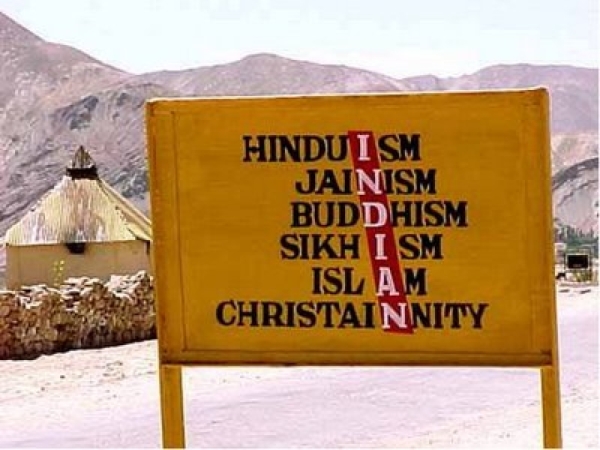

 Saji Koduvath Associates